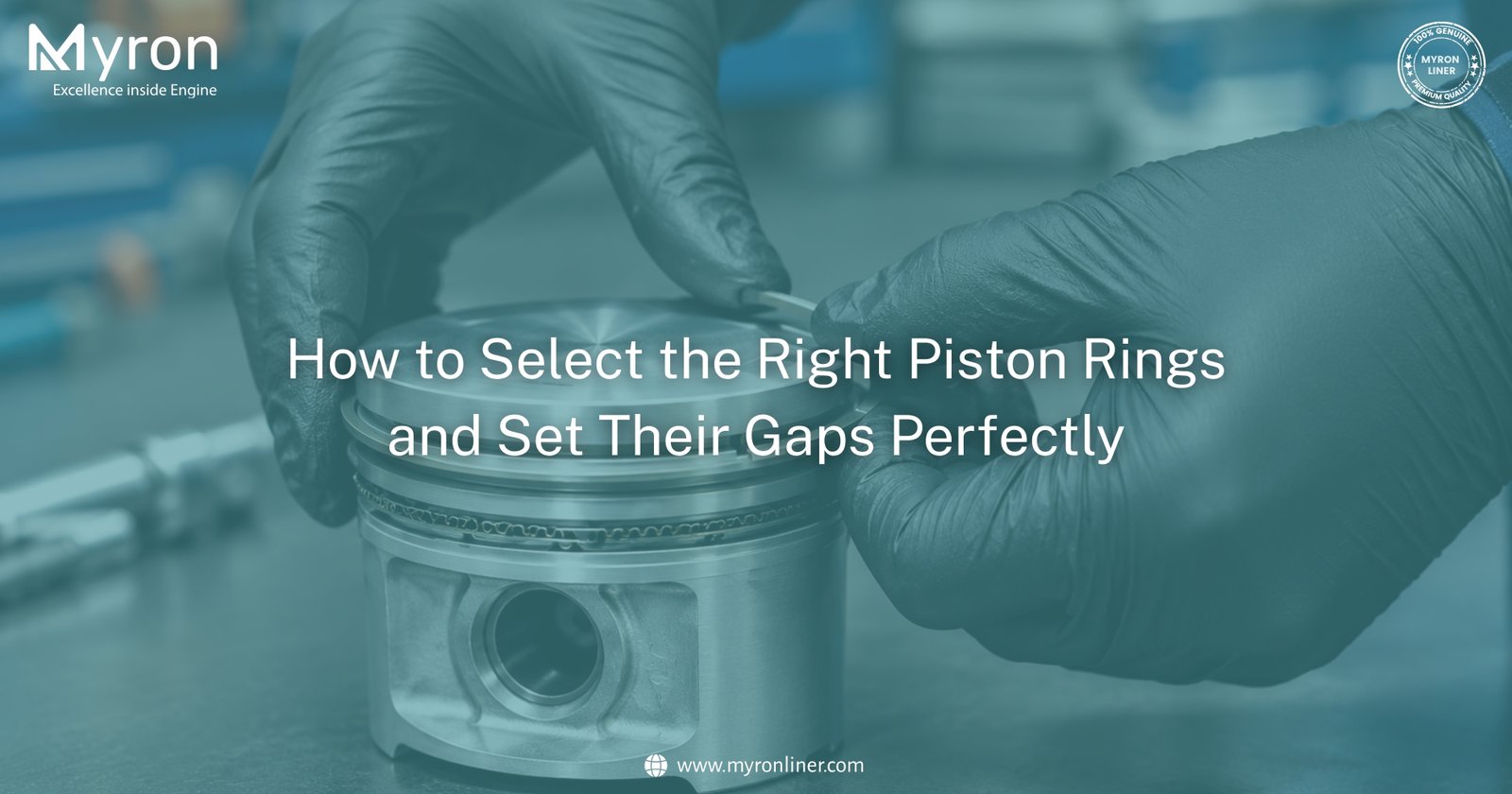
How to Select the Right Piston Rings and Set Their Gaps Perfectly
When it comes to maintaining or rebuilding an engine, choosing the right piston ring and ensuring proper installation can make a huge difference in engine performance. The piston ring set may seem small, but it plays an important role. It seals combustion gases, controls oil, and keeps the right compression in the engine cylinder.
A high-quality piston ring can still fail if it is not installed correctly. It can also underperform if the piston ring gap is not set correctly.
In this guide, we will help you choose the right piston and rings. We will show you how to set their gaps correctly. This will ensure your engine runs well and lasts a long time.
What Are Piston Rings and Why Do They Matter?
Piston rings are circular metal components fitted into the grooves of the piston. They act as seals between the piston and the cylinder wall. This keeps the combustion gases in the combustion chamber. It also stops oil from getting in.
Typically, a piston ring set includes three types of rings:
- Top compression ring – seals the combustion chamber and maintains pressure.
- Second compression ring – assists in sealing and helps control oil.
- Oil control ring – regulates the amount of lubricating oil on the cylinder walls.
Together, these rings are crucial for maintaining compression, reducing friction, and ensuring smooth engine operation.
Read More: Understanding How Engine Piston Rings Work
How to Select the Right Piston Rings
Selecting the correct piston ring depends on several factors, such as engine type, purpose, and material compatibility. Let's look at a few essential considerations:
1. Know Your Engine Type
Different engines have specific requirements. A high-performance racing engine needs rings made from strong materials.
These materials include steel or ductile iron. They can handle extreme heat and pressure. On the other hand, standard vehicle engines can perform well with cast-iron rings.
2. Check the Material
- Cast Iron Rings – Provide good wear resistance and are ideal for older engines or general use.
- Steel Rings – Offer excellent strength and are suitable for high-performance applications.
- Ductile Iron Rings – A balance between cast and steel rings, perfect for heavy-duty engines.
Read More: Complete Guide to Piston Rings: Types, Functions, and Materials
3. Match the Correct Size
Always match the ring size to your piston diameter. Too tight or too loose a fit can lead to compression loss, blow-by, or oil burning. Consult the manufacturer's specifications to confirm the correct ring dimensions.
4. Understand the Coating
Modern rings often come with coatings like chrome, molybdenum, or nitride finishes. These coatings enhance wear resistance and improve heat transfer. For example, molybdenum-coated rings are ideal for engines that run at high RPMs.
Importance of Correct Piston Ring Installation
Improper Piston Ring Installation can cause severe damage to your engine. Rings must be positioned and gapped precisely to create a perfect seal and allow smooth movement. Here are some points to remember during installation:
Clean the Grooves – Make sure the piston grooves are clean before inserting the rings. Any carbon or debris can prevent a proper fit.
2. Use the Right Tools – A ring expander tool helps avoid distortion during fitting.
Follow Correct Orientation – Each ring has a top and bottom side - install them as per the manufacturer's markings.
A common mistake when installing piston rings is forcing them into place. This can cause cracks or uneven sealing. Handle them carefully to ensure a snug but smooth fit.
Don’t miss to check out: Piston Ring Installation Guide for Improved Engine Performance
Setting Piston Ring Gaps Correctly
The piston ring gap is the small space between the ends of the ring when it is in the cylinder. This gap is very important for how well the engine works.
This gap allows for heat expansion during operation. If the gap is too small, the ring ends may touch when the engine heats up, causing scuffing or seizure. If too large, it can lead to compression loss and oil blow-by.
Steps to Set Piston Ring Gaps Properly:
1. Measure the Gap
Insert the ring into the cylinder and use a feeler gauge to measure the end gap. Always measure at the lower part of the cylinder bore for accuracy.
2. Check Manufacturer Specifications
Each engine has a recommended ring gap range. As a general rule, the gap should be around 0.003–0.004 inches per inch of cylinder diameter, but this can vary.
3. File if Necessary
If the ring gap is too tight, use a fine file or ring grinder to adjust it. Always remove small amounts of material at a time and recheck frequently.
4. Recheck After Filing
Once adjusted, insert the ring again and ensure the gap matches the specified tolerance.
5. Set the Ring Position
When installing, the piston ring position also matters. Stagger the gaps of each ring around the piston (typically at 120° apart) to prevent gas leakage through a single path.
Common Mistakes to Avoid When Setting Piston Ring Gaps
Even experienced mechanics can make small errors that affect engine health. Avoid these common mistakes:
- Installing rings upside down.
- Failing to clean the cylinder walls properly.
- Not checking each ring gap individually.
- Align all ring gaps in the same direction.
- Over-filing, leading to an oversized gap.
Installing piston rings correctly and setting the gap helps with compression, oil control, and less wear. These are important for getting the best engine performance.
Why Piston Ring Position Matters
The piston ring position directly affects how well your engine seals and manages oil. If the ring gaps align, combustion gases can escape, leading to power loss. Correct staggering ensures that no two gaps overlap, maintaining a solid seal during operation.
Most manufacturers give a diagram for the right ring orientation. It's best to follow that guide when assembling.
Final Check Before Engine Assembly
Before completing your piston and rings setup, double-check:
- All ring gaps are within the recommended tolerance.
- The cylinder walls are clean and lightly oiled.
- Rings are correctly oriented and spaced.
- Piston movement inside the bore feels smooth and free from resistance.
Performing these checks ensures your engine runs smoothly, efficiently, and for a long time.
Myron Liners – Trusted Manufacturer of Engine Components
If you need reliable and strong engine parts, Myron Liners is a top choice. They are known for making cylinder liners for aftermarket use. They design their precision-engineered products to enhance performance, durability, and efficiency across various engine types.
Myron Liners has years of experience in the automotive and industrial sectors. They make sure every product, from cylinder liners to engine parts, meets high standards of quality and reliability.
Reference:
Piston ring by Wikipedia[1].
FAQ
1. How do I choose the right piston ring for my engine?
Select piston rings based on your engine type, cylinder size, and performance requirements. Always match the ring material—like cast iron, steel, or ductile iron—to your engine's workload and temperature range.
2. What happens if the piston ring gap is too small?
If the piston ring gap is too tight, the ring ends might touch when the engine heats up. This can cause scuffing, damage to the cylinder wall, or even breakage of the ring.
3. What is the ideal piston ring gap size?
The ideal gap varies by engine, but a general rule is 0.003–0.004 inches per inch of cylinder bore diameter. Always check your manufacturer's specifications for accurate measurements.
4. How do you measure and set piston ring gaps?
Insert the ring into the cylinder bore, square it with the piston, and use a feeler gauge to measure the gap. If needed, file the ring ends gently to reach the correct clearance.
5. How do I know if my piston rings are bad?
Common signs include low compression, excessive oil consumption, white or blue exhaust smoke, and poor engine performance. A compression test can help confirm worn-out rings.
6. Can wrong piston ring gaps cause oil consumption?
Yes. If the gap is too large, oil can slip past the rings and burn during combustion, resulting in visible smoke and higher oil usage.
Reference & Trademark Disclaimer
All manufacturer names, trademarks, logos, product names, part numbers, model numbers, descriptions, and other identifying references mentioned in this article are used for identification, reference, and cross-reference purposes only.
Such references do not imply any affiliation, association, authorization, sponsorship, approval, or endorsement by the respective manufacturers or trademark owners. All trademarks, brand names, product names, part numbers, and related intellectual property remain the property of their respective owners.
MYRON LINER LLP is an independent manufacturer and supplier of engine components. The use of any third-party name or reference is solely intended to help readers identify the applicable engine, component, or application.