Complete Guide to Piston Rings: Types, Functions, and Materials
The smallest components often protect the largest investments in an engine build. Every Piston Ring you install helps seal combustion, control oil, and transfer heat from the piston so the engine can live at temperature and RPM. In the aftermarket world - where bores are honed oversized, fuels vary, boost rises, and budgets matter - choosing the right rings and installing them correctly is one of the highest‑leverage decisions you can make. This friendly, professional guide explains the main types of piston rings, the core function of piston rings, how piston ring material affects durability and power, and the steps for a reliable piston ring installation. We'll finish with a look at how quality liners support ring performance.
What Is a Piston Ring?
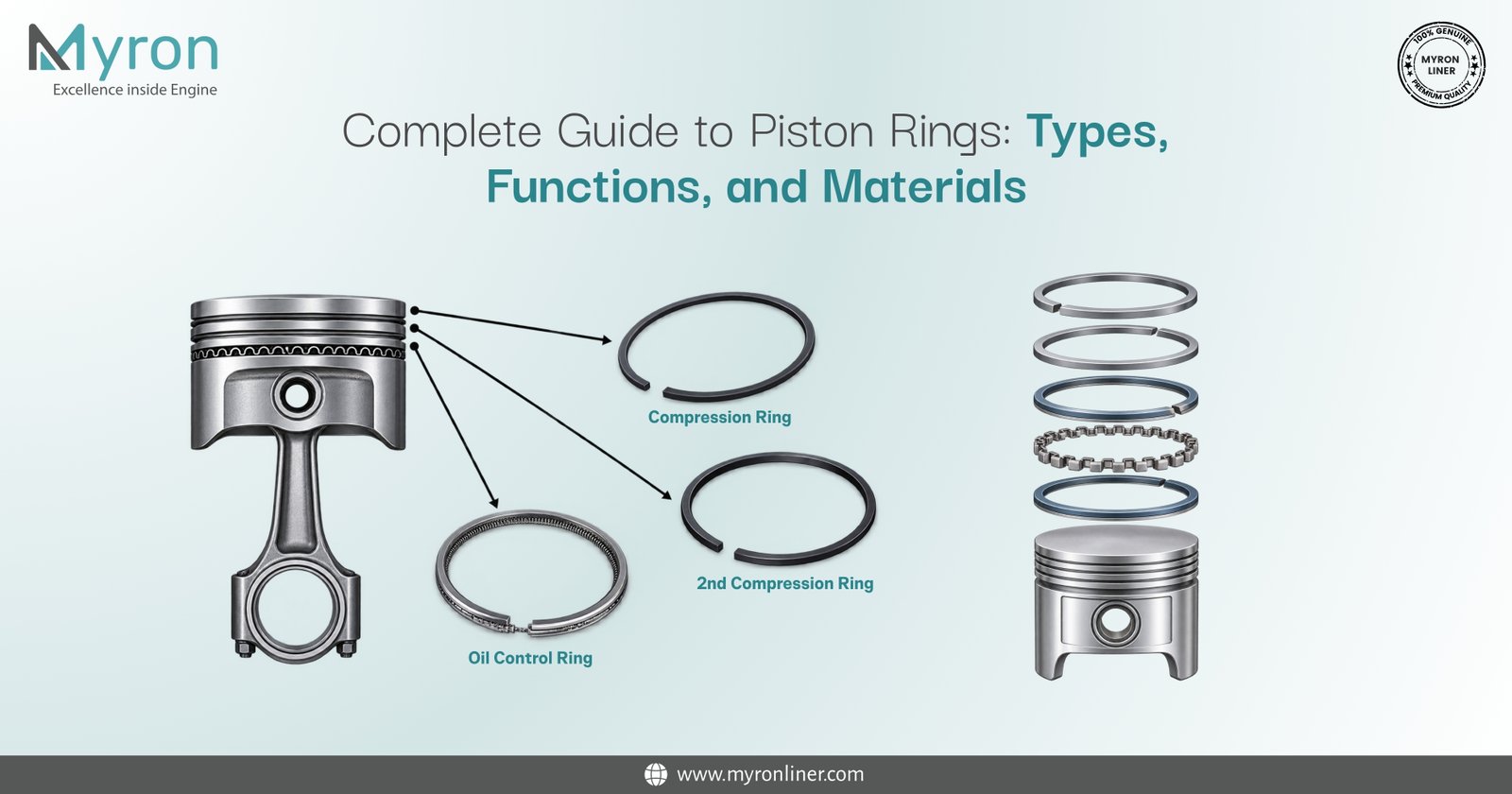
A piston ring is a split, high‑precision metal ring that fits into a groove cut around the piston's outer diameter. Because it is sprung outward, it presses lightly against the cylinder wall and forms a sliding seal as the piston moves. Most modern four‑stroke engines run a stacked ring "pack" in three grooves: an upper combustion seal, a second pressure‑control / scraper ring, and a lower oil control assembly. Ring geometry, surface finish, and tension are engineered so the ring can follow minor bore distortion, survive severe heat, and maintain contact across millions of strokes.
Core Functions of Piston Rings
Piston rings do far more than "seal the hole." Their five essential jobs keep engines alive:
- Combustion Sealing – The top piston compression ring blocks chamber pressure from leaking into the crankcase, preserving power and minimizing blow‑by. By ensuring an airtight seal, it improves fuel efficiency and maximizes engine output under varying loads.
- Heat Conduction – A major function of piston rings is carrying heat from the piston crown into the cooler cylinder wall. Stable temperatures protect against detonation and piston damage. Effective heat transfer also extends the life of the piston and prevents thermal expansion issues.
- Oil Control – Lower rings meter the lube film and scrape excess oil back to the sump, reducing consumption and deposits. They help maintain a consistent oil film on the bore, preventing dry spots and minimizing carbon buildup.
- Pressure Management – The second ring moderates gas that slips past the top ring and often adds scraping duty. It serves as a secondary seal to reduce blow-by and improve overall engine compression, particularly at high RPMs.
- Piston Support – Ring contact helps steady the piston, cutting skirt wear in loose or high‑RPM builds. This added stability reduces vibration, enhances smooth engine operation, and prolongs the life of both the piston and cylinder liner.
The Main Types of Piston Rings
Most aftermarket four‑stroke sets use a three‑ring pack: two uppers and a lower oil control assembly. Face shape and cross‑section tune how each ring seals, seats, and handles oil.
Top Compression Ring Styles
- Barrel Face – Rounded for stable contact. Its curved shape allows better oil retention and reduces bore wear, making it suitable for engines that experience variable loads.
- Taper Face – Seats quickly; common in rebuilds. The angled surface ensures a good initial seal, which improves compression during the break-in period.
- Dykes (L‑Style) – Uses combustion pressure behind the leg for a hard seal; popular in boosted and high‑RPM engines. It is particularly effective in performance applications where peak cylinder pressure is critical.
- Gas‑Assisted – Gas‑ported pistons route pressure behind the ring so you can run lower radial tension. This design minimizes friction while maintaining a reliable seal under high combustion pressure.
Second Ring Options
- Napier – Hooked edge wipes oil; reduces consumption. It's often paired with high-performance setups to ensure efficient oil control and minimize smoke.
- Reverse Taper / Scraper – Balances light pressure bleed with oil control. This type is ideal for engines where both sealing and minimal oil drag are required.
- Conventional – Flat or simple taper; rugged and affordable. It provides dependable performance in standard engines with moderate loads.
Oil Control Assemblies
Typically a three‑piece unit: expander/spacer between two thin rails.
- Standard tension for general use. It offers a balance between oil control and friction, suitable for most daily-driven engines.
- Low tension for friction reduction (needs good vacuum). This is favored in performance or racing applications where every bit of efficiency matters.
- High tension for worn bores or severe service. It maintains better sealing in engines with higher oil consumption or imperfect bore surfaces.
Piston Ring Materials & Surface Engineering
The base piston ring material and its face treatment govern strength, wear, seating speed, and bore compatibility.
Grey Cast Iron
Cost‑effective, oil‑retentive, fast seating; best for mild builds.
Ductile Iron
Tougher and more elastic; good upgrade for towing, moderate boost.
Steel Alloys
High strength in thin sections; ideal for tight ring packs, high RPM, and heavy load.
Face Treatments
- Chrome – Hard, long life; slower seat.
- Plasma‑Moly – Porous, scuff resistant; performance favorite.
- Nitrided – Hardened surface for wear/fatigue protection.
- PVD / DLC – Premium ultra‑low friction films.
- Phosphate – Break‑in aid that holds assembly oil.
Fit to the Bore
Match hone finish (diameter, crosshatch, Ra, plateau) to the ring face. Residue left in the cylinder wall will destroy rings before they seat.
Selecting Rings for Aftermarket Builds
Because you're not locked to a factory part number, you can tailor the ring pack to how the engine will be used. Use this checklist when comparing sets:
- Application – Daily, towing, performance street, race, industrial, marine.
- Fuel & Load – Pump gas, E85, LPG/CNG, diesel, nitrous, turbo/supercharger boost level.
- Bore Material – Cast sleeve, ductile sleeve, coated aluminum; affects compatibility and ring tension.
- Ring Thickness – Thinner rings cut friction and free horsepower but require straighter bores and better oil control.
- Tension Strategy – Balance sealing force vs drag; gas‑assisted designs may allow lower radial tension.
- Service Life Target – Fleet longevity vs short‑interval performance.
- Budget vs Risk – Quality rings are cheap insurance compared to another teardown.
Why Ring Choice Matters
A ring that seals early lets you tune closer to ideal spark and fuel, raising real cylinder pressure instead of leaking power. Correct tension trims friction. Tougher materials stretch rebuild intervals, and better oil control reduces consumption and emissions.
Piston Ring Installation: A Proven Workflow
Accurate piston ring installation is the difference between a tight engine and one that smokes on startup. Use this quick checklist:
Clean & Inspect – After final hone, scrub with hot soapy water until white towels stay clean; verify bore size and roundness.
Deburr Pistons – Lightly chamfer groove edges; clear drainback holes.
Set End Gaps – Square each ring in the bore. Measure. File the piston compression ring to spec (add for heat/boost); set the second ring slightly wider to avoid pressure trapping. Deburr tips.
Check Side Clearance – Ensure the ring moves freely in its groove without excessive slop.
Orient & Stagger Gaps – Follow TOP marks; space ends around the piston; offset oil rail ends from the expander.
Lube & Install – Light oil film only. Use a tapered compressor and ease the piston into the bore.
Break‑In – Start promptly; vary light to moderate load to seat rings against the fresh cylinder wall crosshatch.
Read More: Understanding How Engine Piston Rings Work
About Myron Liners – Aftermarket Cylinder Support You Can Trust
Great rings need a true, stable bore surface. If your block is worn, scored, or going oversized, a precision cylinder liner restores roundness, wall integrity, and heat path so the ring pack can perform. Myron Liners manufactures and supplies aftermarket cylinder liners engineered for dimensional accuracy, wear resistance, and consistent heat transfer across gasoline, diesel, agricultural, industrial, and performance builds. Partnering quality liners with the right ring set helps lock in compression, reduce oil use, and extend service life. Learn more or request specs at cylinder liner today. Myron offers dry and wet cylinder liner options, semi‑finished or finish‑honed, with material pairings matched to modern ring coatings.
Consistent hardness helps rings seat evenly; application support is available for clearance, honing, and ring selection.
Reference:
Piston ring by Wikipedia[1].
FAQ
1. What are the types of piston rings and their functions?
The main types of piston rings are:
- Compression Rings: Seal combustion gases and transfer heat to the cylinder wall.
- Second Rings (Scraper Rings): Control pressure leakage and assist in oil scraping.
- Oil Control Rings: Regulate oil film and return excess oil to the sump.
2. Which material is used for piston rings?
Common piston ring materials include cast iron, ductile iron, and steel alloys, often with coatings like chrome, molybdenum, or nitriding for durability.
3. What are the three main types of piston rings?
The three main types are compression rings, second rings, and oil control rings. Compression rings seal combustion gases, second rings help control pressure and oil, and oil control rings regulate the oil film on the cylinder wall.
4. Why is the piston ring end-gap important?
End-gap allows for thermal expansion. A gap too small causes ring breakage, while too large leads to blow-by and low compression.
5. How do piston rings help in heat transfer?
Piston rings transfer heat from the piston crown to the cooler cylinder wall, preventing overheating and piston damage.
6. What causes piston ring failure?
Poor lubrication, wrong gap settings, overheating, or improper installation are the most common causes.
Reference & Trademark Disclaimer
All manufacturer names, trademarks, logos, product names, part numbers, model numbers, descriptions, and other identifying references mentioned in this article are used for identification, reference, and cross-reference purposes only.
Such references do not imply any affiliation, association, authorization, sponsorship, approval, or endorsement by the respective manufacturers or trademark owners. All trademarks, brand names, product names, part numbers, and related intellectual property remain the property of their respective owners.
MYRON LINER LLP is an independent manufacturer and supplier of engine components. The use of any third-party name or reference is solely intended to help readers identify the applicable engine, component, or application.