Why the Piston Pin Matters in Engine Performance
Engines are marvels of engineering, designed with multiple components working in harmony to convert fuel into usable power. Among these components, the piston pin—though small in size—plays a crucial role in ensuring smooth engine operation and longevity. Understanding the piston pin function not only helps in appreciating engine design but also highlights its importance in maintaining engine efficiency, durability, and performance.
In this blog, we'll delve into the details of what a piston pin is, its key functions, types, materials, failure causes, and why it is a crucial element in internal combustion engines.
What Is a Piston Pin?
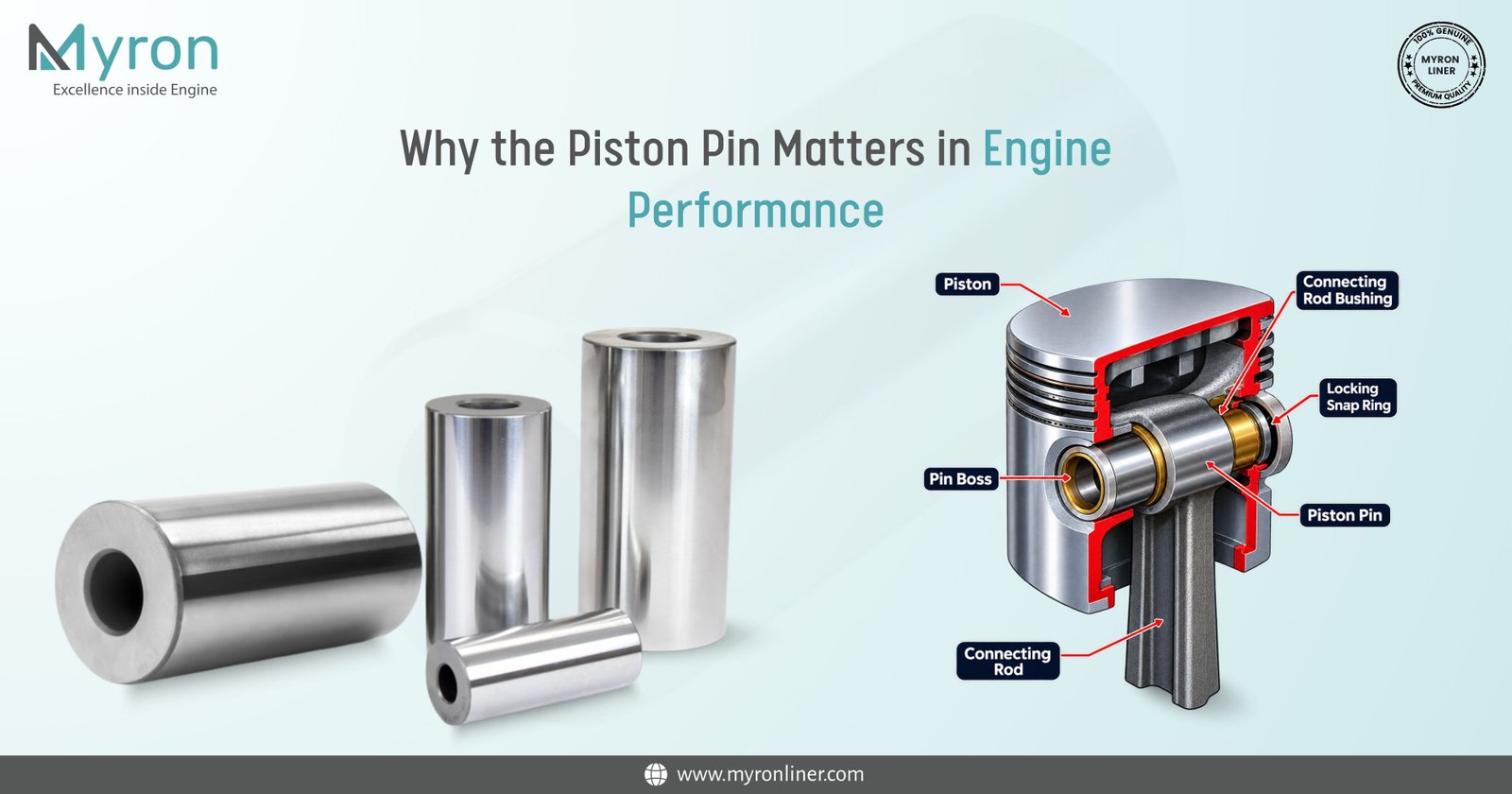
A piston pin, also known as a wrist pin or gudgeon pin, is a hardened cylindrical pin that connects the piston to the connecting rod. It allows the piston to pivot as it moves up and down within the cylinder, transferring force from combustion to the crankshaft.
According to Wikipedia, the piston pin serves as the link between the piston and the connecting rod, withstanding extremely high loads and temperatures inside the combustion chamber. Without it, the piston would not be able to function smoothly, and the engine cycle would break down.
Why the Piston Pin Function Matters
Although it is small, the piston pin plays a critical role in maintaining the entire combustion process. Here's why:
- Transfer of Force – The piston pin transmits the force of expanding gases from the piston to the connecting rod, which ultimately drives the crankshaft.
- Enabling Pivot Motion – It allows relative motion between the piston and the connecting rod without creating excessive friction.
- Durability Under Stress – The piston pin must withstand high compressive forces, heat, and cyclic loading throughout the engine's life.
- Support for Engine Efficiency – A properly designed piston pin minimizes energy loss and improves combustion efficiency.
In simple terms, if the piston is the "muscle" of the engine, the piston pin is the joint that enables it to move effectively.
Anatomy of the Piston Pin
The piston pin may appear to be a simple cylindrical rod, but its design requires precision engineering. Common features include:
- Material: Typically made from high-strength alloy steels, carburized, or surface-treated to resist wear.
- Hollow Design: Many piston pins are designed to be hollow, reducing weight while maintaining strength.
- Surface Finish: Highly polished to minimize friction and wear.
These features ensure that the piston pin can endure the harsh environment inside an engine, where temperatures and pressures are extreme.
Types of Piston Pin Designs
The piston pin's function is heavily influenced by how it is mounted and allowed to move within the piston and connecting rod. Over the years, engineers have developed different piston pin designs, each with unique characteristics, advantages, and limitations. Let's explore the three main types in detail:
1. Fixed Piston Pin
The fixed piston pin is the oldest and simplest type of piston pin. In this arrangement, the pin is rigidly secured to the piston bosses, and the connecting rod's small end oscillates around the pin.
Advantages:
- Simple construction and low manufacturing cost.
- Easy to produce and assemble.
Disadvantages:
- The majority of the wear occurs at the connecting rod small-end bearing, which shortens its lifespan.
- Higher friction due to restricted movement.
Application: Mostly seen in older or smaller low-power engines, where stress levels are relatively low. Today, it's rarely used in modern automobiles due to concerns about durability.
2. Semi-Floating Piston Pin
The semi-floating piston pin is a more advanced design. Here, the pin is locked to either the piston or the connecting rod, while the other end allows for free movement. In most cases, it is fixed in the connecting rod and allowed to rotate within the piston bosses.
Advantages:
- Better load distribution compared to a fixed pin.
- Reduced wear on the connecting rod small-end bearing.
Disadvantages:
- Uneven wear still occurs because only one side of the pin rotates.
- Assembly and disassembly can be tricky.
Application: This design was once widely used in mid-range engines but is now being replaced by full-floating pins in most high-performance and commercial engines.
3. Full-Floating Piston Pin
The full-floating design is the most widely used and advanced configuration in modern engines. In this setup, the piston pin is free to rotate both within the piston bosses and at the small end of the connecting rod. Retaining clips, snap rings, or circlips hold the pin in place to prevent it from sliding out.
Advantages:
- Superior load distribution and reduced wear.
- Lower friction levels directly contribute to improved efficiency.
- Easier assembly and disassembly during maintenance or replacement.
- Better suited for high-speed, high-performance, and heavy-duty applications.
Disadvantages:
- Slightly more complex in design.
- Requires precise machining to avoid clearance issues.
Application: Found in almost all modern internal combustion engines, from passenger cars to heavy-duty trucks, motorcycles, and racing vehicles.
Among these, the full-floating piston pin is the most popular choice in performance and aftermarket applications.
Role of Piston Pin in Engine Performance
The piston pin function goes beyond simple mechanical connection - it directly impacts engine performance in several ways:
- Smooth Power Delivery – Ensures seamless motion between piston and connecting rod. A well-designed pin reduces vibrations and shock loads, resulting in smoother engine operation and consistent performance across a wide range of RPMs.
- Reduced Friction – Modern floating designs minimize wear and help maintain efficiency. Lower friction also means less energy loss, contributing to improved fuel economy and extended lifespan of the piston and connecting rod assembly.
- Durability in High RPM Engines – Essential for racing and heavy-duty engines that face intense loads. A strong, precision-engineered piston pin withstands these conditions, ensuring durability and preventing premature failures that could otherwise damage critical engine parts.
- Heat Management – Transfers heat away from the piston to the connecting rod, preventing piston seizure. This heat dissipation helps avoid piston seizure and ensures that the piston operates within safe temperature limits, even under continuous heavy loads.
Engines that utilize advanced piston pin designs often exhibit improved performance, extended service life, and enhanced reliability.
Read more: How Engine Piston Care Improves Overall Engine Performance
Common Issues and Failures with Piston Pins
Like any engine part, piston pins are not immune to failure. Some common problems include:
- Excessive Wear – Caused by poor lubrication or substandard materials.
- Overheating – Can lead to scoring and seizing of the pin.
- Misalignment – Improper assembly or connecting rod issues can damage the piston pin.
- Fracture – Though rare, material fatigue or extreme stress can cause breakage.
Regular inspection and the use of high-quality aftermarket piston pins are essential in preventing these issues.
Maintenance and Care for Piston Pins
Ensuring a piston pin continues to perform well involves proper maintenance practices:
- Adequate Lubrication – Use quality engine oils to reduce friction.
- Timely Replacement – Replace worn piston pins during overhauls.
- Precision Fitment – Ensure correct installation with the right tools and equipment.
- Use Aftermarket Parts – For heavy-duty and performance engines, aftermarket piston pins often provide better durability than standard replacements.
Piston Pin Materials and Innovations
Modern piston pins are not just about strength - they are designed with cutting-edge materials and coatings. Some shared innovations include:
- Alloy Steel with Case Hardening – Increases surface hardness and wear resistance.
- Hollow, Lightweight Designs – Reduce inertia and improve fuel efficiency.
- Diamond-Like Coatings (DLC) – Used in high-performance engines for reduced friction.
These innovations enable the piston pin to function more reliably, even under extreme conditions, ensuring engines perform at their peak.
Conclusion: The Unsung Hero of Engine Pistons
While it may seem small and insignificant compared to other engine parts, the piston pin function is undeniably one of the most critical aspects of an engine's performance. From ensuring smooth piston movement to managing heat and reducing wear, the piston pin is a true unsung hero in the internal combustion engine.
About Myron Liners – Trusted Name in Engine Parts
When it comes to aftermarket engine solutions, precision and quality matter. Myron Liners is a leading manufacturer and supplier of cylinder liners and other critical engine parts trusted by clients worldwide. With advanced manufacturing techniques and a commitment to performance, Myron Liners ensures durability and reliability for every product.
Reference:
Gudgeon pin by Wikipedia[1].
FAQ
What is the function of a piston?
The piston converts the energy from fuel combustion into mechanical force by moving up and down inside the cylinder. It transfers this force to the crankshaft via the piston pin and connecting rod.
What causes piston wrist pin failure?
Piston wrist pin failure is usually caused by poor lubrication, excessive engine load, misalignment, overheating, or the use of low-quality materials. Over time, these stresses can lead to wear, scoring, or even cracking of the pin.
What are the symptoms of piston failure?
Common symptoms include loss of engine power, knocking or rattling noises, excessive oil consumption, smoke from the exhaust, and, in severe cases, engine seizure.
How long does a piston pin last?
A piston pin can last for thousands of operating hours if properly lubricated and maintained. However, high-performance or heavy-duty engines may require earlier inspection and replacement.
Is a piston pin the same as a gudgeon pin?
Yes, the piston pin is also called a wrist pin or gudgeon pin. All terms refer to the same component that connects the piston to the connecting rod and enables pivoting motion.
Reference & Trademark Disclaimer
All manufacturer names, trademarks, logos, product names, part numbers, model numbers, descriptions, and other identifying references mentioned in this article are used for identification, reference, and cross-reference purposes only.
Such references do not imply any affiliation, association, authorization, sponsorship, approval, or endorsement by the respective manufacturers or trademark owners. All trademarks, brand names, product names, part numbers, and related intellectual property remain the property of their respective owners.
MYRON LINER LLP is an independent manufacturer and supplier of engine components. The use of any third-party name or reference is solely intended to help readers identify the applicable engine, component, or application.
Reference & Trademark Disclaimer
All manufacturer names, trademarks, logos, product names, part numbers, model numbers, descriptions, and other identifying references mentioned in this article are used for identification, reference, and cross-reference purposes only.
Such references do not imply any affiliation, association, authorization, sponsorship, approval, or endorsement by the respective manufacturers or trademark owners. All trademarks, brand names, product names, part numbers, and related intellectual property remain the property of their respective owners.
MYRON LINER LLP is an independent manufacturer and supplier of engine components. The use of any third-party name or reference is solely intended to help readers identify the applicable engine, component, or application.