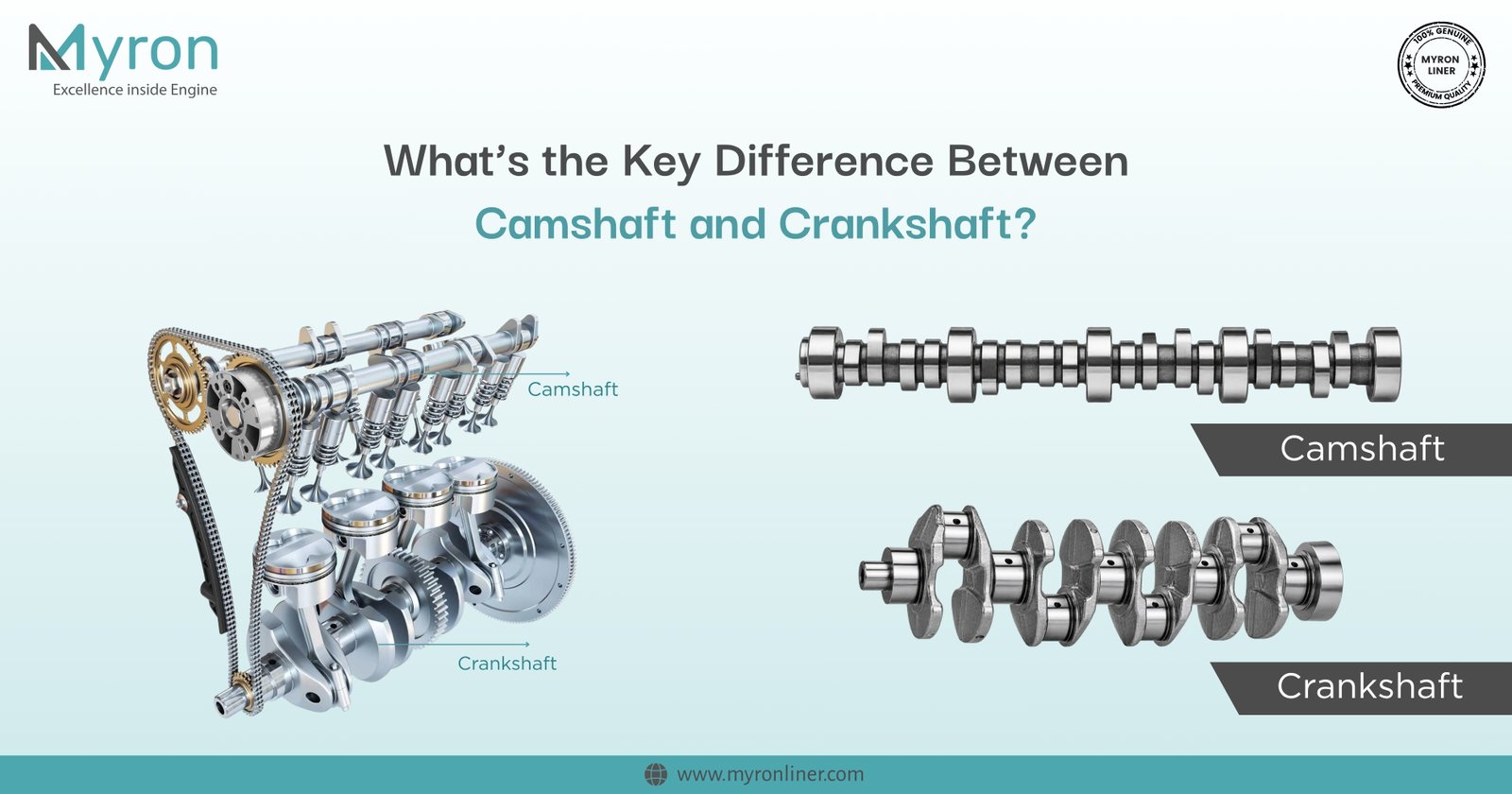
What’s the Key Difference Between Camshaft and Crankshaft?
When it comes to understanding the inner workings of an internal combustion engine, two of the most critical components to know about are the camshaft and crankshaft. These two parts are often mentioned together, but they serve very different roles in how an engine operates. Whether you're a mechanic, a car enthusiast, or simply someone curious about how engines work, learning the camshaft and crankshaft differences can help you better understand engine performance, maintenance, and design.
In this blog, we'll explore what a camshaft and a crankshaft are, their functions, how they differ, and why both are essential to the smooth operation of an engine.
What Is a Camshaft in an Engine?
Let's start with the camshaft. The camshaft is a rotating shaft found in internal combustion engines. It plays a key role in the operation of the engine's valves. Each camshaft is equipped with cams, or lobes, that push against the valves or rocker arms to open and close the intake and exhaust valves at precise times.
Camshaft Meaning and Function
So, what is the camshaft function? The camshaft controls the timing and sequence of valve operation, determining when air and fuel enter the combustion chamber and when exhaust gases exit. Its rotation is timed with the crankshaft to ensure that each cylinder receives air-fuel and expels exhaust at the right moment.
In engines with overhead camshaft (OHC) configurations - like SOHC (Single Overhead Camshaft) or DOHC (Double Overhead Camshaft) - the camshaft sits above the cylinder head and directly controls the valve movement. In older engines or pushrod designs, the camshaft may sit inside the engine block and operate valves via pushrods and rocker arms.
Camshaft Placement and Design Variations
Depending on the engine architecture, camshafts can be located in different positions. The two most common designs are:
1. Overhead Camshaft (OHC)
In modern engines, the camshaft is often placed in the cylinder head, directly above the valves. This layout is known as an Overhead Camshaft design, which improves efficiency and allows for higher engine speeds.
There are two main types of OHC configurations:
- SOHC (Single Overhead Camshaft): One camshaft controls both intake and exhaust valves, typically in inline engines.
- DOHC (Double Overhead Camshaft): Two separate camshafts - one for intake and one for exhaust—allow for better performance, more precise valve control, and higher power output.
2. Cam-in-Block (Pushrod) Engines
In older or traditional American V-type engines, the camshaft is located inside the engine block. It operates the valves using pushrods and rocker arms. While this setup is compact and straightforward, it generally doesn't allow for the high-revving capabilities of OHC designs.
What Is a Crankshaft in an Engine?
Now let's shift focus to the crankshaft, one of the most vital components in any internal combustion engine. The engine crankshaft is a long, robust, and carefully balanced rotating shaft located at the bottom of the engine block. Its job may seem simple at first glance, but it is central to how your engine turns combustion energy into actual motion.
In every piston engine, combustion causes the pistons to move up and down inside the cylinders. However, your wheels don't move up and down—they rotate. That's where the crankshaft comes in. Its primary role is to convert the linear, reciprocating motion of the pistons into rotational motion that drives your vehicle's wheels, directly or through a transmission.
This rotational energy doesn't just power the vehicle; it also drives other essential engine components such as the camshaft, oil pump, alternator, and more. In essence, the crankshaft is the central axis of engine power transmission.
Crankshaft Meaning and Function
The crankshaft function is central to the engine's ability to produce motion. Each time a piston moves down from a combustion event, it pushes on the crankshaft via the connecting rod. This causes the crankshaft to spin. The rotation of the crankshaft drives everything else in the engine—including the camshaft (via a timing belt or chain), alternator, oil pump, and transmission.
If you're wondering what the crankshaft is in an engine, think of it as the part that translates fuel combustion into usable energy that turns your vehicle's wheels.
Read More: What Is a Crankshaft and Why Does It Matter in Engine Performance
Camshaft vs Crankshaft
The camshaft and crankshaft don't just operate independently - they work in perfect harmony. The crankshaft powers the camshaft through a timing belt, timing chain, or gear system. In most 4-stroke engines, the camshaft rotates at half the speed of the crankshaft.
This synchronization ensures that the valves open and close at just the right time during each piston stroke: intake, compression, power, and exhaust.
Why Timing Matters
Incorrect timing between the camshaft and crankshaft can lead to poor engine performance, misfires, or even catastrophic engine damage. This is why timing belts and chains must be appropriately maintained. When timing slips, the pistons can collide with open valves, resulting in bent valves or broken pistons.
Key Differences Between Camshaft and Crankshaft
Let’s break down the difference between camshaft and crankshaft clearly across multiple aspects:
Camshaft: Controls the opening and closing of intake and exhaust valves. It rotates at half the speed of the crankshaft and is driven by a timing belt or chain.
Crankshaft: Converts the pistons’ up-and-down motion into rotation and transfers power to the flywheel and drivetrain.
As you can see, although the camshaft and crankshaft are connected, they serve very distinct and essential purposes in the engine.
Read More: Complete Guide to Cylinder Blocks: Parts, Types, and Key Functions
Common Issues with Camshaft and Crankshaft
Understanding the camshaft vs crankshaft difference also helps in identifying problems early.
Camshaft Issues:
- Worn cam lobes
- Broken timing gear
- Improper timing
- Valve timing error
- Check engine light (for camshaft position sensor failure)
Crankshaft Issues:
- Worn journals or bearings
- Crankshaft cracks or imbalance
- Position sensor failure
- Knocking sounds
- Low oil pressure (due to bearing wear)
Addressing these problems early can prevent severe engine damage and costly repairs.
How to Identify Camshaft and Crankshaft Damage
Both components can wear over time, especially in high-mileage engines. Here's how you might spot a problem:
- Camshaft Warning Signs: Poor acceleration, engine misfiring, ticking noise from the cylinder head, or rough idling.
- Crankshaft Warning Signs: Knocking from the engine bottom, loss of oil pressure, metal shavings in oil, or engine seizing.
If you notice any of these symptoms, it's essential to get your engine checked immediately.
Camshaft and Crankshaft in Aftermarket Engines
While original equipment manufacturers (OEMs) design camshafts and crankshafts for general use, the aftermarket engine parts industry creates them to handle specific performance, durability, or customization needs.
Aftermarket camshafts can be designed for high-lift or racing purposes. Similarly, aftermarket crankshafts can be forged or billet-style to handle more horsepower or boost pressure.
If you're rebuilding or upgrading an engine, choosing high-quality aftermarket camshaft and crankshaft components can lead to better performance and reliability.
Conclusion: Why Both Are Essential
To sum it all up, the camshaft and crankshaft are the backbone of your engine's mechanical movement. While the camshaft controls air-fuel intake and exhaust timing, the crankshaft translates combustion power into usable rotational energy.
Understanding the difference between camshaft and crankshaft helps in diagnosing engine issues, maintaining optimal performance, and selecting the right parts for rebuilds or upgrades.
Whether you're a seasoned mechanic or simply learning the basics of automotive engines, knowing how these two components interact gives you a deeper appreciation of what goes on under the hood.
Quality Engine Parts by Myron Liners
If you're in the market for reliable aftermarket engine parts, including components that support the performance of your camshaft and crankshaft, look no further than Myron Liners.
As a trusted manufacturer and supplier of cylinder liners and precision-engineered engine parts, Myron Liners delivers top-quality products built to meet the demands of today's engines. Whether you're upgrading for performance or restoring a heavy-duty motor, Myron Liners offers the durability, accuracy, and excellence you need in every component.
Reference:
Camshaft by Wikipedia[1].
Crankshaft by Wikipedia[2].
FAQ
1. What is the function of a camshaft?
The camshaft controls the timing of the intake and exhaust valves. It ensures they open and close at the correct moments during the engine cycle.
2. What are the two main parts of a camshaft?
The main parts are the shaft and the cam lobes. The shaft rotates, while the lobes push against valve components to control valve movement.
3. Where is the engine crankshaft typically located?
The crankshaft is usually located at the bottom of the engine block. It sits in the crankcase and converts piston motion into rotational force.
4. What is the difference between a camshaft and a crankshaft?
The camshaft controls valve timing, while the crankshaft converts piston movement into rotational motion. Both work together to ensure proper engine function, but serve different roles.
5. Can a bad camshaft or crankshaft damage an engine?
Yes, a faulty camshaft or crankshaft can lead to serious engine issues like misfires, poor performance, or even complete engine failure. Proper timing and condition of both parts are crucial for engine health.
6. How do I know if my camshaft or crankshaft is failing?
Common signs include engine knocking, rough idling, misfires, or a check engine light. Diagnostic scans or unusual engine noises can also point to issues with these components.
Reference & Trademark Disclaimer
All manufacturer names, trademarks, logos, product names, part numbers, model numbers, descriptions, and other identifying references mentioned in this article are used for identification, reference, and cross-reference purposes only.
Such references do not imply any affiliation, association, authorization, sponsorship, approval, or endorsement by the respective manufacturers or trademark owners. All trademarks, brand names, product names, part numbers, and related intellectual property remain the property of their respective owners.
MYRON LINER LLP is an independent manufacturer and supplier of engine components. The use of any third-party name or reference is solely intended to help readers identify the applicable engine, component, or application.