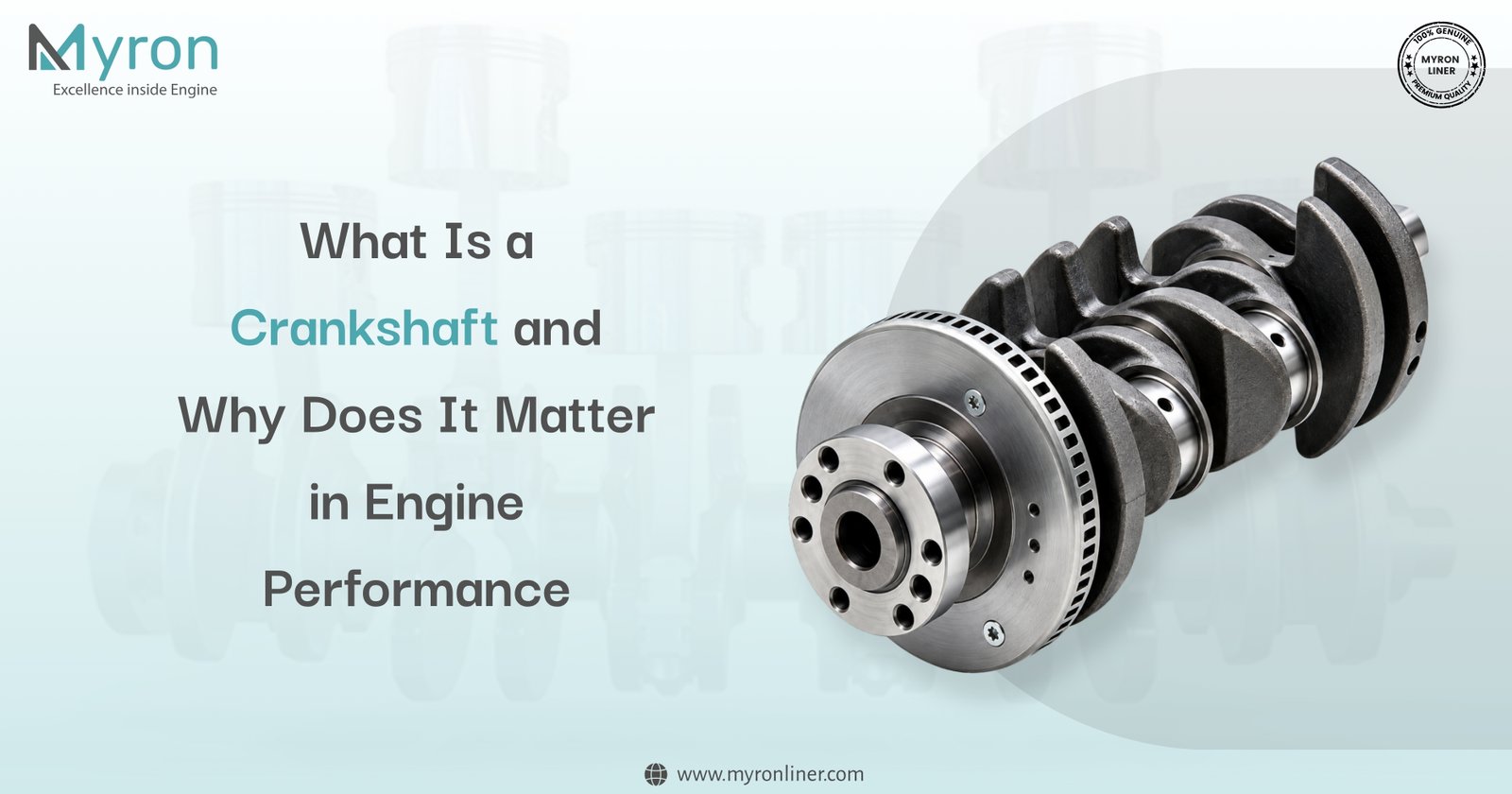
What Is a Crankshaft and Why Does It Matter in Engine Performance
The Crankshaft is often described as the heartbeat of an engine, and for good reason. Without it, your engine cannot convert the linear motion of pistons into the rotational motion that ultimately powers your vehicle. Whether you're a mechanic, engine builder, or someone interested in engine components, understanding the Crankshaft is key to grasping how internal combustion engines function effectively and efficiently.
A crankshaft is a mechanical part that converts between reciprocating motion and rotational motion. Typically connected to a piston via a connecting rod, crankshafts are a core component of internal combustion engines.
But that's just the beginning. In this blog, we'll explore in depth what a crankshaft is, its role in engine performance, the different types of crankshafts, their materials, and manufacturing processes, including the casting process and Crankshaft grinding, as well as how it fits within the broader engine block system. We'll also highlight the importance of counterweights, engine bearings, and the connecting rod, and conclude by featuring Myron Liners, a reliable name in aftermarket engine component manufacturing.
What Is a Crankshaft?
A crankshaft is a crucial rotating shaft in an internal combustion engine that converts the up-and-down motion (reciprocating motion) of the pistons into circular (rotational) motion. This rotation is what turns your car's wheels, drives accessories like the alternator, and powers your vehicle.
It sits within the engine block, housed by engine bearings, and connects to each piston via a connecting rod. The Crankshaft must withstand immense pressure, friction, and heat while maintaining perfect balance and smooth operation.
Crankshaft Function: The Power Converter
The core function of the Crankshaft is to transfer the pistons' motion into rotational energy. As the air-fuel mixture in the combustion chamber ignites, it pushes the piston down. This force is transferred through the connecting rod to the Crankshaft, causing it to rotate. This rotation powers the transmission, which, in turn, powers the wheels.
Crankshafts also help to:
- Maintain engine timing
- Drive ancillary engine components (via belts or gears)
- Regulate combustion force distribution
Its design is critical in ensuring smooth engine operation and contributes heavily to engine performance.
Key Engine Components Attached to Crankshafts
The Crankshaft interacts directly with other essential engine components, including:
- Connecting Rods: These link the piston to the Crankshaft, allowing movement transfer.
- Engine Bearings: These support the Crankshaft within the engine block, enabling smooth rotation and reducing wear.
- Counterweights: Integrated to offset the mass of the rotating assembly and balance the engine.
- Flywheel: Attached to the crankshaft end, it helps regulate power delivery and maintain momentum.
Read More: Types and Functions of Engine Bearings: Everything You Should Know
Types of Crankshafts
There are several types of crankshaft designs, each suited to different engine configurations and applications. The two most common types in internal combustion engines are:
1. Flat-Plane Crankshaft
Typically found in high-performance and racing engines, flat-plane crankshafts are lighter and rev faster. However, they create more vibrations and require sophisticated balancing.
2. Cross-Plane Crankshaft
Used in most V8 engines, cross-plane crankshafts offer smoother operation due to better balance, but are heavier and limit RPM capabilities.
Other less common crankshaft types include:
- Split-pin crankshafts for V-type engines with uneven firing orders
- Single-piece crankshafts are used in small engines
- Built-up crankshafts, often found in two-stroke or industrial engines
3. Forged Crankshaft vs. Cast Crankshaft
Material and manufacturing methods greatly affect crankshaft durability, strength, and cost. Two popular types include:
Forged Crankshaft
A forged crankshaft is made by hammering steel into shape under high pressure. This process aligns the grain structure of the metal, making it incredibly strong and durable. It's ideal for high-performance, heavy-duty, and aftermarket applications where longevity and resilience are critical.
Advantages:
- Higher tensile strength
- Better fatigue resistance
- Longer lifespan
Cast Crankshaft
A cast crankshaft is created by pouring molten metal into a mold (casting process). It's more affordable and easier to produce, but less intense than forged types. These are suitable for standard engines with moderate power demands.
Advantages:
- Cost-effective
- Quicker manufacturing
- Adequate for low-to-mid-range applications
The Importance of Counterweights in Crankshafts
Every Crankshaft includes counterweights, which are crucial for engine balance. These weighted sections reduce the vibration caused by the rotating crank throws and piston movement. Balanced crankshafts mean less stress on the engine bearings, reduced wear, and improved engine performance.
Unbalanced crankshafts can cause:
- Premature engine wear
- Decreased fuel efficiency
- Increased noise and vibration
- Potential engine failure
This makes counterweights an essential aspect of crankshaft design.
Crankshaft Grinding: Restoring Performance
Over time, crankshafts can wear out due to continuous motion, high temperatures, and friction. Crankshaft grinding is a precision machining process that resurfaces crank journals and pins to restore smooth operation. It removes damage, corrects distortion, and helps extend the life of the engine crankshaft.
Signs you may need Crankshaft grinding:
- Knocking noise from the engine
- Low oil pressure
- Visible scoring or scratches on journals
- Out-of-round crankshaft surfaces
Crankshaft's Role in Overall Engine Performance
The Crankshaft doesn't operate alone—it plays a vital role in overall engine performance. A well-designed and properly balanced crankshaft can:
- Improve fuel efficiency
- Increase torque output
- Reduce mechanical stress on the engine block
- Enable higher RPM operation
In performance engines, the design, weight, and material of the Crankshaft can make a significant difference in power delivery and durability. That's why high-performance vehicles often use forged crankshafts rather than cast ones.
Why Crankshaft Quality Matters in Aftermarket Applications
When working with aftermarket engine components, the quality of the Crankshaft becomes even more crucial. Aftermarket builds often aim for improved power, custom setups, or restoration. This means you need components designed for resilience, precision, and compatibility.
Aftermarket crankshafts must:
- Match engine specifications exactly
- Be machined to high tolerances
- Offer heat-treated durability
- Accommodate modified pistons and connecting rods
So, whether you're rebuilding a diesel engine or tuning a high-performance petrol engine, don't compromise on crankshaft quality.
Why Myron Liners Is a Trusted Name in Engine Components
When it comes to high-quality engine components, Myron Liners stands out as a trusted manufacturer and supplier of aftermarket cylinder liners and other precision engine parts. While crankshafts play a central role in converting motion, various components, such as cylinder liners, contribute to ensuring durability, optimal combustion, and effective cooling.
Myron Liners specializes in:
- Precision-engineered cylinder liners
- Engine parts that meet global aftermarket standards
- High-performance solutions for diesel and petrol engines
With a focus on innovation, durability, and cost-effectiveness, Myron Liners helps ensure your engine runs smoother and lasts longer.
So, whether you're upgrading or rebuilding, trust Myron Liners for reliable, high-precision engine components.
Conclusion
To sum up, the Crankshaft is not just another rotating part—it's the mechanical heart that transforms power within an engine. From its interaction with the connecting rod, engine block, and engine bearings, to the balance provided by counterweights, every aspect of the Crankshaft impacts overall engine performance.
Understanding the types of crankshafts, whether forged crankshafts or cast, and knowing how processes like crankshaft grinding can restore functionality, helps both professionals and enthusiasts make more informed engine decisions.
For those in the aftermarket engine industry, investing in quality parts is crucial. And when it comes to engine parts like cylinder liners, Myron Liners delivers the excellence and reliability your engine deserves.
Reference:
Crankshaft by Wikipedia[1].
FAQ
1. What does the Crankshaft do?
The Crankshaft converts the up-and-down motion of the pistons into rotational motion that powers the vehicle.
2. What is the difference between a camshaft and a crankshaft?
The Crankshaft drives piston motion, while the camshaft controls valve timing for air and fuel flow.
3. How much does it cost to replace a crankshaft?
Crankshaft replacement can cost between ₹25,000 and ₹80,000 (or $300–$ 1,000), depending on the engine type and labor.
4. Why Crankshaft Damage?
Crankshaft damage often occurs due to oil starvation, poor lubrication, bearing wear, or engine overload.
5. Can a crankshaft be repaired?
Yes, a crankshaft can be repaired through grinding, welding, or machining, depending on the severity of the damage.
6. What are the signs of a bad crankshaft?
Common signs include engine knocking, low oil pressure, metal shavings in oil, and difficulty starting the engine.
7. What material is used to make a crankshaft?
Crankshafts are typically made from either forged steel or cast iron, depending on the specific strength and performance requirements.
Reference & Trademark Disclaimer
All manufacturer names, trademarks, logos, product names, part numbers, model numbers, descriptions, and other identifying references mentioned in this article are used for identification, reference, and cross-reference purposes only.
Such references do not imply any affiliation, association, authorization, sponsorship, approval, or endorsement by the respective manufacturers or trademark owners. All trademarks, brand names, product names, part numbers, and related intellectual property remain the property of their respective owners.
MYRON LINER LLP is an independent manufacturer and supplier of engine components. The use of any third-party name or reference is solely intended to help readers identify the applicable engine, component, or application.