Complete Guide to Engine Radiators: Types, Functions & Importance
Engines are the heart of every vehicle, but just like the human body, they need a proper cooling system to function efficiently. One of the most vital components in this cooling system is the engine radiator. Without it, engines would overheat quickly, leading to severe damage and costly repairs. Whether you're an auto enthusiast, a driver focused on vehicle maintenance, or someone curious about how cars work, understanding radiators is essential.
This complete guide will walk you through what an engine radiator is, its key functions, the different radiator types, and why it plays such an essential role in keeping vehicles running smoothly.
Engines generate intense heat during operation, and without proper cooling systems, they would fail quickly. The engine radiator - as explained in automotive references like Wikipedia's article on engine cooling radiators - acts as a heat exchanger that regulates this temperature and prevents damage.
What Is an Engine Radiator?
An engine radiator is a crucial part of the cooling system in internal combustion engines. Its primary role is to regulate the engine's temperature by dissipating excess heat. When fuel burns inside the cylinders, it produces tremendous energy, but only a portion of this energy powers the vehicle. The rest converts into heat, which, if left unmanaged, could damage engine components.
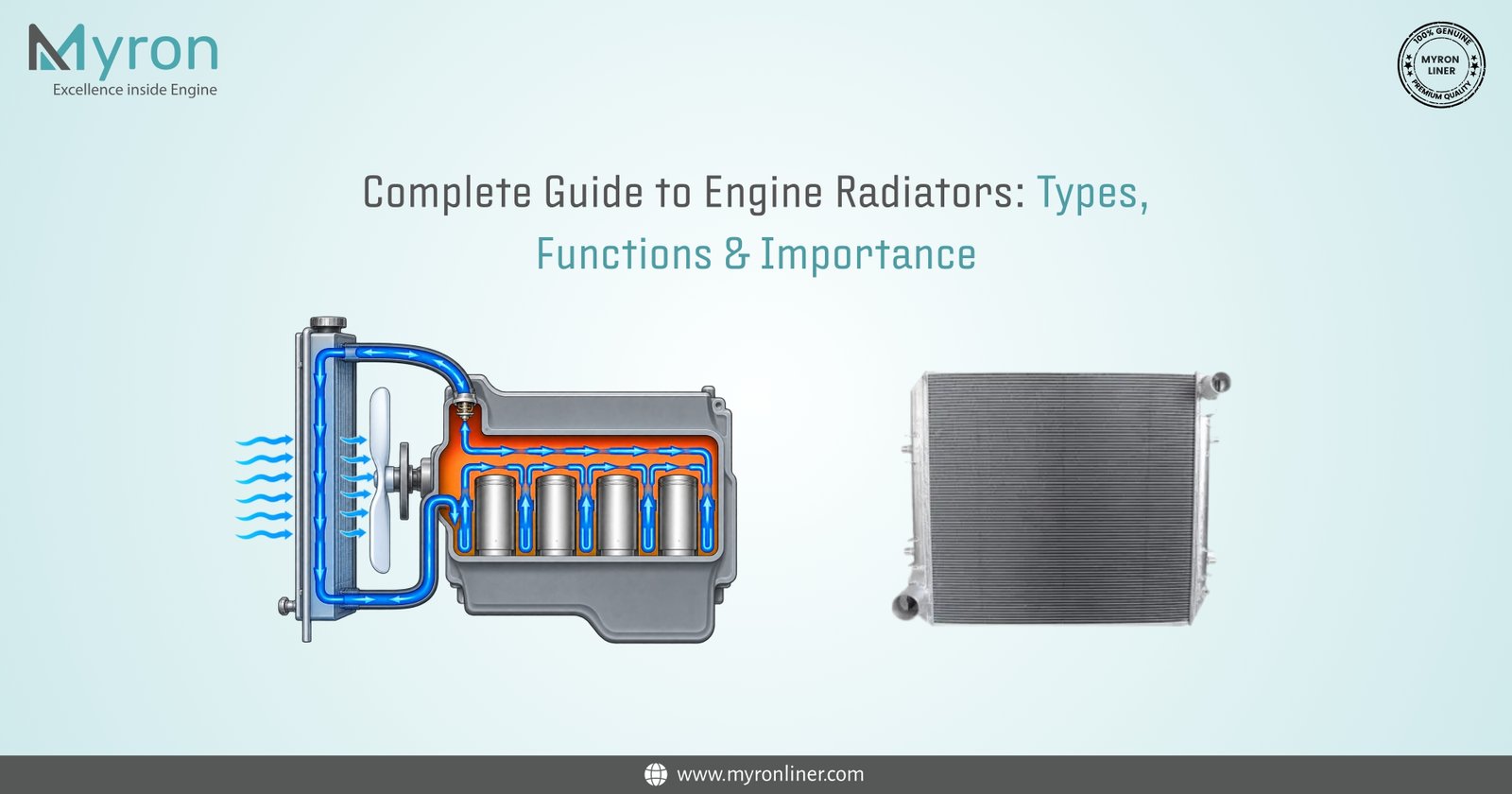
The radiator works as a heat exchanger. It receives hot coolant from the engine, transfers the heat to the outside air, and sends the cooled liquid back into the engine. This continuous cycle ensures that the engine maintains an optimal temperature for performance, efficiency, and longevity.
Why Is the Engine Radiator Important?
The importance of radiators extends beyond just cooling. Here are some critical reasons why every vehicle depends on its radiator:
- Prevents Overheating: Engines generate extreme heat during operation. A radiator dissipates this heat, keeping the engine within a safe range.
- Protects Engine Components: Excessive heat can warp cylinder heads, damage pistons, and affect the cylinder liner, leading to performance issues.
- Supports Vehicle Maintenance: Regular radiator checks are a core part of vehicle maintenance, helping avoid costly breakdowns.
- Improves Fuel Efficiency: Engines operating at the correct temperature burn fuel more efficiently.
- Extends Engine Life: Controlled heat levels reduce wear and tear, giving the engine a longer service life.
How Does an Engine Radiator Work?
The radiator's operation is simple yet highly effective. Here's a step-by-step look at the process:
1. Coolant Circulation: A liquid coolant flows through the engine, absorbing heat from combustion.
2. Transfer to Radiator: The hot coolant travels through hoses to the radiator.
Heat Dissipation: As coolant passes through thin metal fins and tubes inside the radiator, air (often aided by a cooling fan) removes the heat.
4. Return Flow: The cooled liquid is pumped back into the engine, and the cycle repeats.
This continuous loop ensures the engine never overheats, even during long drives or in hot weather.
As highlighted by Wikipedia's explanation, the working principle of radiators is pretty straightforward but critical—coolant carries heat away from the engine block and cylinder liners, then passes through the radiator's core, where it is cooled by airflow before being recirculated.
Types of Engine Radiators
There are several radiator types, each designed for specific vehicles and performance needs. Let's explore the most common ones:
1. Downflow Radiator
In a downflow radiator, the coolant flows vertically from the top tank to the bottom. This design is traditional and often found in older vehicles or trucks. While they provide good cooling capacity, they are less space-efficient compared to newer models.
2. Crossflow Radiator
Crossflow radiators allow coolant to flow horizontally from one side to the other. They are widely used in modern vehicles because of their efficient cooling design and compact fit under the hood.
3. Single-Pass Radiator
In a single-pass system, the coolant passes through the radiator core once before returning to the engine. This type is more straightforward and often sufficient for standard passenger cars.
4. Double-Pass Radiator
Here, coolant travels through the radiator twice before returning to the engine, providing better heat dissipation. This design is popular in performance and heavy-duty applications where extra cooling is required.
5. Triple-Pass Radiator
As the name suggests, the coolant flows three times through the radiator. This is the most efficient among radiator types, ideal for racing cars or high-performance engines that generate excessive heat.
6. Aluminum Radiator
Aluminum radiators are lightweight, strong, and provide excellent heat dissipation. They are often preferred in modern vehicles for better efficiency and durability.
7. Copper-Brass Radiator
Traditional in design, copper-brass radiators are known for superior heat conductivity. However, they are heavier and less common in newer vehicles, being more prominent in heavy-duty or industrial applications.
Common Issues with Engine Radiators
Like all engine parts, radiators can develop problems over time. Some of the most common issues include:
- Leaks: Small cracks or worn hoses can lead to coolant leakage, reducing cooling efficiency.
- Clogging: Dirt, rust, or mineral deposits can block the radiator tubes, restricting coolant flow.
- Corrosion: Metal components may corrode due to prolonged exposure to moisture and chemicals.
- Faulty Radiator Cap: A weak or damaged cap can cause pressure imbalances, leading to overheating.
- Cooling Fan Failure: If the fan doesn't work correctly, the radiator can't cool the coolant effectively.
Regular inspections as part of vehicle maintenance can help detect and fix these issues early.
Best Practices for Radiator Maintenance
To keep your engine radiator performing at its best, here are some essential maintenance tips:
- Check Coolant Levels: Ensure the coolant is always at the recommended level.
- Flush the Radiator: Perform periodic radiator flushes to remove dirt, rust, and contaminants.
- Inspect for Leaks: Regularly check hoses, clamps, and the radiator body for leaks.
- Monitor Temperature Gauge: If the gauge shows overheating, stop the vehicle and check the radiator.
- Replace Old Coolant: Over time, coolant loses effectiveness. Follow the manufacturer's guidelines for replacement intervals.
Proactive radiator care not only prevents breakdowns but also ensures long-term engine health.
The Role of Radiators in Modern Vehicles
In modern vehicles, radiators are more advanced and efficient than ever. With lightweight materials, compact designs, and integration with advanced cooling technologies, they provide reliable temperature control even under demanding conditions. For drivers, this means better fuel economy, consistent performance, and reduced risk of engine damage.
Moreover, as vehicle maintenance practices evolve, radiators remain a top priority. They directly influence engine efficiency, making them an indispensable component of every car, truck, or heavy machine.
Conclusion
The engine radiator is far more than just a cooling device—it's the guardian of engine health. Efficiently dissipating heat ensures safe operating temperatures, protects engine components, improves performance, and extends the lifespan of vehicles. Understanding the different radiator types and following proper maintenance practices is vital for every driver and technician.
And while radiators safeguard engine cooling, other engine parts like the cylinder liner play equally essential roles in durability and performance.
About Myron Liners
At Myron Liners, we specialize in manufacturing and supplying high-quality cylinder liners for the aftermarket engine parts industry. With precision engineering and a commitment to reliability, our products are trusted for long-lasting performance across various applications. If you're looking for durable and efficient cylinder liner solutions, visit us at https://www.myronliner.com/.
Reference:
Radiator (engine cooling) by Wikipedia[1].
FAQ
What do engine radiators do?
Engine radiators cool the engine by transferring heat from the coolant to the air, preventing overheating.
What are the three types of radiators?
The main radiator types are downflow, crossflow, and aluminum radiators.
What are the two functions of a radiator?
Radiators regulate engine temperature and protect engine components from heat damage.
How much does an engine radiator cost?
An engine radiator typically costs between $150–$600, depending on type and vehicle model.
How often should you replace an engine radiator?
Most radiators last 8–10 years, but replacement depends on leaks, corrosion, or poor cooling performance.
What maintenance does a car radiator need?
Regular coolant checks, radiator flushes, and leak inspections keep your engine radiator working efficiently.
Reference & Trademark Disclaimer
All manufacturer names, trademarks, logos, product names, part numbers, model numbers, descriptions, and other identifying references mentioned in this article are used for identification, reference, and cross-reference purposes only.
Such references do not imply any affiliation, association, authorization, sponsorship, approval, or endorsement by the respective manufacturers or trademark owners. All trademarks, brand names, product names, part numbers, and related intellectual property remain the property of their respective owners.
MYRON LINER LLP is an independent manufacturer and supplier of engine components. The use of any third-party name or reference is solely intended to help readers identify the applicable engine, component, or application.