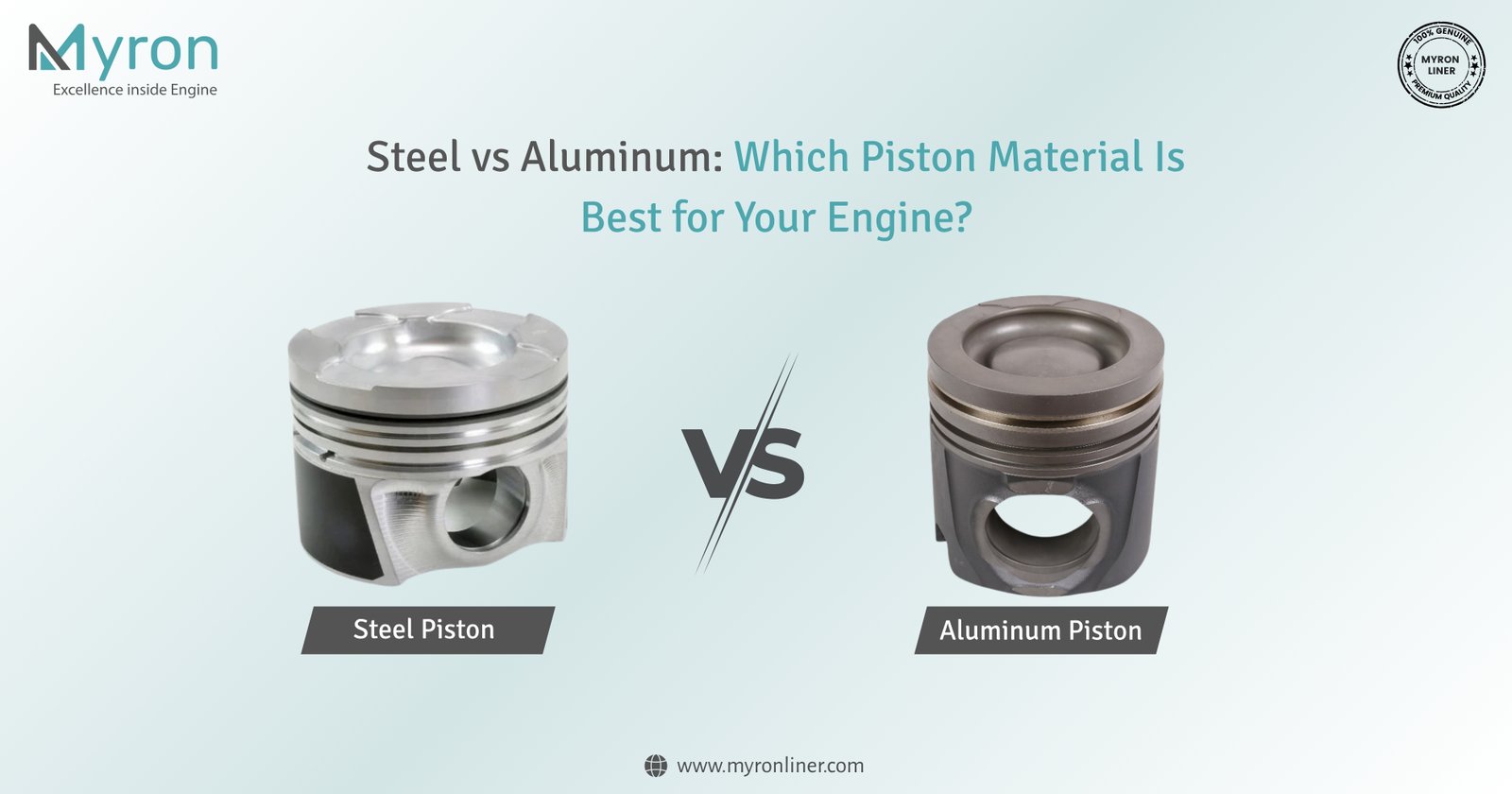
Steel vs Aluminum: Which Piston Material Is Best for Your Engine?
When it comes to engine performance, few components are as crucial as the piston. As one of the core engine components, the piston plays a central role in converting fuel combustion into mechanical motion. But not all pistons are created equal - especially when it comes to the piston material. Two of the most common choices are steel and aluminum, each offering a unique set of advantages and trade-offs.
Whether you're a performance tuner, a mechanic, or simply someone interested in engine internals, understanding the differences in steel vs aluminum pistons can help you make informed decisions - especially in the aftermarket engine parts sector. In this blog, we’ll dive deep into both materials, explore their strengths and weaknesses, and help you decide which one is the best fit for your engine needs.
What Is a Piston?
A piston is a critical engine component that moves up and down inside the engine’s cylinder. It plays a key role in transforming the pressure generated by the combustion of fuel into mechanical motion. Pistons are typically connected to the crankshaft via connecting rods and are subject to extreme heat and pressure.
A piston transfers the force generated by expanding combustion gases to the crankshaft through the connecting rod. This makes the choice of piston material - such as steel or aluminum - vital for optimal engine performance and durability.
Understanding Piston Material and Its Role in Engine Performance
The piston material directly influences the engine's strength, efficiency, weight, thermal performance, and overall lifespan. Pistons must withstand extreme temperatures, high pressures, and continuous mechanical stress. Therefore, choosing the right material is critical for achieving the desired performance—whether for daily driving, racing, or heavy-duty machinery.
The two leading materials used in aftermarket piston manufacturing are:
- Aluminum Alloys
- Steel Alloys
Aluminum Pistons: Lightweight Performance for Faster Response
Advantages of Aluminum Pistons
1. Lightweight Nature
Aluminum pistons are significantly lighter than steel counterparts. This results in lower reciprocating mass, which helps improve engine response and allows the engine to rev faster. This is especially beneficial in high-RPM engines like those found in motorcycles, performance cars, and racing applications.
2. Excellent Heat Dissipation
Aluminum has superior thermal conductivity, allowing pistons to dissipate heat more quickly. Aluminum's high thermal conductivity helps transfer heat away from the piston crown. However, detonation and pre-ignition depend on several factors, including combustion conditions, fuel quality, engine tuning and cooling.
3. Lower Inertia = Higher RPM
Because of their low weight, aluminum pistons enable engines to reach higher revolutions per minute without placing excessive strain on the crankshaft or connecting rods.
4. Widespread Availability
Aluminum pistons are widely available in the aftermarket engine parts industry and are often more affordable than steel options.
Disadvantages of Aluminum Pistons
1. Lower Strength at High Temperatures
While aluminum dissipates heat well, it loses strength at high temperatures. In extremely demanding applications like turbocharged diesel engines or prolonged heavy-duty usage, aluminum pistons can suffer from deformation or even cracking.
2. Higher Wear Rate
Due to its softer nature, aluminum can wear out faster, especially under high load or improper lubrication conditions.
3. Thermal Expansion
Aluminum pistons expand more than steel when heated, which means they require wider piston-to-cylinder clearances. This can lead to piston slap during cold starts.
Steel Pistons: Strength and Durability for Heavy-Duty Power
Advantages of Steel Pistons
1. Superior Strength
Steel is nearly twice as strong as aluminum. This makes steel pistons ideal for high-stress environments such as commercial diesel engines, turbocharged setups, and high-compression builds.
2. High Thermal Resistance
Steel pistons maintain their strength even at elevated temperatures. This makes them better suited for engines that operate under intense heat and pressure for extended periods.
3. Reduced Oil Consumption
Because steel expands less than aluminum when heated, piston-to-wall clearances can be tighter. This improves sealing and reduces oil consumption—a significant benefit in industrial and performance applications.
4. Increased Lifespan
Steel pistons can offer a longer service life in high-load applications because of their strength and fatigue resistance. Actual durability depends on the piston design, operating conditions and maintenance.
Disadvantages of Steel Pistons
1. Heavier Weight
Steel's higher density can increase piston mass and reciprocating inertia, potentially affecting engine responsiveness. However, optimized steel piston designs can reduce this weight difference. This may not be ideal for engines designed for quick acceleration or high RPM.
2. Slower Heat Dissipation
Steel does not conduct heat as efficiently as aluminum, meaning it retains more heat. Without adequate cooling systems, this could raise piston temperatures and potentially affect performance.
3. Higher Cost
Steel pistons are generally more expensive and less commonly available in consumer-level aftermarket applications.
Read More: High-Performance Alloys for Aftermarket Pistons: A Complete Guide
Which Piston Material Should You Choose?
The choice between steel vs aluminum pistons comes down to how the engine is used:
- Choose Aluminum Pistons If:
You need lightweight, quick-revving engines for racing, street performance, or motorcycles where rapid throttle response is essential.
- Choose Steel Pistons If:
Your application involves high loads, high boost pressure, or extreme operating conditions - like turbocharged diesel engines, heavy-duty trucks, or endurance motorsports.
In many performance builds, especially in the aftermarket engine parts world, the right piston material is selected after careful consideration of factors like compression ratio, combustion temperature, desired RPM range, and engine type.
Importance of Matching Pistons with Cylinder Liners
Regardless of whether you choose steel or aluminum pistons, pairing them with high-quality cylinder liners is crucial. Liners help create the necessary sealing surface for pistons and rings, facilitate heat dissipation, and protect the engine block from wear. Improper liner and piston matching can lead to reduced compression, oil blow-by, and premature engine wear.
Final Thoughts: Choose Based on Your Engine’s Needs
The steel vs aluminum debate isn’t about which material is universally better - it’s about suitability for your specific engine type and application. For high-RPM, short-burst performance, aluminum may serve you best. For long-duration, high-load performance, steel may be the more reliable choice.
In either case, quality manufacturing, proper installation, and compatible engine components will ensure long-term success.
Need Reliable Engine Parts? Choose Myron Liners
When it comes to reliable engine components, Myron Liner LLP manufactures and supplies cylinder liners, cylinder sleeves and other engine components for automotive and industrial applications.
Explore our product range to find engine components suited to your requirements.
Visit: https://www.myronliner.com/
Reference:
Piston by Wikipedia[1].
FAQ
Are aluminum pistons better than steel?
Aluminum pistons are better for lightweight, high-RPM engines due to their fast heat dissipation and lower mass. But steel pistons offer more strength and durability under heavy loads.
Which material is best for pistons?
The best material depends on the engine used. Aluminum is ideal for speed and performance; steel is best for strength and heavy-duty applications.
What are the advantages of steel pistons?
Steel pistons are stronger, more heat-resistant, have less thermal expansion, and last longer in high-load or turbocharged engines.
Do steel pistons reduce engine efficiency?
Steel pistons are heavier, which can slightly reduce engine responsiveness, but they improve efficiency in high-pressure engines by offering better sealing and durability.
Can I replace aluminum pistons with steel in the same engine?
Not directly. Switching to steel pistons often requires changes to the crankshaft, connecting rods, and cooling system to handle the added weight and different expansion rates.
Reference & Trademark Disclaimer
All manufacturer names, trademarks, logos, product names, part numbers, model numbers, descriptions, and other identifying references mentioned in this article are used for identification, reference, and cross-reference purposes only.
Such references do not imply any affiliation, association, authorization, sponsorship, approval, or endorsement by the respective manufacturers or trademark owners. All trademarks, brand names, product names, part numbers, and related intellectual property remain the property of their respective owners.
MYRON LINER LLP is an independent manufacturer and supplier of engine components. The use of any third-party name or reference is solely intended to help readers identify the applicable engine, component, or application.