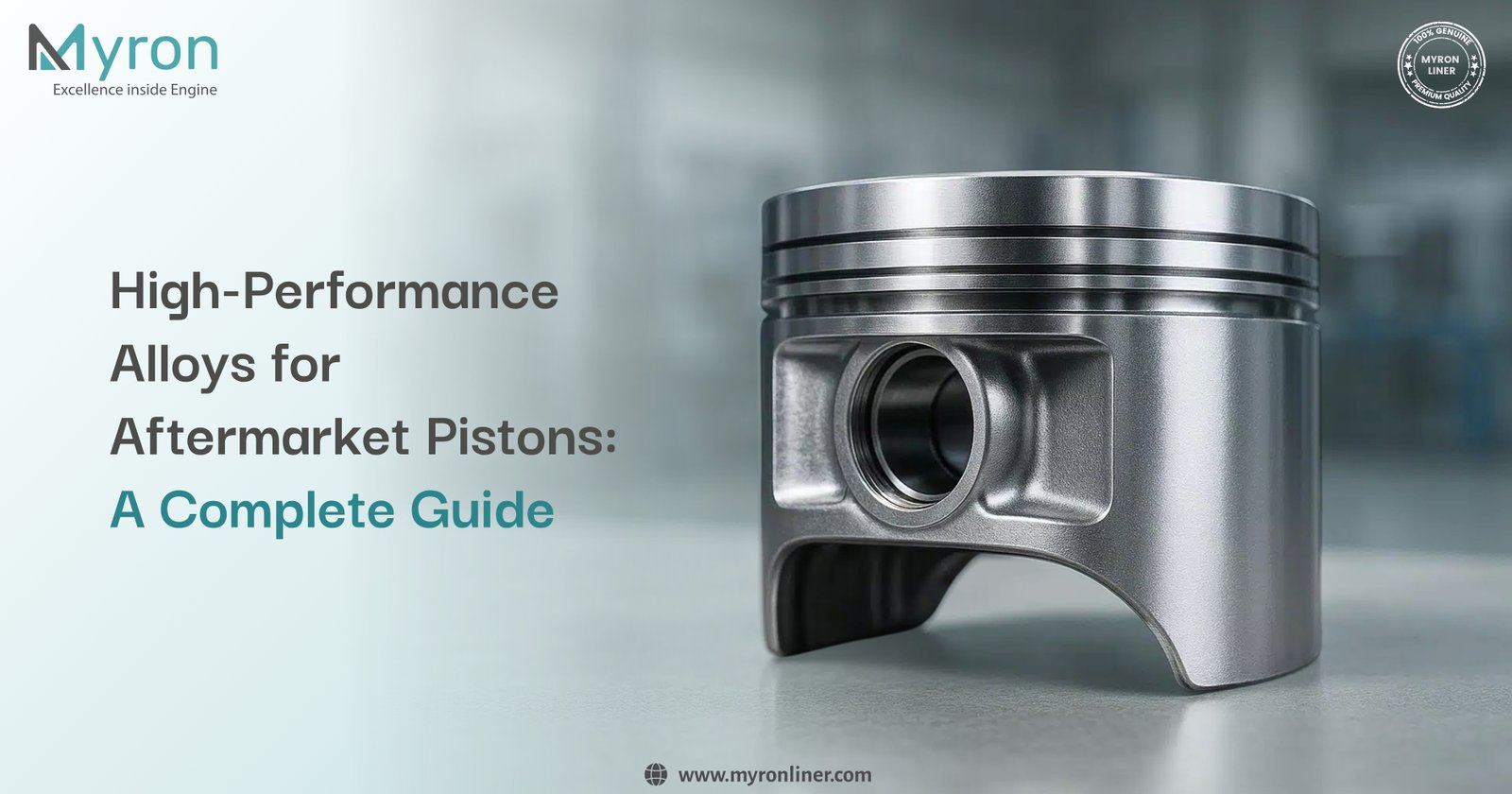
High-Performance Alloys for Aftermarket Pistons: A Complete Guide
When it comes to aftermarket engine performance, piston material is an important factor affecting strength, thermal behavior, durability, and piston-to-cylinder clearance. Unlike standard cast pistons found in everyday vehicles, high-performance aftermarket pistons utilize advanced alloys specifically engineered to withstand extreme conditions while delivering superior power and reliability.
The material used for piston manufacturing directly impacts thermal management, structural integrity, and overall engine longevity. Understanding these materials isn't just technical knowledge - it's the foundation for building engines that perform consistently under demanding conditions.
Understanding High-Performance Piston Materials
High-performance piston alloys represent a significant evolution from basic aluminum castings. These specialized materials incorporate precise combinations of elements designed to optimize strength, heat resistance, and thermal expansion characteristics.
Forged aluminum alloys dominate the aftermarket piston landscape, with two primary compositions leading the field: 4032 and 2618 aluminum alloys. Each offers distinct advantages depending on your specific application requirements.
The manufacturing process itself plays a crucial role in material performance. Forged pistons undergo compression under tremendous pressure (approximately 2000 tons), creating a uniform grain structure that significantly enhances strength and durability compared to cast alternatives56.
The Science Behind 4032 Aluminum Alloy
4032 aluminum alloy contains approximately 12-13% silicon content, making it a high-silicon, low-expansion material. This composition provides several key advantages for street and moderate performance applications.
The elevated silicon content reduces the coefficient of thermal expansion, allowing for tighter piston-to-bore clearances. This translates to quieter operation, especially during cold starts, and improved sealing characteristics.
Exploring 2618 Aluminum Alloy Advantages
2618 aluminum alloy represents the opposite approach, featuring minimal silicon content (less than 0.3%) while incorporating copper and nickel for enhanced strength properties.
This low-silicon composition creates a more malleable material that can withstand extreme cylinder pressures and detonation events that would crack other alloys. The trade-off is higher thermal expansion, requiring increased piston-to-wall clearances.
Key Characteristics of 2618:
- Superior ductility under extreme loads
- Excellent high-temperature strength retention
- Higher expansion rate requiring careful clearance management
- Resistance to shock loading from detonation
2618 alloy was originally developed by Rolls-Royce for the Merlin aircraft engine, demonstrating its capability in demanding applications. Today, it's the preferred choice for high-boost, nitrous, and extreme racing applications where ultimate strength takes priority over noise considerations.
The material's ability to flex before fracturing provides crucial insurance against catastrophic failure in high-stress environments, though it requires more frequent servicing due to its softer nature.
Hypereutectic Aluminum: The Budget Performance Option
Hypereutectic aluminum alloys contain silicon levels exceeding the eutectic point of 12%, typically ranging from 16-19% silicon content. These materials offer a cost-effective entry point into performance piston technology.
The high silicon content provides exceptional wear resistance and lower thermal expansion than conventional aluminum. This allows for tighter tolerances and reduced piston noise, making hypereutectic pistons popular for mild performance builds.
However, the increased silicon content also makes the material more brittle, particularly under high RPM or forced induction conditions. While suitable for naturally aspirated engines with moderate modifications, hypereutectic pistons lack the durability for extreme applications.
Applications for hypereutectic alloys include:
- Street performance builds with mild modifications
- Budget-conscious projects requiring improved durability over stock
- Applications prioritizing quiet operation and longevity.
Advanced Manufacturing: Forged vs. Billet Construction
The manufacturing process significantly impacts piston material properties and performance characteristics. Understanding these differences helps you select the optimal construction method for your application.
Forged Piston Advantages
Forged pistons begin as aluminum billets heated and pressed into shape under extreme pressure. This process creates a directionally aligned grain structure that provides superior strength and fatigue resistance.
The forging process also allows for complex internal geometries like oil cooling galleries and reinforcement ribs that would be impossible with casting. Most importantly, forged construction provides the foundation for using advanced alloys like 2618 and 4032.
Billet Piston Innovation
Billet pistons are machined entirely from solid aluminum slugs, offering complete design freedom without the constraints of forging dies. This manufacturing method provides several unique advantages:
- Complete customization of internal and external features
- Elimination of weak points through continuous grain structure
- Faster development times for specialty applications
- Superior surface finish on all machined surfaces
While billet construction requires more machining time, making it costlier per unit, it offers unmatched flexibility for custom applications. The strength difference between properly made billet and forged pistons is minimal for most applications.
Cutting-Edge Materials: Metal Matrix Composites
Metal Matrix Composites (MMCs) represent the pinnacle of piston material technology, combining aluminum matrices with ceramic reinforcement particles.
MMC pistons typically incorporate silicon carbide particles within the aluminum structure, providing remarkable improvements in key properties:
- 40% higher specific stiffness than conventional alloys
- 25% lower thermal expansion coefficient
- Superior fatigue resistance at elevated temperatures
- Excellent wear resistance properties
The Gordon Murray T.50 supercar utilizes MMC pistons in its 12,100 RPM V12 engine, demonstrating the technology's capability in extreme applications. The composite construction enables the engine to achieve its remarkable power density while maintaining reliability.
However, MMC manufacturing requires specialized processes and significantly higher costs, limiting application to ultra-high-performance builds where conventional alloys reach their limits.
Thermal Barrier Coatings: Enhancing Performance Further
Modern aftermarket pistons often incorporate thermal barrier coatings (TBCs) to enhance performance and durability. These ceramic coatings provide crucial advantages in high-performance applications.
Read More: What Are Aftermarket Engine Parts? A Simple Guide for Beginners
Types of Piston Coatings
Thermal barrier crown coatings applied to piston tops reflect combustion heat into the chamber, increasing exhaust gas temperatures and improving thermal efficiency. Common materials include:
- Yttria-Stabilized Zirconia (YSZ) - The industry standard
- Zirconium dioxide (ZrO2) - Enhanced thermal properties
- Ceramic polymer composites - Advanced thermal management
Dry-film skirt coatings reduce friction and wear between the piston and cylinder wall, providing better lubrication and reduced parasitic losses.
Performance Benefits
TBC applications deliver measurable improvements:
- Reduced heat transfer to cooling system by up to 30%
- Improved fuel efficiency through better thermal management
- Enhanced durability under extreme temperature conditions
- Reduced emissions through optimized combustion temperatures
The coatings also enable operation with reduced cooling requirements, allowing for more aggressive engine tuning while maintaining component integrity.
Quality Control and Manufacturing Standards
Aftermarket piston material quality varies significantly between manufacturers. Understanding quality indicators helps ensure you're getting components worthy of your investment.
Reputable manufacturers implement rigorous quality control processes including:
- Precise alloy composition verification using spectrometry
- Dimensional accuracy testing with coordinate measuring machines
- Surface finish analysis and hardness testing
- Fatigue testing under simulated operating conditions
Certification standards like ISO 9001:2015 indicate manufacturers maintain consistent quality management systems throughout production processes
Myron Liners: Your Trusted Partner for Aftermarket Engine Parts
When building high-performance engines with premium pistons, the supporting components must meet equally demanding standards. Myron Liner LLP stands as a leading manufacturer and supplier of precision-engineered cylinder liners and engine parts, serving the aftermarket industry with uncompromising quality.
With extensive expertise in aftermarket engine components, Myron Liner specializes in manufacturing centrifugal cylinder liners that provide the perfect foundation for high-performance piston applications. Their precision-engineered products ensure optimal sealing, durability, and thermal management—critical factors when maximizing the performance potential of advanced piston alloys.
Myron Liner's commitment to quality extends throughout their comprehensive range of engine parts, manufactured to exacting specifications that meet the demands of performance builds. Whether you're constructing a street performance engine with 4032 forged pistons or an extreme racing application utilizing 2618 alloy, Myron Liner provides the supporting components necessary for optimal performance and reliability.
For more information about Myron Liner's precision-engineered cylinder liners and complete range of aftermarket engine parts, visit www.myronliner.com to discover how their quality components can enhance your next performance build.
The selection of piston material represents one of the most critical decisions in aftermarket engine building. From proven 4032 aluminum for street performance to exotic MMC composites for ultimate applications, understanding these materials empowers you to make informed choices that align with your performance goals and budget requirements.
Combined with quality supporting components from trusted suppliers like Myron Liner, the right material used for piston construction forms the foundation for exceptional engine performance that delivers both power and reliability.
Reference:
Piston by Wikipedia[1].
FAQ
1. What pistons make the most power?
Forged pistons, especially those made from 2618 aluminum alloy, can handle high boost and extreme pressure, making them ideal for maximum power.
2. What is the best alloy for pistons?
For racing, 2618 aluminum alloy is best due to its strength, while 4032 aluminum alloy suits street engines for its durability and low expansion.
3. What are the strongest types of pistons?
Forged 2618 aluminum and steel pistons are the strongest, designed to withstand high stress, boost, and extreme engine conditions.
4. What is 2618 aluminum alloy?
2618 aluminum alloy is a high-strength, low-silicon alloy used in forged pistons for its durability, ductility, and resistance to detonation.
5. Why do forged pistons tick when cold?
Higher-expansion alloys (notably 2618) need extra clearance so they won’t seize when hot; that gap can sound like light rattle at startup.
6. Can coatings replace a stronger alloy?
No—coatings extend margin but cannot compensate for insufficient base strength. Start with the right alloy, then enhance.
7. How does piston material affect engine performance?
Weight, heat transfer, and strength all feed into power, knock control, and reliability. Better alloy = wider safe tuning window.
Reference & Trademark Disclaimer
All manufacturer names, trademarks, logos, product names, part numbers, model numbers, descriptions, and other identifying references mentioned in this article are used for identification, reference, and cross-reference purposes only.
Such references do not imply any affiliation, association, authorization, sponsorship, approval, or endorsement by the respective manufacturers or trademark owners. All trademarks, brand names, product names, part numbers, and related intellectual property remain the property of their respective owners.
MYRON LINER LLP is an independent manufacturer and supplier of engine components. The use of any third-party name or reference is solely intended to help readers identify the applicable engine, component, or application.