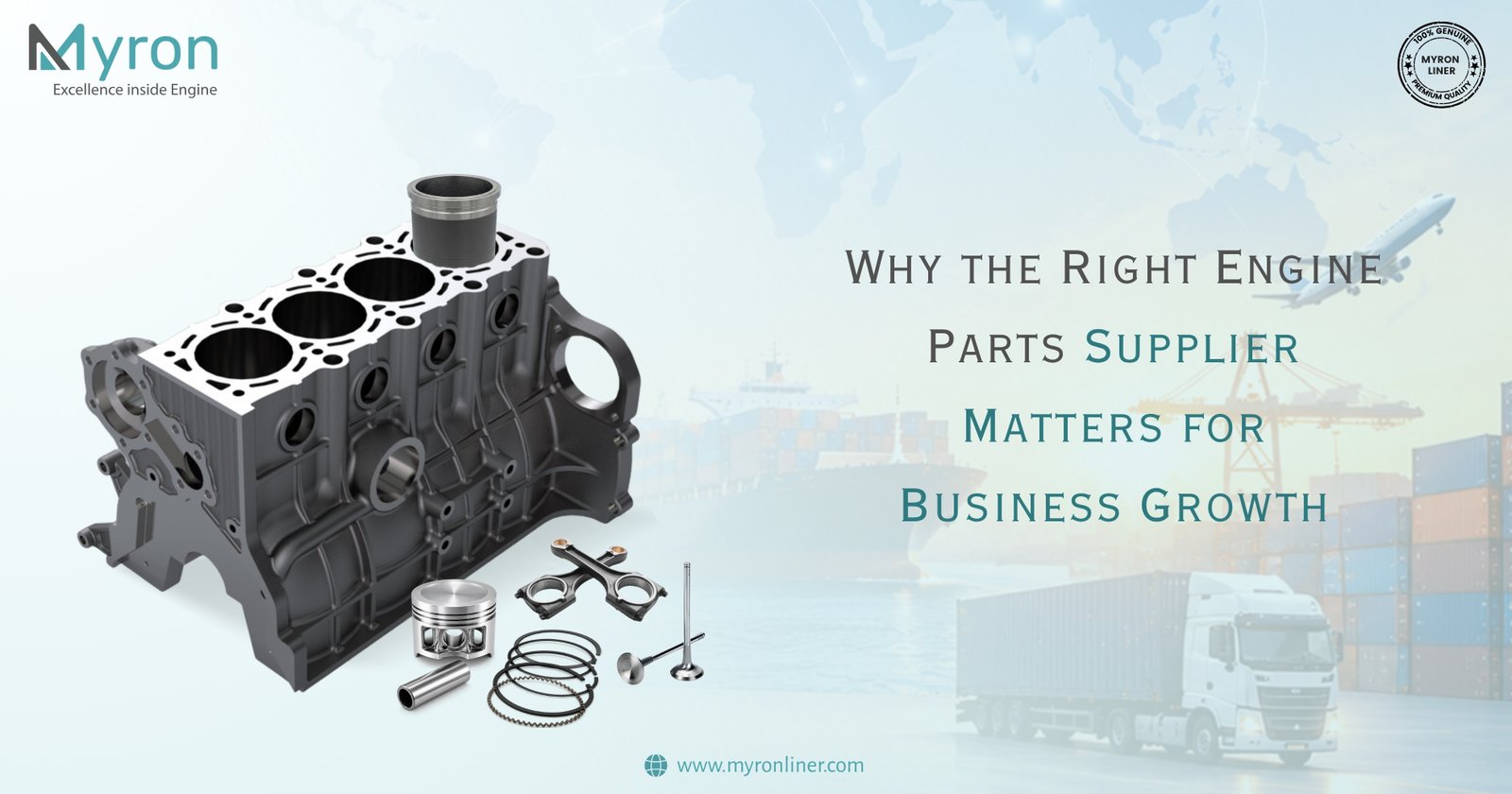
Why the Right Engine Parts Supplier Matters for Business Growth
Running a business in the automotive aftermarket is not just about selling parts. It is about building trust, delivering quality, and keeping customers happy. One of the most important factors that decides your success is choosing the right engine parts supplier.
A good supplier helps your business grow, while a poor one can hold it back. In this blog, let's understand why the right supplier matters, what to look for, and how it directly supports your business growth.
The Role of Engine Parts in Business Success
Every engine has many parts. These include pistons, valves, cylinder liners, and bearings. All these parts work together to keep the engine running smoothly.
In the aftermarket industry, customers depend on your company for replacement engine parts. They do not rely on parts from the original manufacturer (OEM). That means the parts you sell or use must perform just as well or even better than the originals.
If the quality is poor or the part doesn't fit properly, customers lose trust. But when your parts perform well, customers come back again and again — and that's how your business grows.
Why the Right Supplier Makes All the Difference
Choosing the right engine parts supplier is about more than just price. It's about reliability, consistency, and support. Let's look at how a good supplier helps your business in different ways.
1. Consistent Quality Builds Reputation
The most important thing your customers expect from you is quality. If your supplier provides top-quality engine components that perform well and last long, your customers will notice.
Consistent quality reduces complaints, product returns, and repair failures. Over time, this builds a strong reputation for your business — and reputation drives growth.
2. Timely Delivery Keeps Your Business Moving
Even with excellent products, delivery delays can cause serious problems. Customers expect quick service, and you can only provide that if your supplier delivers parts on time.
A good supplier with proper stock management and logistics helps you finish jobs faster. This leads to happier customers and better profits.
3. Competitive Pricing Improves Profit Margins
Price always matters, but cheap parts are not always good parts. The right supplier offers competitive prices without compromising on quality. This helps you maintain healthy profit margins while keeping your customers happy with fair rates.
Some suppliers offer bulk discounts or flexible order amounts. This is great for growing businesses that want to save money.
4. Technical Support Makes Work Easier
Not all customers or businesses have in-house engineers. That's why suppliers with technical knowledge are valuable partners.
If your engine parts supplier advises on materials, compatibility, or installation methods, it saves you time. This also helps you avoid expensive mistakes. Their expertise can make a big difference, especially when dealing with new or complex engine models.
Read more: How to Install Cylinder Liners in Engines: A Step-by-Step Guide
5. Reliable Suppliers Help You Scale
As your business grows, you'll need more stock, faster deliveries, and a wider product range. A supplier who can handle large orders and maintain the same quality ensures your business can scale smoothly.
This flexibility lets you serve more clients without worrying about supply chain problems.
How the Right Supplier Boosts Business Growth
Now, let's connect these points directly to business growth. When you have a trusted and capable supplier, you gain:
- Happy customers who trust your brand and recommend you to others.
- Reduced downtime because of fewer delays and quality issues.
- Lower operational costs due to fewer complaints and returns.
- More opportunities to expand your product line and enter new markets.
Each of these factors helps your business move forward. In short, your supplier's reliability becomes part of your success story.
What to Look for in a Good Engine Parts Supplier
When you search for the right supplier, consider these key factors:
1. Quality assurance – Ask about their testing process, materials used, and quality control methods.
Product range – Ensure they offer all major engine components you need, including liners, pistons, valves, and rings.
3. Experience – Long-term experience in the aftermarket industry shows reliability.
4. Timely delivery – Check their average delivery time and order tracking system.
5. Customer support – A responsive supplier helps you resolve issues quickly.
6. Pricing and flexibility – Look for transparent pricing, bulk discounts, and adjustable order sizes.
7. Innovation – Suppliers who regularly upgrade their products stay ahead of market trends.
When you find a supplier who meets all these points, you've found a partner who can truly support your business growth.
How Engine Parts Quality Impacts Performance
Let's take an example. Imagine you're rebuilding an engine and the cylinder liner is slightly off in measurement or surface finish. The result?
It may cause friction, overheating, or even total engine failure.
Now, picture getting the liner from a trusted supplier. It is made from high-quality materials, has a flawless finish, and is exact in its dimensions. The engine runs smoothly and lasts longer.
This simple difference determines whether your customer returns to you or looks elsewhere. That's the real impact of choosing the right supplier.
Building Long-Term Partnerships, Not Just Transactions
Successful businesses treat their suppliers as long-term partners, not one-time vendors.
When you build trust with your engine parts supplier, you gain many benefits. You get priority support, better pricing, and faster problem resolution. Sometimes, you can work together to develop new products.
A long-term relationship helps both sides grow together, leading to mutual success.
The Aftermarket Advantage
Since your business deals with aftermarket engine parts rather than OEM parts, the quality of your supplier is even more critical. OEM companies have their own fixed supply chains, but aftermarket businesses depend entirely on reliable suppliers.
A good engine parts supplier helps you offer durable and affordable options to customers who need replacements or upgrades. This flexibility gives you an edge in the market and opens the door for faster business growth.
Conclusion
In the aftermarket engine industry, your success depends heavily on the suppliers of your products. A good engine parts supplier ensures you get strong, dependable, high-quality engine parts. They deliver on time and at a fair price.
Good suppliers help you build a strong reputation, reduce risks, and achieve steady business growth. Remember, it's not just about buying parts — it's about creating a partnership that supports your success for years to come.
About Myron Liners
If you need a reliable partner for engine parts, think about Myron Liners. They are a top maker and supplier of cylinder liners for the aftermarket industry.
Myron Liners makes high-quality cylinder liners. They use strong materials and advanced machinery to ensure a perfect fit and long-lasting performance. Their team focuses on quality, consistency, and fast delivery - all key factors for growing your business.
Myron Liners offers both dry and wet liners. We have standard and custom sizes. You can count on us for the reliability and performance your customers want.
Visit https://www.myronliner.com/product to explore their full range of engine parts and see how they can help your business grow.
Reference:
Internal combustion engine by Wikipedia[1].
Cylinder (engine) by Wikipedia[2].
Piston by Wikipedia[3].
Valvetrain by Wikipedia[4].
Automotive aftermarket by Wikipedia[5].
FAQ
Q1: What is the difference between OEM and aftermarket engine parts?
The original manufacturer makes OEM parts. Aftermarket parts come from independent suppliers. They can be more affordable and flexible.
Q2: What to look for in an engine parts supplier?
Quality, on-time delivery, wide product range, technical support, fair pricing, and innovation.
Q3: How can I test supplier reliability?
Request samples, check certifications, place small pilot orders, and monitor performance.
Q4: What risks come with a poor supplier?
Defective parts, delivery delays, increased costs, and damaged customer trust.
Q5: How does a strong supplier help business growth?
Ensures quality, timely delivery, innovation, and cost savings — all boosting customer trust and revenue.
Reference & Trademark Disclaimer
All manufacturer names, trademarks, logos, product names, part numbers, model numbers, descriptions, and other identifying references mentioned in this article are used for identification, reference, and cross-reference purposes only.
Such references do not imply any affiliation, association, authorization, sponsorship, approval, or endorsement by the respective manufacturers or trademark owners. All trademarks, brand names, product names, part numbers, and related intellectual property remain the property of their respective owners.
MYRON LINER LLP is an independent manufacturer and supplier of engine components. The use of any third-party name or reference is solely intended to help readers identify the applicable engine, component, or application.