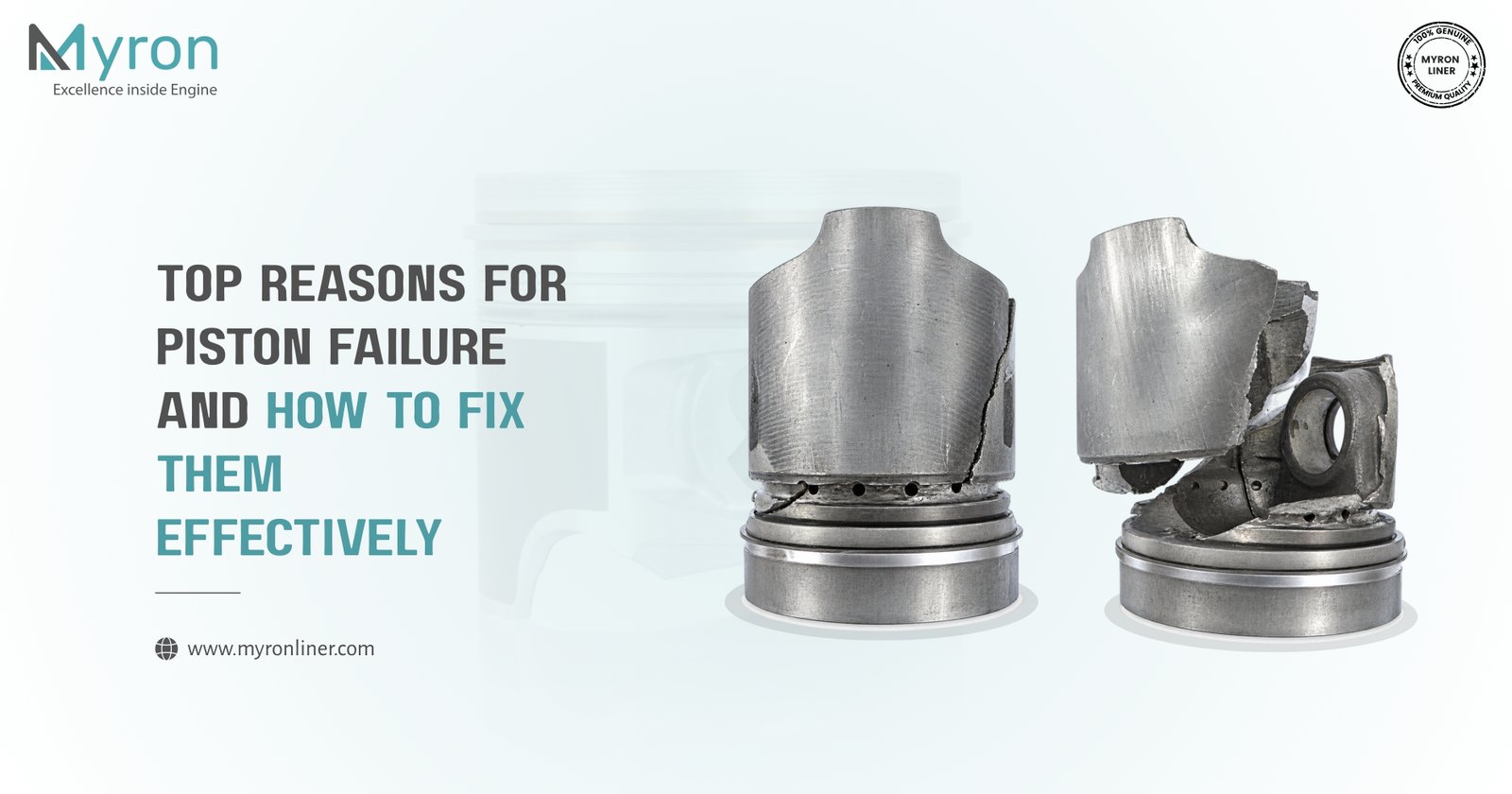
Top Reasons for Piston Failure and How to Fix Them Effectively
Pistons are at the heart of every internal combustion engine. As one of the most essential moving components, pistons help convert the energy generated by combustion into mechanical motion. However, despite their durability and design, pistons can and do fail—sometimes with serious consequences for your engine's performance.
Understanding why piston failure occurs, how to recognize it, and—more importantly—how to prevent or fix it, is crucial for any engine builder, mechanic, or business that relies on aftermarket engine parts.
In this blog, we'll explore the top reasons for piston failure, signs to look for, and practical solutions for restoring engine health. Whether you're managing fleet maintenance or building engines for resale, this guide will offer practical, actionable insights.
1. Poor Material Selection
One of the most overlooked reasons for piston failure is material selection. In the world of aftermarket engine parts, choosing the wrong material for the application can lead to severe damage.
Common Pitfall:
Using low-grade alloys or materials that aren't suited to the thermal and mechanical demands of specific engines often results in cracks, warping, or even piston seizure.
How to Fix:
- Use high-quality forged aluminum or steel alloys that offer better heat resistance and strength.
- Choose pistons from trusted manufacturers who focus on aftermarket engine parts specifically designed for durability and performance.
- Analyze your engine's performance requirements before selecting materials—especially for high-compression or turbocharged applications.
2. Overheating and Thermal Stress
High temperatures are a piston's worst enemy. Continuous exposure to extreme heat can cause pistons to expand excessively, distort, or melt. This not only affects the piston but also damages adjacent components like cylinder liners and rings, potentially leading to complete engine failure.
Causes:
- Poor cooling system performance
- Inadequate oil circulation
- Detonation or pre-ignition
Symptoms:
- Scuffed or seized pistons
- Cracking around the piston crown or skirt
- Burnt piston surfaces
Fix and Prevention:
- Regularly inspect and maintain cooling systems.
- Ensure proper oil grade and pressure are used for optimal lubrication and cooling.
- Adjust the ignition timing to prevent detonation.
- Regular maintenance is critical to keeping the engine temperature within safe limits.
3. Incorrect Combustion Timing (Detonation or Pre-Ignition)
Detonation (knock) and pre-ignition can destroy pistons in a matter of seconds. These conditions create extreme pressure spikes in the combustion chamber, often beyond what the piston was designed to handle.
Resulting Damage:
- Cracked ring lands
- Holes in the piston crown
- Deformed or melted pistons
How to Prevent:
- Use fuel with the correct octane rating.
- Tune the ignition system correctly for your engine build.
- Monitor air-fuel ratios using wideband O2 sensors.
- Maintain proper compression ratios and eliminate hot spots in the combustion chamber.
4. Poor Lubrication and Oil Contamination
Pistons require consistent lubrication to minimize friction, manage heat, and ensure smooth movement within the cylinder. Engine oil acts as a barrier between metal surfaces, preventing direct contact and reducing wear. When lubrication is compromised—either due to low oil levels, degraded oil quality, or contamination—the piston is left vulnerable to damage.
Causes of Lubrication Failure:
- Low oil levels
- Oil contamination with debris or coolant
- Faulty oil pumps or blocked passages
Indicators:
- Scuffed piston skirts
- Blue smoke from the exhaust (oil burn)
- Engine knocking sounds
Fix:
- Always use high-quality engine oil suited for your application.
- Stick to a strict regular maintenance schedule for oil changes.
- Replace oil filters on time.
- Flush the engine if contamination is suspected.
5. Improper Installation or Assembly Errors
Even the best piston will fail if not installed correctly. This is especially common in aftermarket builds, where custom fitting may be required. Improper clearances, incorrect ring orientation, or using mismatched components can quickly lead to premature piston failure—even during engine break-in.
A common issue is piston-to-wall clearance being too tight or too loose, which can cause seizure or excessive slap.
Common Mistakes:
- Incorrect ring gap settings
- The piston is not appropriately aligned with the connecting rod.
- Using incompatible parts (wrong size or compression height)
Damage Symptoms:
- Excessive wear on one side of the piston
- Broken rings or ring lands
- Uneven skirt damage
Solutions:
- Follow torque specs and assembly procedures exactly.
- Measure clearances using micrometers and bore gauges.
- Work with skilled technicians familiar with aftermarket engine parts and tolerances.
6. Contaminated Fuel or Air Intake
Engines rely on clean fuel and air to run smoothly. Contaminants such as dirt, water, or debris can cause abrasive wear and hot spots on the piston surface, eventually leading to scoring, pitting, or erosion. When fuel is contaminated, it may not burn efficiently, leaving carbon deposits on the piston crown and increasing the risk of pre-ignition.
What to Watch For:
- Deep scoring on the piston surface
- Excessive carbon buildup
- Reduced compression
How to Fix:
- Use high-quality fuel and maintain fuel filters.
- Clean or replace air filters regularly.
- Inspect intake manifolds and throttle bodies for signs of buildup or leaks.
7. Worn or Broken Piston Rings
While not the piston itself, piston rings play a crucial role in sealing combustion pressure and managing oil control. When they fail, pistons bear the brunt of the damage. When these rings wear out or break, the sealing efficiency drops, causing combustion gases to leak past the piston (blow-by) and oil to enter the combustion chamber.
Signs:
- Poor engine compression
- Oil consumption and blow-by
- Scored cylinder walls
Fix:
- Replace worn rings with proper gap sizing.
- Hone the cylinder to restore surface finish.
- Inspect ring grooves and lands for wear before installing new rings.
Read More: Complete Guide to Piston Rings: Types, Functions, and Materials
8. Excessive Engine Loads or Boost Pressure
Modern performance tuning and turbocharging often push engines far beyond stock specs. If pistons are not upgraded to match, failure is likely. Excessive loads can cause the piston crown to crack, ring lands to break, or even result in complete structural collapse during high RPM operation.
Common in:
- Racing applications
- Modified turbo engines
- Heavy-duty towing vehicles
Damage:
- Broken ring lands
- Deformed or melted piston crowns
- Fatigue cracks
Fix:
- Upgrade to forged pistons designed for high load/boost.
- Reduce boost pressure or retune for safe operation.
- Use pistons with internal cooling galleries for better heat management.
Tips for Preventing Piston Failure Long-Term
To ensure long engine life and avoid piston-related damage, consider these best practices:
- Choose the right piston material and size based on the engine's performance level.
- Stick to a rigorous regular maintenance routine—including oil changes, filter replacements, and cooling system checks.
- Use data logging and sensors to monitor engine parameters in real time.
- Always inspect parts thoroughly before installation.
- Use high-quality aftermarket engine parts from reliable suppliers.
Why Material Selection Matters in Aftermarket Builds
In aftermarket applications, engines are often rebuilt under different conditions than OEM engines. That makes material selection even more crucial.
High-performance engines benefit from forged pistons, which can withstand greater heat and stress. Cast pistons may be cheaper but are more prone to cracking under pressure.
Choose piston materials that match your specific usage—whether daily driving, performance tuning, or heavy-duty machinery.
Final Thoughts
Piston failure is not just inconvenient—it can be catastrophic. However, with the proper knowledge, proactive care, and trusted aftermarket components, most piston issues can be prevented or fixed before they escalate.
If you're in the business of rebuilding or maintaining engines, never compromise on component quality. From material selection to regular maintenance, every step plays a role in engine longevity.
Trusted Partner for Engine Parts: Myron Liners
When it comes to engine rebuilding, quality engine parts are non-negotiable. That's where Myron Liners comes in. As a trusted manufacturer and supplier of cylinder liners, Myron Liners delivers high-performance solutions for the global aftermarket engine parts industry.
Their range of products includes precision-engineered cylinder liners designed for durability, efficiency, and optimal performance across various engine platforms.
Whether you're restoring a diesel engine or upgrading a high-performance build, count on Myron Liners to support your success with reliable engine parts built to last.
FAQ
What are the signs of a failing piston?
Common signs include excessive smoke from the exhaust, loss of engine power, knocking sounds, and increased oil consumption.
Why would a piston need to be replaced?
A piston may need replacement due to cracks, wear, overheating, or damage from poor lubrication or detonation.
How much does a failing piston cost?
Piston replacement costs can range from $1,000 to $2,000 or more, depending on the engine type, parts quality, and labor charges.
What causes piston rings to break?
Piston rings can break due to detonation, poor installation, overheating, or excessive cylinder pressure from performance tuning.
How do you prevent piston failure?
Prevent piston failure by using quality engine parts, ensuring proper material selection, and sticking to regular maintenance like oil changes and cooling system checks.
Reference & Trademark Disclaimer
All manufacturer names, trademarks, logos, product names, part numbers, model numbers, descriptions, and other identifying references mentioned in this article are used for identification, reference, and cross-reference purposes only.
Such references do not imply any affiliation, association, authorization, sponsorship, approval, or endorsement by the respective manufacturers or trademark owners. All trademarks, brand names, product names, part numbers, and related intellectual property remain the property of their respective owners.
MYRON LINER LLP is an independent manufacturer and supplier of engine components. The use of any third-party name or reference is solely intended to help readers identify the applicable engine, component, or application.