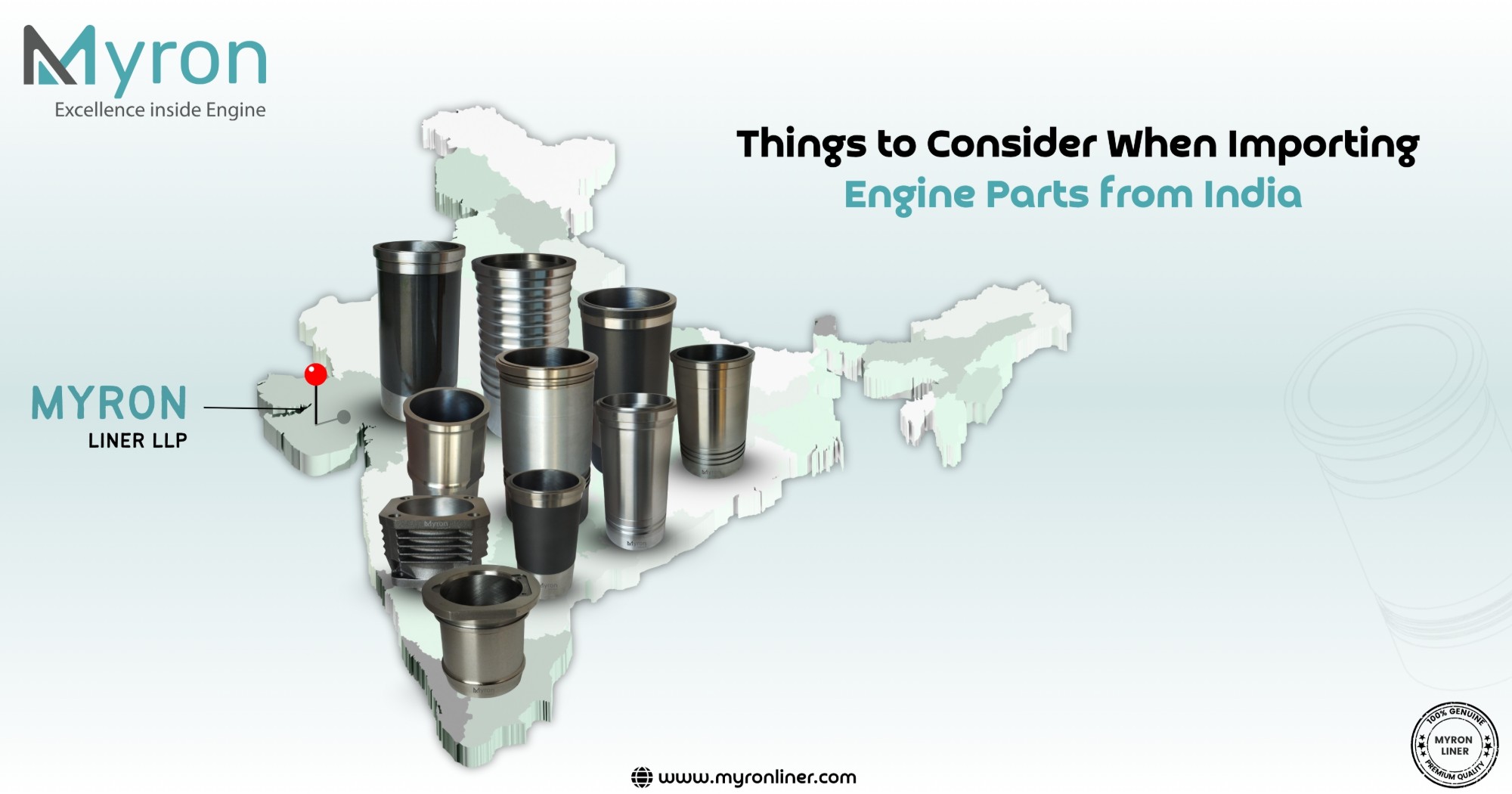
Things to Consider When Importing Engine Parts from India
India has established itself as one of the most reliable sources of automotive engine components worldwide. With its combination of advanced manufacturing capabilities, competitive pricing, and a vast network of suppliers, India is an ideal partner for businesses looking to import engine parts. However, to ensure a successful import experience, several crucial factors must be taken into account.
In this blog, we will explore the key considerations for importing engine parts from India, including quality standards, supplier selection, logistics, legal regulations, and more. Whether you're sourcing cylinder liners, pistons, crankshafts, or other engine components, this guide will help you navigate the process effectively.
1. Understanding the Indian Engine Parts Market
India is home to a thriving automotive manufacturing sector, serving not only the domestic market but also catering to a growing international clientele. Indian engine parts manufacturers produce a wide range of products for various applications, including:
- Passenger vehicles
- Commercial trucks
- Two-wheelers
- Agricultural machinery
- Industrial engines
Popular engine components exported from India include:
- Cylinder liners
- Pistons and rings
- Valve guides and seats
- Connecting rods
- Engine blocks
Before you begin the import process, it's important to have a good understanding of the Indian market, including the types of engine parts available and the leading manufacturers and exporters in each category.
2. Defining Your Engine Component Requirements
One of the first steps in the import process is defining your exact requirements. Engine parts are highly specialized, and even slight variations in specifications can affect performance and compatibility. Consider the following:
- Vehicle make and model: Ensure compatibility with your application.
- OEM vs aftermarket parts: Decide whether you need Original Equipment Manufacturer parts or quality aftermarket alternatives.
- Materials used: Different applications require varying grades of metals and coatings.
- Quantity and frequency: Are you placing a one-time order or recurring shipments?
Clearly defining your needs will help you communicate more effectively with Indian suppliers and avoid costly errors.
3. Researching and Vetting Suppliers
Finding the right supplier is perhaps the most critical aspect of importing engine parts from India. Not all suppliers maintain the same quality standards or customer service levels.
Tips for Selecting Reliable Suppliers:
- Check certifications: Look for ISO certifications and quality assurance standards.
- Read customer reviews: Online directories and B2B marketplaces often include verified feedback.
- Request samples: Always ask for samples to test quality before placing a large order.
- Visit manufacturing facilities: If feasible, visiting factories can help build trust and verify claims.
- Check export history: Ensure the supplier has experience in international logistics and documentation.
4. Quality Control and Standards
Quality control is paramount when importing engine parts. Engine components operate under extreme conditions, and any defect can lead to performance issues or safety risks.
Key factors to consider include:
- Tolerance and measurements: Ensure precision manufacturing within required tolerances.
- Testing protocols: Reputable suppliers will have in-house testing for strength, durability, and performance.
- Material certification: Ask for documentation that proves the use of specific materials.
- Packaging standards: Proper packaging prevents damage during transit.
Don’t hesitate to hire a third-party inspection agency to verify quality before shipment.
5. Legal and Regulatory Compliance
When importing engine parts from India, it's essential to comply with both Indian export regulations and your own country's import laws.
Important Legal Considerations:
- HS codes: Correctly classify your engine parts using Harmonized System codes.
- Import licenses: Verify whether you need special permissions or licenses.
- Customs duties and taxes: Be aware of applicable duties and taxes in your country.
- Documentation: Key documents include invoices, packing lists, certificates of origin, and bills of lading.
Working with an experienced customs broker or freight forwarder can streamline the documentation and clearance process.
6. Logistics and Shipping
Once your order is ready, the next critical step is managing international shipping. Engine components are often heavy, bulky, and sensitive to handling.
Shipping Considerations:
- Mode of transport: Air freight is faster but more expensive; sea freight is cost-effective for large quantities.
- Packaging and labelling: Ensure parts are packed to withstand rough handling and climate changes.
- Freight forwarder: Partner with a reliable freight forwarding company that understands engine parts logistics.
- Transit insurance: Always insure your shipment to protect against loss or damage.
Also, factor in delivery timelines, mainly if your business depends on timely inventory replenishment.
7. Cost Analysis and Negotiation
Price is a significant consideration, but it should not be the only one. Low-cost engine parts may compromise quality, leading to bigger problems down the line.
Consider the Full Landed Cost:
- Unit price of engine parts
- Shipping and freight charges
- Customs duties and taxes
- Inspection and testing costs
- Warehouse and local transport fees
Negotiate pricing based on volume and build long-term relationships to unlock better deals.
8. Sustainability and Environmental Standards
As sustainability becomes a global concern, many importers are looking at how engine parts are manufactured. Eco-friendly manufacturing processes and responsible sourcing are increasingly becoming competitive differentiators.
Ask suppliers about:
- Use of recycled materials
- Energy-efficient production methods
- Waste disposal practices
- Compliance with environmental regulations
This not only ensures regulatory compliance but also supports your brand image and corporate responsibility.
9. Trends in Engine Parts Manufacturing in India
India’s engine parts industry is evolving rapidly. Staying updated with industry trends can help you stay competitive:
- Use of AI and automation in production
- Adoption of precision machining for high-performance parts
- Increased focus on EV (Electric Vehicle) engine components
- Expansion of exports to North America, Europe, and the Middle East
Being aware of these trends can help you plan better and align with innovative suppliers.
10. Post-Sales Support and Service
After-sales support is often overlooked but is a critical factor when importing engine parts. Once the goods arrive, you may encounter issues like installation queries, replacement needs, or performance clarifications. A reliable Indian supplier should provide prompt and professional post-sales service to address such concerns.
What to Look for in Post-Sales Support:
- Clear return or replacement policies
- Technical support for part fitment or performance issues
- Warranty coverage on engine components
- Easy communication channels (email, phone, WhatsApp)
- Availability of spare or complementary engine parts
Strong post-sales service not only builds trust but also minimizes operational disruptions, especially if you're ordering at scale. Always clarify service terms before finalizing any agreement.
Final Thoughts: Trust Matters When Importing Engine Components
Importing engine parts from India can be a profitable venture when done right. By carefully considering your requirements, vetting suppliers, ensuring quality, and managing logistics efficiently, you can build a strong and dependable supply chain.
Whether you're importing for retail, manufacturing, or wholesale distribution, it's crucial to partner with the right supplier who offers consistent quality and professional support.
About Us: Myron Liners
At Myron Liners, we manufacture and supply premium-quality automobile engine components—including our signature cylinder liner—crafted with precision and supported by rigorous quality control. Clients worldwide trust our products to deliver durability and peak performance.
Explore our full range at myronliner.com.
By keeping these factors in mind and partnering with Myron Liners, you can ensure that importing engine parts from India is a seamless and successful process.
Reference:
Automotive industry in India by Wikipedia[1].
FAQ
1. Is it safe to import engine parts from India?
Yes, India is a global hub for quality automotive components. To ensure safety, verify supplier credentials, request product certifications, and check for compliance with international standards like ISO or IATF 16949.
2. What documents are required to import engine parts from India?
You’ll typically need a Commercial Invoice, Packing List, Bill of Lading or Airway Bill, Certificate of Origin, and any applicable import licenses or technical certificates, depending on your country.
3. How can I verify the quality of engine parts before importing?
You can request product samples, ask for third-party test reports, perform factory audits (in person or remotely), and confirm certifications like ISO 9001 or IATF 16949 for quality assurance.
4. What’s the average lead time for shipping engine parts from India?
Lead time can vary depending on order size and customization. On average:
Standard parts: 2–4 weeks
Custom parts: 4–8 weeks
Shipping duration depends on the mode (air/sea) and destination country.
5. How do I calculate customs duty for engine parts?
Customs duties depend on your country’s import tariff code (HS Code for engine parts is generally 8409). Use your government’s customs portal or consult a customs broker for exact duty and tax calculations.
Reference & Trademark Disclaimer
All manufacturer names, trademarks, logos, product names, part numbers, model numbers, descriptions, and other identifying references mentioned in this article are used for identification, reference, and cross-reference purposes only.
Such references do not imply any affiliation, association, authorization, sponsorship, approval, or endorsement by the respective manufacturers or trademark owners. All trademarks, brand names, product names, part numbers, and related intellectual property remain the property of their respective owners.
MYRON LINER LLP is an independent manufacturer and supplier of engine components. The use of any third-party name or reference is solely intended to help readers identify the applicable engine, component, or application.