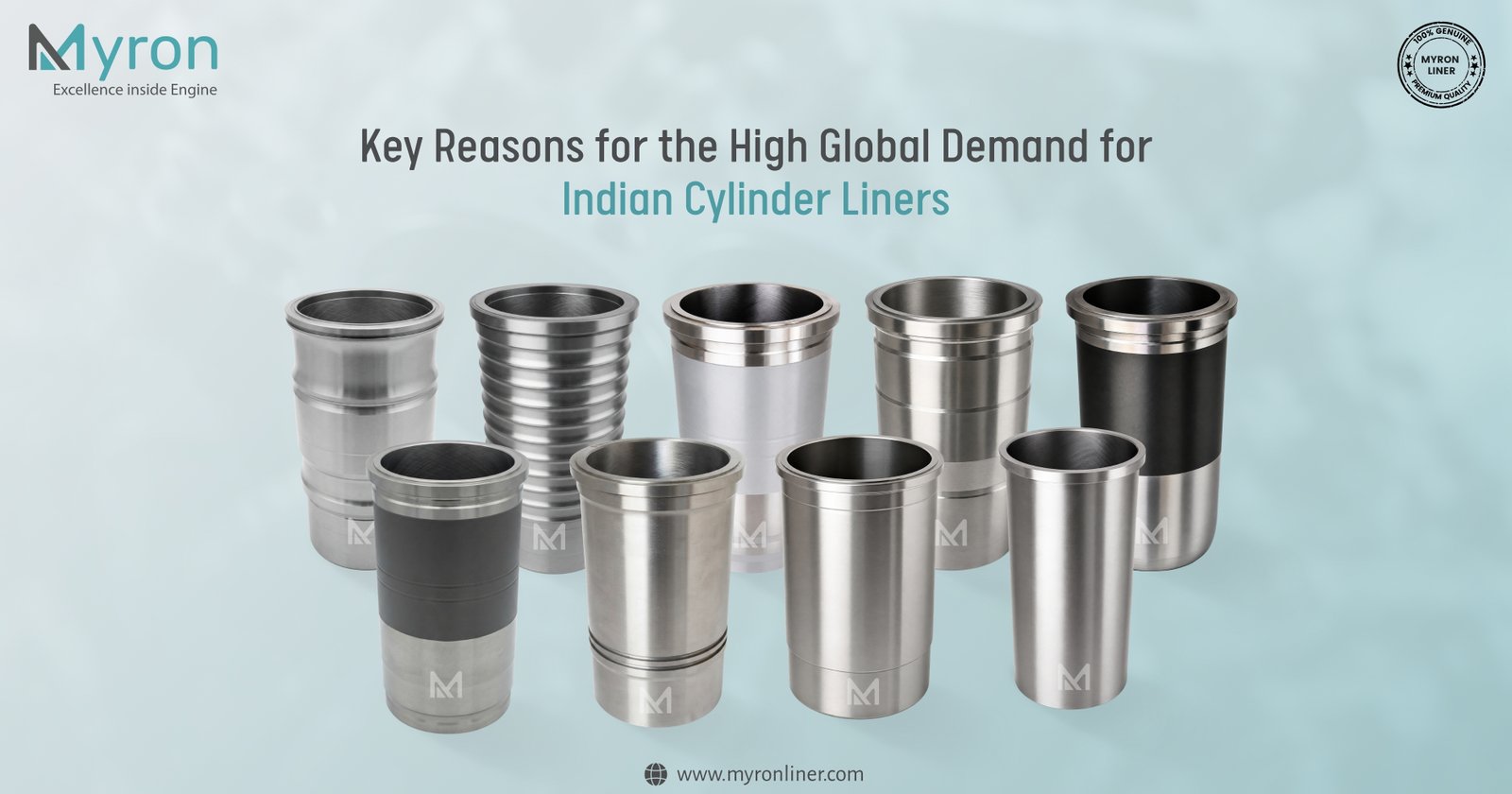
Key Reasons for the High Global Demand for Indian Cylinder Liners
Modern engine rebuilding is now a borderless business. Independent truck fleets in Africa, agricultural equipment refurbishers in Latin America, marine engine overhaul shops in Europe, and power‑generation rebuild centers in the Middle East all need reliable, precisely machined Cylinder Liners. Increasingly, they source Indian Cylinder Liners because India combines metallurgical expertise, flexible batch manufacturing, competitive pricing, and export‑ready logistics. The result: consistently specified liners that help rebuilders extend engine life while controlling cost.
What Does a Cylinder Liner Do - and Why It Matters
A cylinder liner (or sleeve) forms the wear‑resistant running surface in which the piston travels. It must hold roundness under heat and load, resist scuffing, manage lubrication, and contain combustion pressure. In engines designed for rebuild, installing fresh liners restores compression and oil control without replacing the parent block—saving money, material, and downtime. Because they contribute to the cylinder's running surface, combustion sealing, heat transfer, and lubrication, cylinder liners are important components in many engine overhaul programs.
Global Aftermarket Dynamics Driving High Demand
Engines work hard, often far from factory service networks. When bores score, oil consumption rises, or compression drops, buying a new engine is rarely economical. Rebuilders install new Cylinder Liners to extend duty cycles, keep assets productive, and manage lifecycle costs. Around the world, fleets are running equipment longer, capital budgets remain tight in many regions, and sustainability pressures favor repair over replacement. Together, these factors contribute to continued demand for dependable replacement liners, with India serving as an important manufacturing and export base.
Why Global Buyers Turn to India
Price matters, but it isn't the whole story. Veteran importers and distributors highlight a multifaceted value proposition: broad material choices, precision machining capabilities, disciplined quality control, order flexibility, and dependable export support from India-based cylinder liner manufacturers. Many leading Indian plants have evolved from simple cast-and-ship shops into vertically integrated, technology-driven facilities with in-house metallurgy labs, CNC machining cells, induction hardening, plateau honing, automated washing, and documented inspection workflows. The combination delivers repeatability batch after batch.
Below are the key reasons the world continues to choose India.
1. Application‑Specific Metallurgy
Engines experience different duty cycles, including high-speed light commercial applications, slow-speed marine diesels, natural-gas power units, and heavy agricultural tractors, each of which stresses liners differently. Leading Indian suppliers offer gray cast iron, alloyed cast irons with chromium or molybdenum, as well as centrifugal cast ductile options, and optional surface processes such as nitriding, phosphating, or chrome plating (when applicable) to enhance wear, corrosion resistance, and heat dissipation. This ability to match metallurgy to operating conditions helps extend service life in the field.
2. Advanced Casting and Precision Machining
Quality begins in the melt and ends in the micrometer. Modern Indian cylinder liner manufacturers utilize controlled melt chemistry, automated core setting, and centrifugal casting to achieve uniform wall thickness. Post‑cast heat treatment stabilizes the microstructure. CNC turning, boring, and internal grinding are used to achieve the dimensional tolerances and surface-finish requirements specified for each liner application. Many Indian Cylinder Liners now ship installation-ready, cutting machine time for rebuilders and shortening turnaround times.
3. Documented Quality Assurance and Traceability
Global buyers want data, especially when shipping parts across oceans. Indian facilities are increasingly providing dimensional inspection reports, spectrochemical certificates, hardness mapping, and microstructure validation tied to heat lots. Air gauging of bores, ultrasonic wall checks, and coordinate measuring machines help ensure that sample approvals match production runs. Laser‑etched or barcoded batch IDs simplify warehouse control and warranty tracking across multiple markets.
4. Cost Efficiency Without Cutting Corners
Yes, India offers a cost advantage; the difference is that it's paired with process discipline. Concentrated foundry clusters reduce raw material and energy inputs. Shared tooling libraries shorten changeovers across dozens of liner references. Statistical process control lowers scrap. Skilled labor, supported by automation in critical tolerance steps, maintains quality where it matters and keeps costs in check where feasible - result: premium‑function Cylinder Liners at price points that help rebuilders stay competitive without sacrificing reliability.
5. Broad Size Range and Customization
Aftermarket distributors serve mixed fleets, not single part numbers. Indian suppliers typically catalog wet and dry liners, flanged and plain designs, ported and unported styles, oversized repair bores, and custom wall thicknesses for re‑sleeving worn blocks. Flexible machining cells and modular fixturing make short‑run or mid‑volume specials practical. This responsiveness directly supports global High Demand across diverse engine families and regional markets.
Read More: What Are Aftermarket Engine Parts? A Simple Guide for Beginners
6. Export‑Ready Packaging and Logistics
Significant parts can fail in transit. Export-focused Indian cylinder liner manufacturers utilize rust-preventive oils, VCI wraps, end caps, shrink films, and heavy-duty cartons or crates designed for long sea voyages. Pallet optimization reduces freight cost per unit. Documentation—commercial invoices, packing lists, country‑specific markings, and fumigation certificates, where required—flows quickly because experienced export desks work closely with freight forwarders. Reliable dispatch reduces damage risk and helps distributors maintain service promises downstream.
7. Technical Support That Understands Rebuilders
Successful installation drives longevity. Increasingly, Indian technical teams issue bore preparation specifications, press-fit vs. slip-fit guidance, wet-liner seal groove tolerances, recommended torque steps for clamp rings, and break-in lubrication notes. Some provide digital clearance calculators or remote video support during complex rebuilds. This "help you succeed" mindset reduces comebacks and lets distributors compete on more than price.
8. Sustainability and the Circular Economy
Replacing worn liners instead of scrapping engine blocks conserves iron, energy, and capital, which is beneficial for both business and the planet. Fleets that rebuild extend the service life of large diesel, gas, and industrial engines, shrinking waste streams and embodied carbon. Because India can supply large volumes of rebuild-grade cylinder liners in many diameters, it helps global operators meet sustainability metrics while managing their budgets.
9. Proven Field Performance Across Harsh Conditions
Mining haul trucks operate in abrasive dust, coastal vessels battle salt‑laden humidity, and agricultural equipment endures seasonal storage plus hard starts. Field feedback from rebuilders indicates that correctly specified Indian Cylinder Liners maintain an oil film, resist corrosion during transit, and retain dimensional stability for efficient combustion. Real-world durability drives repeat orders—and, in turn, repeat orders reinforce global demand.
Read More: Things to Consider When Importing Engine Parts from India
How to Evaluate Indian Cylinder Liner Manufacturers Before You Buy
Use this practical checklist to qualify suppliers and de‑risk procurement:
- Material Match: Confirm alloy, hardness range, and microstructure versus the target engine family.
- Dimensional Capability: Review sample inspection data for bore size, flange height, and overall length repeatability.
- Surface Finish: Plateau‑honed? Cross‑hatch angle? Is in‑shop finish honing required?
- Cooling / Oil Features: Wet liner O‑ring groove accuracy, port locations, anti‑corrosion treatments.
- Packaging Integrity: VCI protection, capped ends, impact‑resistant boxing, container load plans.
- Order Flexibility: Minimum order quantities, mixed‑part shipments, visibility on lead times.
- Documentation: Material certs, batch traceability, dimensional and hardness reports, conformity statements.
- Technical Resources: Installation guides, troubleshooting charts, response turnaround commitments.
- Warranty Path: Clear claim procedure with evidence requirements and decision timelines.
- Communication: Dedicated export contact, language clarity, timezone overlap for urgent questions.
Market Outlook: Combustion Engines Still Need Support
Electrification is accelerating, yet millions of compression-ignition and spark-ignition engines will remain in service for decades in mining, agriculture, marine transportation, construction, backup power, and remote infrastructure. Crucially, many of these platforms are designed to be rebuilt. That established installed base supports continued demand for replacement cylinder liners and creates opportunities for manufacturers and suppliers serving the global aftermarket.
Bottom Line
The continuing High Demand for Indian Cylinder Liners is no temporary spike. It reflects durable strengths, including application-tuned metallurgy, precision machining, documented quality systems, cost efficiency, broad catalogs, export readiness, and rebuild-focused technical support from experienced cylinder liner manufacturers. For distributors, engine rebuilders, and fleet maintenance operations, India offers a compelling mix of performance, reliability, and value across the global aftermarket for engine components.
Myron Liners: Aftermarket‑Focused Manufacturing You Can Rely On
When you need a trusted India‑based manufacturer and global supplier of precision cylinder liner solutions, look at Myron Liners. The company focuses on the aftermarket, supporting engine rebuild shops, fleet maintenance programs, agricultural service centers, marine repair yards, and industrial power specialists that demand consistent fit and finish. Myron Liners combines controlled metallurgy, precise dimensional process controls, and export-grade packaging, ensuring your parts arrive ready for installation. The team is responsive to specifications, documentation, and shipping coordination, making international sourcing easier. Learn more or request a quote at cylinder liner: https://www.myronliner.com/.
Reference
Cylinder(engine) by Wikipedia[1].
FAQ
1. Why are Indian cylinder liners in high global demand?
They combine high-quality metallurgy with advanced casting and CNC machining, offering competitive prices backed by ISO/ASTM-certified quality control and export support.
2. What manufacturing standards do cylinder liner manufacturers in India typically follow?
Most follow stringent protocols, including CNC machining, spectral analysis, ultrasonic inspection, and certifications such as ISO 9001 or IATF 16949.
3. What types of cylinder liners are available from Indian manufacturers?
They offer wet liners, dry liners, and even finned designs, customizable by material (gray cast iron, alloyed irons), wall thickness, and bore finish.
4. How do Indian manufacturers ensure consistency in precision and finish?
Through centrifugal casting for uniform walls, CNC boring, plateau honing, and in‑house inspection labs using CMMs and air‑gauging equipment.
5. Which global regions import cylinder liners from India?
Major importers include nations across the Middle East, Africa, Latin America, Europe, and the Asia-Pacific—especially developing markets that depend on cost-effective engine rebuilds.
Reference & Trademark Disclaimer
All manufacturer names, trademarks, logos, product names, part numbers, model numbers, descriptions, and other identifying references mentioned in this article are used for identification, reference, and cross-reference purposes only.
Such references do not imply any affiliation, association, authorization, sponsorship, approval, or endorsement by the respective manufacturers or trademark owners. All trademarks, brand names, product names, part numbers, and related intellectual property remain the property of their respective owners.
MYRON LINER LLP is an independent manufacturer and supplier of engine components. The use of any third-party name or reference is solely intended to help readers identify the applicable engine, component, or application.