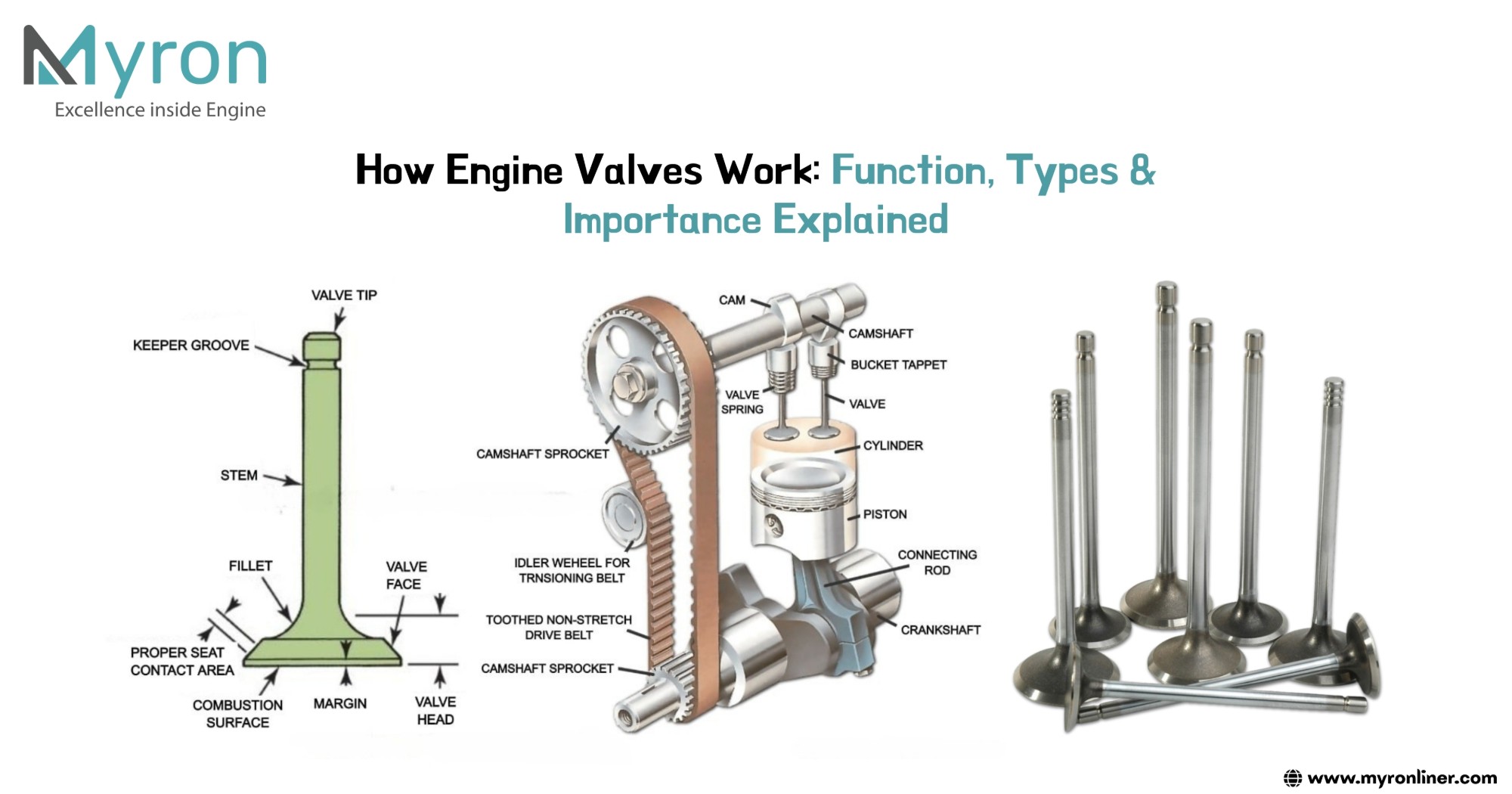
How Engine Valves Work: Function, Types & Importance Explained
Engine valves are critical components in any internal combustion engine. Acting as gatekeepers for the flow of air and fuel into the engine and the expulsion of exhaust gases, they directly influence engine performance, fuel efficiency, and emissions. Whether you're a vehicle enthusiast, a student of mechanical engineering, or simply curious about how your car works, understanding engine valves is essential.
In this blog, we'll take a deep dive into how engine valves work, the various types, their role in the engine cycle, and why they matter in ensuring engine efficiency. We'll also touch on essential concepts like valve overlap and, finally, introduce you to a reliable source for high-quality engine components.
What Are Engine Valves?
Engine valves are mechanical devices located in the cylinder head of an internal combustion engine. They control the flow of gases into and out of the combustion chamber. There are two primary types of engine valves:
- Intake Valve: Allows the air-fuel mixture to enter the combustion chamber.
- Exhaust Valve: Enables the burnt gases to exit the chamber after combustion.
These valves open and close in sync with the engine cycle, regulated precisely by a component called the camshaft.
Historically, the use of cams dates back to ancient times, with early applications like trip hammers powered by waterwheels. The concept was later refined by the engineer Ismail al-Jazari in 1206. In the late 19th and early 20th centuries, camshafts became integral to internal combustion engines, with early adopters like the Maudslay (1902) and Marr Auto Car (1903) featuring single overhead camshaft designs that paved the way for modern valve control systems.
Without these valves operating accurately and timely, engine performance would be severely compromised.
The Engine Cycle and Valve Operation
An internal combustion engine typically operates in a four-stroke cycle: intake, compression, power, and exhaust. Here's how engine valves come into play in each stage:
Intake Stroke:
- The intake valve opens.
- The piston moves downward, drawing in an air-fuel mixture.
Compression Stroke:
- Both intake and exhaust valves are closed.
- The piston moves upward, compressing the air-fuel mixture.
Power Stroke:
- Both valves remain closed.
- The compressed mixture is ignited, forcing the piston downward.
Exhaust Stroke:
- The exhaust valve opens.
- The piston moves upward again, expelling exhaust gases from the combustion chamber.
This synchronized movement of engine valves, coordinated by the camshaft and timing belt or chain, ensures optimal operation of the engine.
How the Camshaft Controls Valve Timing
The camshaft plays a crucial role in valve operation. It rotates in sync with the crankshaft and contains specially shaped lobes (cams) that push on the valves—either directly or via rocker arms and lifters—to open them. Once the cam lobe moves past, the valve springs pull the valve back into the closed position.
Advanced engines now use variable valve timing (VVT) technology, which adjusts the timing of valve opening and closing depending on engine speed and load. This enhances engine efficiency and power and reduces emissions.
Types of Engine Valves
There are various types of engine valves based on their design, material, and actuation method:
Poppet Valves (Mushroom Valves)
- Most common in automotive engines.
- Named for their mushroom-like shape.
- These valves open and close vertically within a valve seat, ensuring a tight seal.
- They are known for their durability and are used in both gasoline and diesel engines due to their reliability and efficiency.
Sleeve Valves
- Used in some historical engines.
- Utilize a rotating sleeve to control gas flow.
- Though no longer common in modern automotive engines, they offered smoother operation with less noise and wear.
- They were especially favored in aircraft engines before the development of more efficient valve systems.
Rotary Valves
- It is found in some high-performance and two-stroke engines.
- Rotate to allow gas flow instead of opening linearly.
- These valves can provide improved airflow and higher RPM capabilities in performance applications.
- However, they are complex to manufacture and maintain, limiting their use to specialized engines.
Reed Valves
- Common in two-stroke engines.
- Flexible metal strips open and close based on pressure differences.
- They are lightweight, simple, and cost-effective, making them ideal for small engines like those in motorcycles or outboard motors.
- Reed valves only allow one-way flow, ensuring the air-fuel mixture is efficiently delivered into the combustion chamber.
Valve Materials and Construction
Given the extreme heat and pressure inside the engine, engine valves must be made from durable materials. Common choices include:
- Stainless steel alloys
- Titanium (used in high-performance engines)
- Inconel (for exhaust valves due to its heat resistance)
Valves are often hardened or coated to resist wear, pitting, and corrosion, ensuring a long lifespan under harsh operating conditions.
Valve Overlap: What Is It and Why Does It Matter?
Valve overlap refers to the brief period when both the intake and exhaust valves are open at the same time. This occurs between the end of the exhaust stroke and the beginning of the intake stroke.
Why is valve overlap necessary?
- It improves scavenging, which is the clearing out of exhaust gases.
- It helps draw in a fresh air-fuel mixture.
- Enhances volumetric efficiency and power at higher RPMs.
However, too much valve overlap can lead to inefficiency at low speeds, which is why performance engines often have different timing settings compared to standard engines.
Common Problems with Automotive Engine Valves
Over time, engine valves may wear out or malfunction due to:
- Valve seat erosion
- Valve sticking (often due to oil deposits or overheating)
- Bent valves (usually from timing belt failure)
These issues can cause misfires, loss of power, reduced engine efficiency, and even engine damage if not addressed promptly.
Importance of Engine Valves in Engine Performance
While small in size, engine valves have a massive impact on engine performance:
- Control the fuel-air intake and exhaust flow
- Affect compression ratios and combustion timing
- Influence fuel economy and emissions
A well-functioning valve system ensures optimal engine efficiency, smoother operation, and longer engine life. Engine valves contribute to the precise metering of airflow, which is essential for maintaining the correct air-fuel ratio across various engine speeds and loads. This balance is critical for clean combustion, helping reduce harmful emissions and supporting better compliance with environmental regulations.
In high-performance engines, the design and responsiveness of the valves can mean the difference between average and exceptional output. Engineers often experiment with valve size, shape, lift, and timing profiles to enhance torque and horsepower while maintaining fuel economy. Furthermore, valve reliability is crucial in preventing costly engine repairs and breakdowns, as a single malfunctioning valve can lead to loss of compression or even piston damage.
Automotive engineers spend significant time designing valve geometry and timing for each engine model to achieve the right balance between performance, longevity, and efficiency. This makes engine valves not just a supporting component but a key contributor to overall engine dynamics and reliability.
Read More: Things to Consider When Importing Engine Parts from India
Choosing Quality Engine Components Matters
When replacing or upgrading engine components like valves, quality should never be compromised. Substandard parts can drastically affect engine performance and lifespan. It's essential to source your components from a trusted manufacturer or supplier.
Myron Liners – Your Trusted Source for Engine Components
If you are looking for reliable and high-performance engine components, including cylinder liners and other essential parts, look no further than Myron Liners. As a reputed manufacturer and supplier, Myron Liners offers top-grade products that meet rigorous industry standards.
Whether you're an engine rebuilder or an auto parts distributor, Myron Liners ensures that your engine components are built for durability, efficiency, and performance. Their comprehensive product range and commitment to quality make them a go-to name in the global automotive aftermarket.
Reference:
Camshaft by Wikipedia[1].
Internal combustion engine by Wikipedia[2].
FAQ
1. How many types of engine valves are there?
There are several types of engine valves, mainly classified by their design and function. The most common type is the poppet valve (or mushroom valve), widely used in modern engines. Other types include sleeve valves, rotary valves, and reed valves, which are more common in older or specialized engines like two-stroke or aircraft engines
.
2. What is a 2-valve and 4-valve engine?
A 2-valve engine typically has one intake and one exhaust valve per cylinder. This setup is more straightforward and more cost-effective but may restrict airflow at higher engine speeds. A 4-valve engine, on the other hand, has two intake and two exhaust valves per cylinder, allowing better airflow and combustion efficiency. This results in improved performance, fuel efficiency, and emissions control, especially at higher RPMs.
3. What does a 3-valve engine mean?
A 3-valve engine design features three valves per cylinder—usually two intake valves and one exhaust valve. This setup strikes a balance between the airflow benefits of a 4-valve engine and the simplicity of a 2-valve engine. It offers improved combustion efficiency and performance compared to a 2-valve engine while being less complex and often more cost-effective than a 4-valve system.
4. What is the function of an engine valve?
The primary function of an engine valve is to regulate the flow of gases in and out of the combustion chamber. The intake valve allows the air-fuel mixture to enter during the intake stroke, while the exhaust valve lets burnt gases exit during the exhaust stroke. This controlled operation is synchronized with the engine cycle and is essential for efficient combustion, power generation, and exhaust management.
5. What happens if an engine valve fails?
If an engine valve fails, it can cause serious engine performance issues or even damage. A stuck or bent valve may lead to loss of compression, misfires, rough idling, reduced power, or engine knocking. In severe cases—such as valve-to-piston contact due to timing belt failure—the engine could suffer significant internal damage, requiring costly repairs or replacement. Regular maintenance and timely part replacement are essential to prevent valve-related issues.
Reference & Trademark Disclaimer
All manufacturer names, trademarks, logos, product names, part numbers, model numbers, descriptions, and other identifying references mentioned in this article are used for identification, reference, and cross-reference purposes only.
Such references do not imply any affiliation, association, authorization, sponsorship, approval, or endorsement by the respective manufacturers or trademark owners. All trademarks, brand names, product names, part numbers, and related intellectual property remain the property of their respective owners.
MYRON LINER LLP is an independent manufacturer and supplier of engine components. The use of any third-party name or reference is solely intended to help readers identify the applicable engine, component, or application.