How Connecting Rods Ensure Perfect Engine Alignment & Reliability
Engines are the heart of any vehicle. Inside this heart is a key part that helps everything run well - the Connecting Rod. The connecting rod is often called the backbone of the engine. It connects the piston to the crankshaft.
This part is important. It changes the piston’s up-and-down motion. This motion is turned into the rotary motion that powers your vehicle.
In this blog, we will look at how it helps with engine alignment, reliability, and performance. We will also understand their structure, functions, and types. Finally, we will see how precision engineering keeps them working well in tough conditions.
What Is a Connecting Rod?
A connecting rod is an important part of an internal combustion engine. It connects the piston to the crankshaft. It transfers the reciprocating motion of the piston into the rotary motion of the crankshaft.
In simpler terms, every time fuel burns inside the cylinder, the expanding gases push the piston down. The connecting rod transmits this motion to the crankshaft, converting it into rotational force — which eventually turns the wheels.
The efficiency of this motion depends greatly on perfect engine alignment. Even a small misalignment can lead to vibrations, excessive wear, and reduced performance. Hence, its design and balance are critical for maintaining smooth engine operation.
The Relationship Between Piston and Connecting Rod
The piston and connecting rod work in perfect synchronization. The piston moves up and down in the cylinder. It helps change this motion into smooth rotation through the crankshaft.
Here’s how it works in sequence:
- Intake stroke: The piston moves downward, drawing in the air-fuel mixture.
- Compression stroke: The piston moves upward, compressing the mixture.
- Power stroke: The air-fuel mixture ignites, forcing the piston down.
- Exhaust stroke: The piston moves up again, pushing out exhaust gases.
During all these strokes, the connecting rod must stay aligned. This ensures the piston moves straight without tilting or changing direction. Misalignment in the connecting rod or crankshaft can cause friction, loss of power, and long-term engine damage.
Keeping the right shape between the piston and connecting rod helps the engine work well. It also makes the internal parts last longer.
Read More: How Engine Piston Care Improves Overall Engine Performance
How Connecting Rods Maintain Engine Alignment
Perfect engine alignment means that all internal components — pistons, connecting rods, and crankshaft — work in harmony, reducing mechanical stress and improving reliability. It plays a central role in achieving this by:
a. Ensuring Straight Motion Path
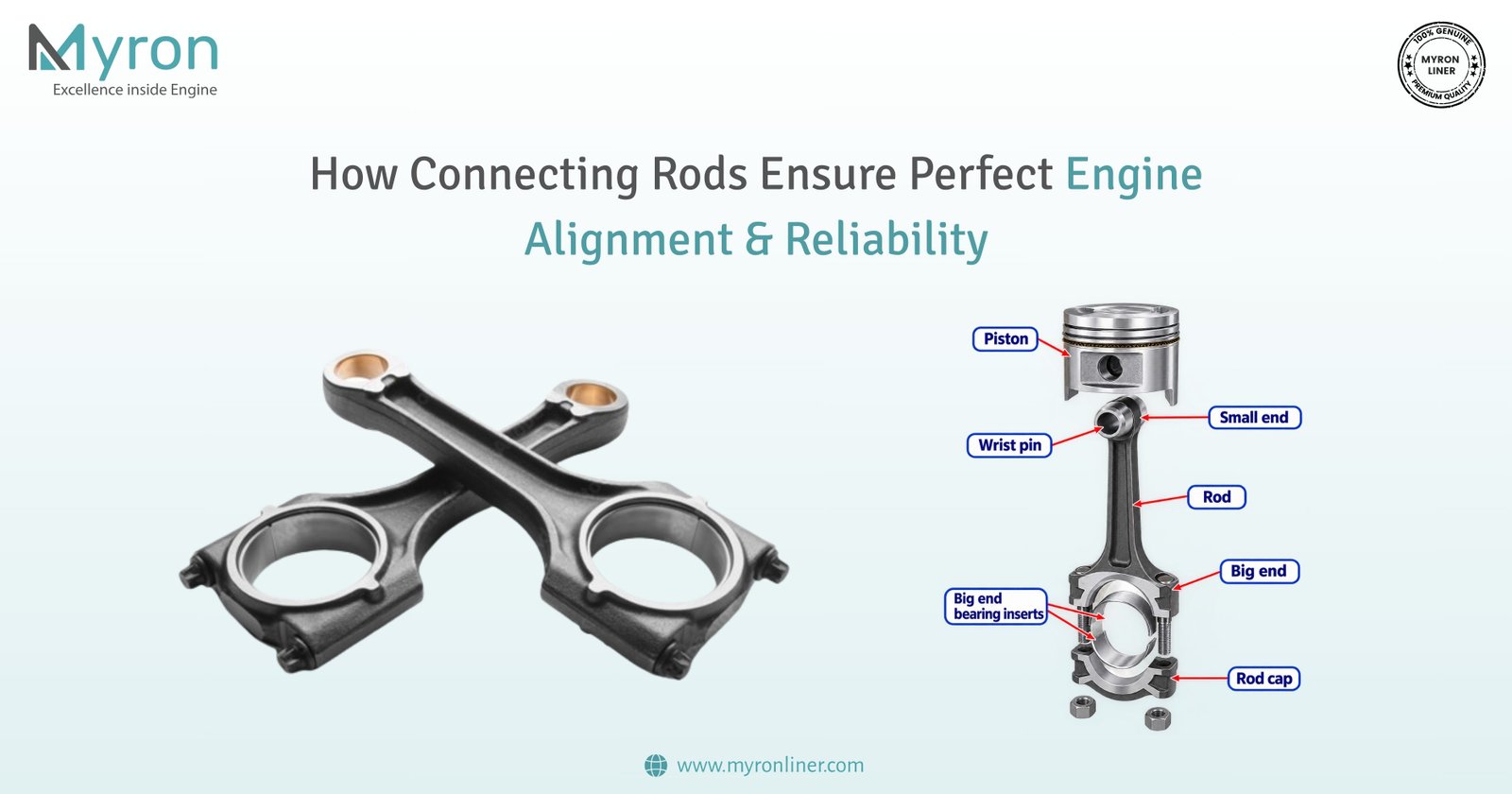
The small end of the connecting rod attaches to the piston pin, while the big end connects to the crankshaft. This design allows for smooth, straight motion of the piston inside the cylinder, preventing tilting or bending.
b. Balancing Rotational Forces
A well-balanced connecting rod helps maintain even weight distribution during high-speed rotations. If rods are uneven or misaligned, it can lead to vibrations, imbalance, and engine knocking.
c. Reducing Friction and Wear
Proper alignment minimizes friction between the piston and cylinder wall, which reduces wear on both surfaces. This also helps in maintaining oil film integrity and thermal stability.
d. Maintaining Compression and Power Output
A properly aligned connecting rod helps the piston reach the right top dead center (TDC) and bottom dead center (BDC) positions. These positions are important for keeping compression and combustion cycles steady.
Structure and Design of a Connecting Rod
Each engine connecting rod is designed to endure immense pressure, heat, and stress during operation. A typical connecting rod consists of the following key parts:
- Small End: Connected to the piston pin.
- Big End: Connected to the crankshaft journal.
- Shank: The central body that transmits force between the two ends.
- Bolts and Bearings: Used to secure and allow smooth rotation between joints.
It must be both lightweight and strong. Lightweight rods help in achieving faster engine speeds, while strength ensures that they don’t bend or break under pressure. Materials like forged steel, aluminum alloys, and titanium are commonly used for manufacturing.
Different Types of Connecting Rod
The types of connecting rod vary based on engine design, purpose, and material. Here are some of the most common ones:
a. I-Beam Connecting Rod
This type resembles the shape of the letter “I” and offers a balance of strength and light weight. It’s widely used in both standard and performance engines.
b. H-Beam Connecting Rod
The H-shaped design offers more strength and rigidity. This makes it perfect for high-performance or turbocharged engines with heavy loads.
c. X-Beam Connecting Rod
This is a newer design offering optimized strength-to-weight ratio, reducing stress points under heavy load conditions.
d. Tubular Connecting Rod
As the name suggests, this type is tubular and provides excellent stiffness with less weight. It’s mostly used in racing or high-speed engines.
e. Forged vs. Cast Connecting Rods
Forged connecting rods are made by pressing and shaping metal with high pressure. This process gives them strong strength and better resistance to wear. Cast rods, while more economical, are less durable and typically used in engines with lower performance requirements.
Each type of connecting rod is designed for a specific balance of power, weight, and reliability. Choosing the right type depends on the engine’s design and operating conditions.
Material Selection for Reliability
The choice of material significantly affects the connecting rod’s durability and performance. Common materials include:
- Forged Steel: Offers high tensile strength and fatigue resistance. Common in heavy-duty and performance engines.
- Aluminum Alloy: Lighter but not as strong as steel. Ideal for high-speed engines where weight reduction is critical.
- Titanium: Combines lightweight characteristics with excellent strength but is expensive - usually used in racing engines.
The material not only determines strength but also influences how the rod handles heat, vibration, and stress during operation. Precision machining and surface finishing further enhance reliability and ensure perfect engine alignment.
Read more: Why Quality Materials Matter in Engine Connecting Rods
Manufacturing Process: Precision Matters
The manufacturing process of connecting rods is crucial for ensuring consistent alignment and performance. The process typically includes:
- Forging or Casting: Depending on the rod type.
- Machining: Achieving accurate dimensions and surface finish.
- Heat Treatment: Improving strength and resistance to fatigue.
- Balancing: Ensuring equal weight among all rods in a set.
- Quality Inspection: Checking for cracks, alignment errors, and surface defects.
Precision engineering ensures that every connecting rod aligns perfectly within the engine assembly. Even microscopic errors can lead to imbalance or mechanical failure at high RPMs.
Signs of Misaligned or Faulty Connecting Rods
Over time, wear and improper maintenance can affect the alignment and performance of connecting rods. Some common symptoms include:
- Engine knocking or rattling noises
- Reduced oil pressure
- Loss of compression
- Excessive vibration
- Blue smoke due to oil burning
If you see these signs, check the engine connecting rod right away. This will help prevent more damage to the crankshaft or piston.
Maintenance Tips for Long-Lasting Reliability
To keep your connecting rods functioning efficiently and maintain perfect engine alignment:
- Regular oil changes – Clean oil minimizes friction and prevents bearing wear.
- Use quality lubricants – Helps maintain smooth movement and cooling.
- Avoid engine over-revving – Reduces stress on rods and bearings.
- Inspect during rebuilds – Always check for bends, cracks, or uneven wear.
- Maintain correct torque values – Ensures proper tightening and alignment during assembly.
Regular maintenance ensures that your piston and connecting rod operate efficiently, maintaining engine balance and extending component life.
The Role of Connecting Rods in Engine Reliability
A perfectly aligned connecting rod ensures that all moving components within the engine work together harmoniously. It maintains proper motion transfer, minimizes friction, and supports consistent power output.
Simply put, they are the link between power and precision. Without proper alignment and strength, even the most powerful engines can suffer from inefficiency and premature failure.
Connecting rods are made for cars, motorcycles, and heavy machines. They are designed for reliability and strength. This helps your engine run well in all conditions.
Conclusion
The connecting rod may seem like a simple mechanical link, but it’s truly the heart of engine synchronization. From converting energy into motion to maintaining perfect alignment, one cannot overstate its role in ensuring engine reliability. Proper design, precision manufacturing, and regular maintenance keep your engine performing efficiently and reliably for years.
About Myron Liners
Myron Liners is a trusted manufacturer and supplier of high-quality engine parts, specializing in cylinder liners designed for superior performance and durability. Myron Liners uses advanced technology and focuses on quality. They offer reliable engine parts that meet global standards.
Reference:
Connecting rod by Wikipedia[1].
FAQ
1. What does a connecting rod do?
It links the piston to the crankshaft, converting piston motion into rotational engine power.
2. How does it affect engine alignment?
It ensures the piston moves straight, reducing friction, vibrations, and wear.
3. What are the types of connecting rods?
Common types: I-Beam, H-Beam, X-Beam, and tubular rods, each designed for specific performance needs.
4. How do piston and connecting rod work together?
The piston moves up and down, and the connecting rod transfers this motion to the crankshaft.
5. What materials are connecting rods made of?
Forged steel, aluminum alloys, and titanium — chosen for strength and weight balance.
6. How do I know if a connecting rod is damaged?
Look for knocking noises, engine misfires, or metal shavings in the oil.
Reference & Trademark Disclaimer
All manufacturer names, trademarks, logos, product names, part numbers, model numbers, descriptions, and other identifying references mentioned in this article are used for identification, reference, and cross-reference purposes only.
Such references do not imply any affiliation, association, authorization, sponsorship, approval, or endorsement by the respective manufacturers or trademark owners. All trademarks, brand names, product names, part numbers, and related intellectual property remain the property of their respective owners.
MYRON LINER LLP is an independent manufacturer and supplier of engine components. The use of any third-party name or reference is solely intended to help readers identify the applicable engine, component, or application.