Boost Engine Power and Efficiency with Air Cooled Blocks
Air cooled engine blocks have long played a crucial role in evolving efficient and reliable engine design. Unlike liquid-cooled systems, air-cooled blocks rely on direct airflow and integrated fins to dissipate heat, eliminating the need for complex coolant systems. This reduces overall engine weight and simplifies the design, making them more cost-effective and easier to maintain. Due to their robust and low-maintenance nature, these blocks are widely used in motorcycles, scooters, compact vehicles, and even light aircraft engines.
One of the key advantages of air cooled engine blocks is their ability to perform effectively in environments where simplicity and durability are paramount. This blog will explore how air cooled blocks help improve engine performance and fuel efficiency and analyze their benefits, limitations, and ideal applications.
What Are Air Cooled Engine Blocks?
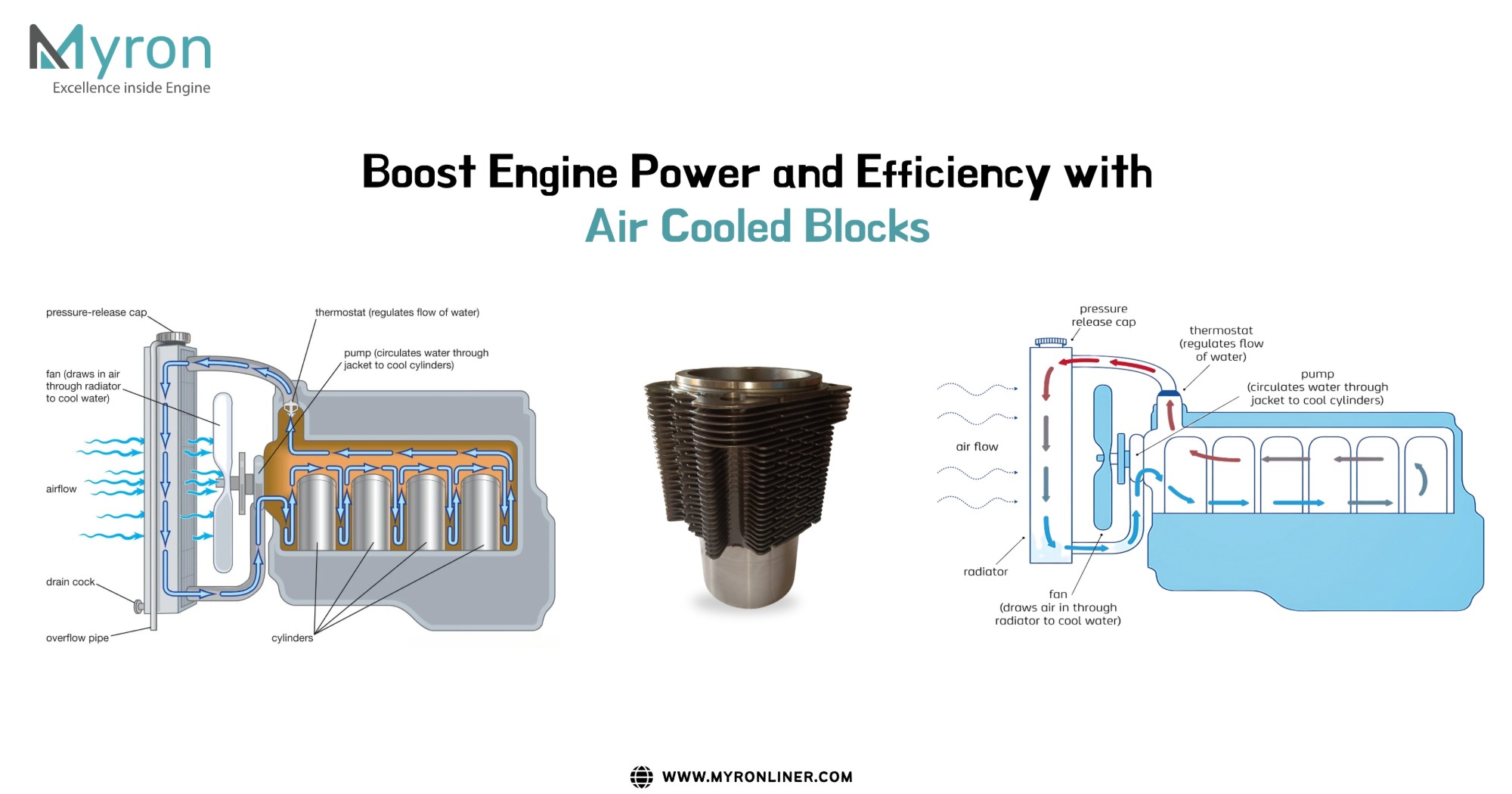
An air cooled engine block dissipates heat through the flow of air over external fins that are cast into the engine. Air-cooled engines only use airflow to regulate temperature, unlike water-cooled engines that also use radiators and coolant fluid. The engine block is typically made of lightweight alloys like aluminium to enhance heat conduction.
How Air Cooling Works
Air cooled blocks have large surface area fins to maximize contact with passing air. As the engine operates and generates heat, the air passing over these fins carries away the heat, keeping the engine at optimal operating temperature. This system eliminates the need for a coolant, radiator, and water pump, reducing weight and mechanical complexity. The constant airflow generated by the engine's motion enhances the engine's cooling capacity, which ensures heat is effectively dissipated. Additionally, this setup provides a more straightforward cooling process, making air cooled engines more reliable and easier to maintain over time.
Key Benefits of Air Cooled Blocks
1. Improved Fuel Efficiency
Air cooled engines generally have fewer moving parts and experience less drag from auxiliary components like water pumps. This reduction in mechanical resistance improves overall engine efficiency and fuel consumption. Lightweight materials further enhance performance, allowing the engine to deliver more power per unit of fuel. The simplified design also reduces parasitic losses, which can hinder energy transfer. Over time, this efficiency translates to lower fuel costs and reduced environmental impact.
2. Enhanced Power-to-Weight Ratio
Air-cooled engines weigh significantly less by eliminating bulky components such as radiators and coolant reservoirs. This weight advantage improves acceleration, manoeuvrability, and power output, especially in smaller vehicles and motorcycles. A better power-to-weight ratio enhances throttle response and handling, making the engine more agile and responsive. This makes air-cooled blocks particularly beneficial in applications where quick movement and efficiency are key, such as in two-wheelers and light aircraft.
3. Lower Maintenance Requirements
Without a liquid cooling system to maintain, air-cooled blocks reduce the chances of coolant leaks, radiator failures, or pump malfunctions. This makes them ideal for rugged environments and off-road vehicles where reliability is crucial. The simplicity of the design also reduces the risk of overheating since there's no complex cooling system to malfunction. Moreover, maintenance tasks like flushing coolant or replacing water pumps are eliminated, resulting in less downtime for maintenance.
4. Cost-Effective Manufacturing and Repairs
Because air-cooled engines are simpler, they are less expensive to manufacture and maintain. Fewer components mean easier disassembly and service, shorter downtimes, and lower labour costs. The absence of a liquid cooling system reduces the need for additional parts, such as hoses, radiators, and coolant pumps, thus simplifying the entire system. This also makes air cooled engines a more affordable option for consumers, especially in markets where budget-friendly solutions are a priority.
5. Better Performance in Cold Climates
Air cooled engines warm up quickly in cold weather since no coolant needs to reach operating temperature. This results in faster startups, better combustion, and less engine wear during winter months. The engine's immediate readiness requires less time to reach optimal efficiency, which is ideal for vehicles in cold regions. Additionally, since there's no reliance on coolant fluid, there's less chance of freezing or fluid loss, ensuring consistent performance even in extreme cold weather conditions.
Don't miss to check: Complete Guide to Cylinder Blocks: Parts, Types, and Key Functions.
Common Applications of Air Cooled Blocks
Air cooled engine blocks are predominantly used in:
- Motorcycles and Scooters: Lightweight and compact, ideal for small two-wheelers.
- Lawnmowers and Small Equipment: Simple design suits low-maintenance outdoor equipment.
- Aviation Engines: Used in small aircraft for reliability and weight savings.
- Classic and Vintage Cars: Older models like the Volkswagen Beetle use air cooled engines.
Limitations of Air Cooled Blocks
While air cooled blocks have several benefits, they also come with trade-offs:
- Less Efficient Cooling at High Loads: Air cooling can struggle to maintain optimal temperatures during prolonged high-speed or high-load operation.
- Noise Levels: The lack of insulation and fans results in louder engine operation.
- Inconsistent Temperature Control: Varies with environmental conditions, making temperature regulation harder in hot climates.
Recent Innovations in Air Cooled Technology
Advancements in metallurgy and engine design have improved the efficiency and reliability of air cooled systems. Modern air cooled engines now use:
- High thermal conductivity alloys to enhance heat dissipation.
- Advanced fin designs that maximize airflow and surface contact.
- Hybrid cooling systems combine air and oil cooling for enhanced performance.
Conclusion
Air cooled engine blocks provide a unique performance, efficiency, and simplicity balance. They are a powerful solution for applications where weight, cost, and ease of maintenance matter most. While they may not be ideal for every use case—especially high-performance cars or large trucks - they continue to offer significant benefits in two-wheelers, aviation, and small machinery. As new materials and design innovations emerge, air-cooled engines' potential to deliver better performance and fuel savings is greater than ever.
Why Choose Myron Liner for Air Cooled Engine Blocks?
Myron Liner is a trusted name in the industry regarding precision, durability, and performance. As a leading manufacturer and supplier of high-quality engine components, including air cooled blocks and cylinder liners, Myron Liner delivers products engineered for maximum efficiency and long-lasting reliability. With advanced manufacturing technology, strict quality standards, and a commitment to innovation, Myron ensures every engine component meets modern performance demands. Partner with Myron Liner today and power your engines with excellence.
Reference:
Air-cooled engine by Wikipedia[1].
FAQ
1. Are air-cooled engines more efficient?
Air-cooled engines are more efficient in smaller applications by reducing mechanical complexity and weight. They eliminate the need for coolant and cooling systems, improving fuel efficiency. However, in extreme conditions, liquid-cooled engines may provide better performance.
2. What are the advantages of air cooled engine blocks?
Air cooled engine blocks offer several advantages, including improved fuel efficiency, a higher power-to-weight ratio, lower maintenance requirements, and reduced manufacturing and repair costs. They are also ideal for vehicles operating in cold or harsh climates because they can warm up quickly.
3. How do air cooled engine blocks improve fuel efficiency?
By eliminating the need for a water pump and radiator, air cooled blocks experience less mechanical drag, improving overall engine efficiency. The lightweight construction also allows the engine to perform better, using less fuel to generate power.
4. Can I replace a liquid-cooled engine with an air-cooled block?
In most cases, replacing a liquid-cooled engine with an air-cooled block is not advisable, as the two systems have different cooling requirements. Air-cooled engines are more suitable for specific applications, and converting a liquid-cooled engine to air-cooling could compromise engine performance and efficiency.
Reference & Trademark Disclaimer
All manufacturer names, trademarks, logos, product names, part numbers, model numbers, descriptions, and other identifying references mentioned in this article are used for identification, reference, and cross-reference purposes only.
Such references do not imply any affiliation, association, authorization, sponsorship, approval, or endorsement by the respective manufacturers or trademark owners. All trademarks, brand names, product names, part numbers, and related intellectual property remain the property of their respective owners.
MYRON LINER LLP is an independent manufacturer and supplier of engine components. The use of any third-party name or reference is solely intended to help readers identify the applicable engine, component, or application.