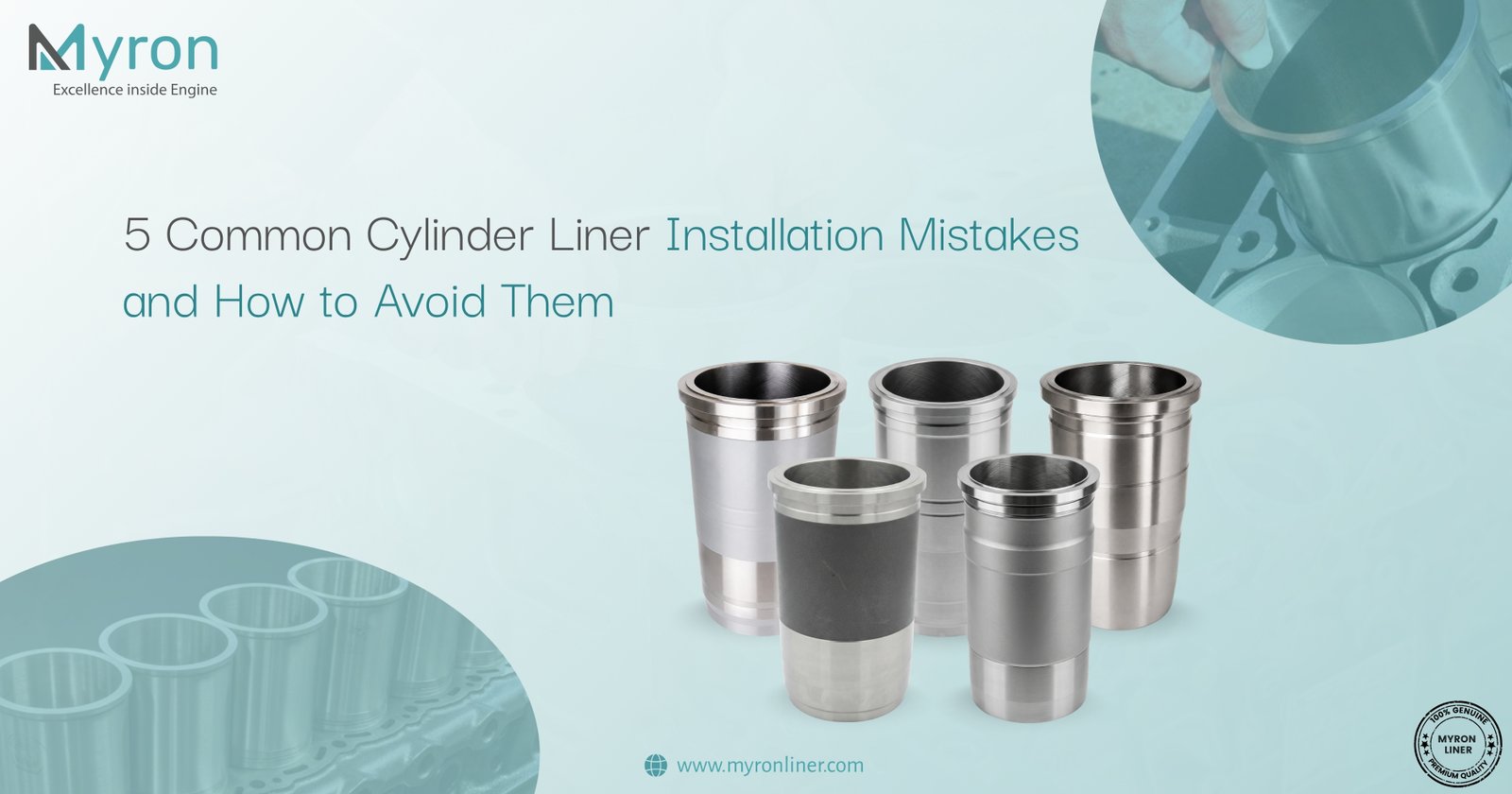
5 Common Cylinder Liner Installation Mistakes and How to Avoid Them
Cylinder liners play a critical role in an engine's performance and longevity. They make up the inner surface of the engine cylinders. Pistons move up and down here. This surface is essential for keeping compression and reducing wear.
Whether you are an experienced mechanic or a DIY enthusiast, understanding the common mistakes while installing cylinder liners can save time, money, and potential engine damage. In this blog, we will look at five common mistakes made during cylinder liner installation. We will also give tips on how to avoid these mistakes.
Read More: What Are Cylinder Liners and Why Are They Important
1. Using Improper Tools or Techniques
One of the most common mistakes in installing cylinder liners is using the wrong tools or improper techniques. Mechanics sometimes use hammers or other tools to push the liner into the engine block. This can cause cracks, warping, or misalignment.
How to Avoid: Always use precision tools like hydraulic presses, liner pullers, and alignment guides. Following the manufacturer's installation procedure ensures the liner fits snugly without damage. Using the proper technique not only protects the liner but also maintains the integrity of the engine block.
2. Ignoring Cylinder Block Preparation
Installing a cylinder liner into an unprepared engine block is another common pitfall. Residues, rust, or debris in the cylinder bore can stop the liner from seating properly. This can cause leaks or uneven wear.
How to Avoid: Before installation, thoroughly clean the cylinder bore using a mild solvent and a lint-free cloth. Inspect the block for any damage or imperfections.
Some mechanics lightly oil the outer surface of the liner. This helps with smooth insertion and proper heat transfer during engine operation. Proper preparation helps the liner settle perfectly and ensures longer engine life.
3. Incorrect Liner Orientation
Cylinder liners are designed to fit the engine in a specific orientation. Installing a liner upside down or misaligned can affect oil flow, cooling, and piston performance. Even a slight misalignment can result in reduced compression, higher wear rates, and engine inefficiency.
How to Avoid: Pay close attention to the liner's design features, such as locating notches, flanges, or oil holes. Many liners come with installation instructions marking the correct orientation. Double-check the position before final insertion into the engine block. A well-oriented liner ensures optimal lubrication, cooling, and engine performance.
Read More: How Cylinder Liner Thickness Impacts Engine Efficiency
4. Overlooking Thermal Expansion and Clearance
Every engine component expands and contracts with temperature changes. Failing to account for the thermal expansion of cylinder liners can lead to problems.
If there isn't enough clearance, it can cause warping. This may also result in sticking pistons or cracking. This mistake is more common in high-performance or heavy-duty engines where temperatures rise significantly.
How to Avoid: Follow the recommended clearance specifications provided by the liner manufacturer. Measure the diameter of both the cylinder liner and the engine block carefully. Use precision tools like micrometers and feeler gauges to ensure accurate installation. Correct clearance accounts for thermal expansion, allowing smooth piston movement and avoiding future engine issues.
5. Neglecting Lubrication During Installation
Dry installation of cylinder liners is a mistake that can cause immediate and long-term problems. Friction between the liner and the engine block can cause scratches, scoring, or uneven wear, compromising engine performance.
To prevent issues, apply a thin layer of quality engine assembly lubricant or oil. Do this on the liner's outer surface before installing it. This helps reduce friction during seating and allows the liner to settle properly.
Proper lubrication helps with heat transfer. It also protects the liner's surface when the engine starts for the first time.
Tips for Successful Cylinder Liner Installation
- Always follow the manufacturer's installation guidelines for your specific engine model.
- Inspect each cylinder liner for defects before installation.
- Take your time — rushing the installation process can lead to errors and costly repairs.
- Consider professional training if you frequently install cylinder liners in high-performance engines.
Conclusion
Installing cylinder liners correctly is crucial for engine performance, reliability, and longevity. By avoiding common mistakes, mechanics can ensure smooth operation and fewer engine problems. These mistakes include using the wrong tools, failing to prepare the block, incorrect orientation, failing to account for thermal expansion, and forgetting to lubricate.
Cylinder liners are an essential part of engine parts. Proper installation helps your engine work at its best.
For high-quality cylinder liners, Myron Liners is a trusted name. We manufacture and supply premium cylinder liners designed for aftermarket engines, providing durability, precision, and reliability.
Myron Liners provides high-quality engine parts for both heavy-duty and standard engines. Our products meet industry standards.
Reference:
Engine block by Wikipedia[1].
Cylinder (engine) by Wikipedia[2].
FAQ
1. What's the difference between wet and dry liners?
Wet liners contact coolant directly; dry liners don't.
2. How do I ensure proper liner protrusion?
Use a depth micrometer and follow the manufacturer's specs.
3. What causes cylinder liner failure?
Common causes: improper installation, poor lubrication, debris, or wrong clearance.
4. Should I replace liners during an engine overhaul?
Replace if worn or damaged; otherwise, reconditioning may be enough.
5. How can I prevent corrosion?
Maintain coolant, use inhibitors, and check seals regularly.
6. Signs a liner needs replacement?
Loss of compression, oil contamination, blow-by, or visible damage.
Reference & Trademark Disclaimer
All manufacturer names, trademarks, logos, product names, part numbers, model numbers, descriptions, and other identifying references mentioned in this article are used for identification, reference, and cross-reference purposes only.
Such references do not imply any affiliation, association, authorization, sponsorship, approval, or endorsement by the respective manufacturers or trademark owners. All trademarks, brand names, product names, part numbers, and related intellectual property remain the property of their respective owners.
MYRON LINER LLP is an independent manufacturer and supplier of engine components. The use of any third-party name or reference is solely intended to help readers identify the applicable engine, component, or application.