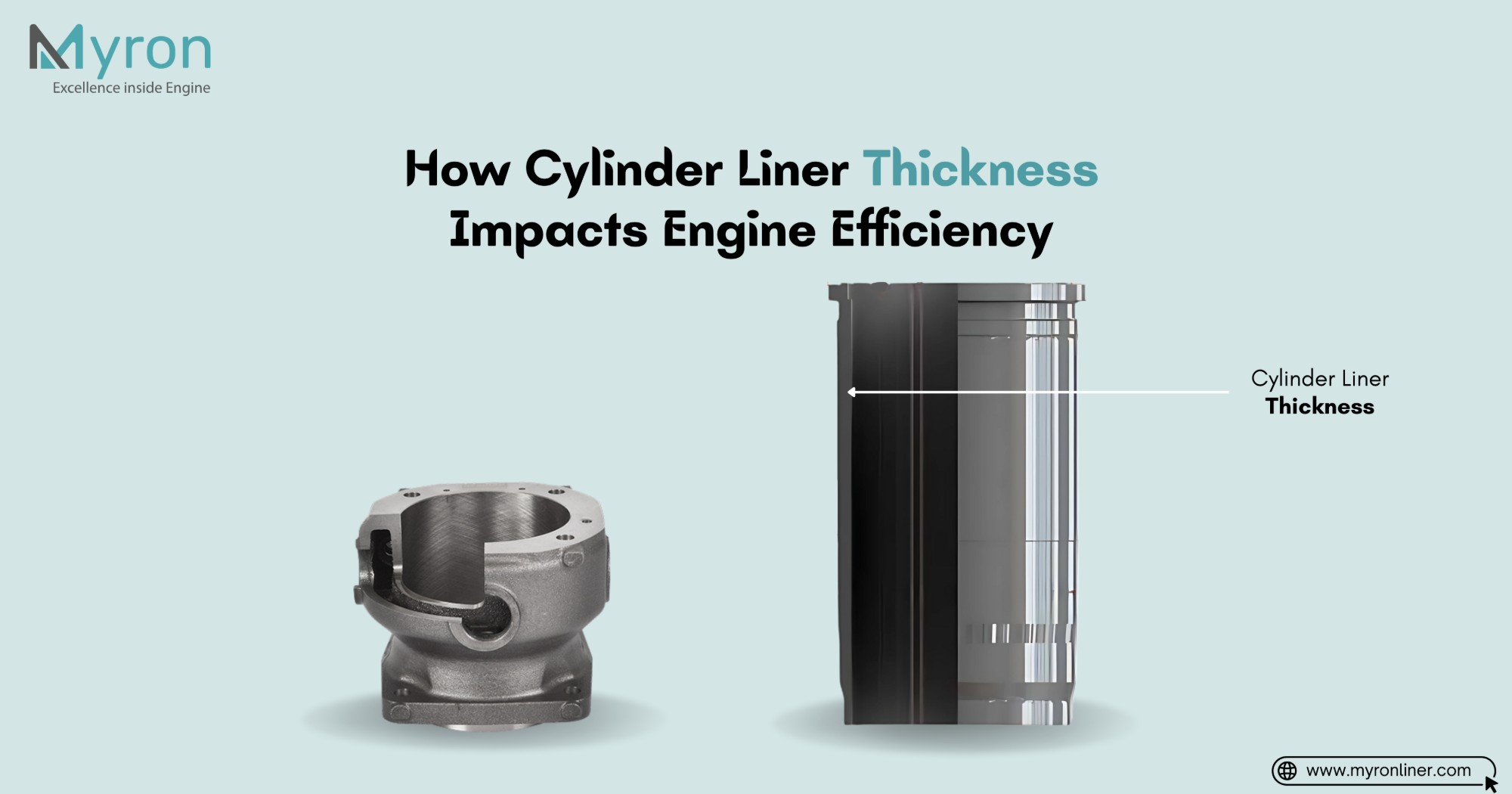
How Cylinder Liner Thickness Impacts Engine Efficiency
Cylinder liners form an engine's cylinder's inner surface, sometimes referred to as cylinder sleeves. These liners serve as the running surface for the piston rings and contribute to heat transfer, sealing, and structural integrity. Among the many factors influencing their effectiveness, cylinder liner thickness is one of the most overlooked but vital aspects. This article will explore how liner thickness affects engine performance, efficiency, durability, and overall operation.
Understanding Cylinder Liners
Cylinder liners can be dry, wet, or air-cooled. They are designed to withstand high pressure, heat, and mechanical loads regardless of the type. The thickness of these liners influences how they respond to these forces.
Liner thickness refers to measuring the material's width from the inner running surface to the outer wall that contacts the engine block or coolant. This measurement directly affects the liner's strength, heat dissipation properties, and resistance to wear.
Read More: A Complete Guide to the Different Types of Cylinder Liners
The Role of Cylinder Liner Thickness in Engine Efficiency
1. Heat Transfer Efficiency
Thicker liners can dissipate heat more effectively by providing a larger cross-sectional area for heat conduction. Heat generated during combustion must be transferred away from the cylinder to prevent overheating, knocking, or premature wear. Thermal stress is decreased, and equal heat distribution is guaranteed with the right liner thickness.
However, excessive thickness can be a thermal barrier, slowing heat transfer and affecting combustion chamber temperatures. Thus, finding the ideal thickness is essential to balance thermal efficiency and durability.
2. Structural Integrity and Durability
A thicker cylinder liner is generally more robust and better suited for heavy-duty or high-performance engines. It offers improved resistance to cracking, warping, and mechanical deformation. In high-load engines, such as those used in trucks, marine vessels, or industrial machinery, thicker liners can extend engine lifespan and reduce maintenance frequency.
Conversely, thinner liners might reduce engine weight and cost but are more prone to wear and damage under heavy use.
3. Friction and Fuel Economy
Cylinder liner thickness can influence the piston-to-wall clearance, directly affecting engine friction. Excessively thick liners may increase engine size and frictional resistance, lowering fuel efficiency. When engineered correctly, thin liners help reduce friction losses and improve combustion efficiency, translating into better mileage and reduced emissions.
Finding the right thickness helps reduce internal drag without compromising component strength.
4. Support for Bore Stability
Proper liner thickness helps maintain bore roundness during thermal expansion and mechanical stress. Bore distortion affects sealing performance and can lead to increased oil consumption and reduced compression. Uniform liner thickness helps support consistent piston movement and efficient combustion cycles.
5. Impact on Engine Noise and Vibration
The stiffness of a thicker liner helps dampen vibrations and reduce engine noise. It acts as a buffer, absorbing shocks and oscillations generated during engine operation. For vehicles with critical NVH (Noise, Vibration, and Harshness) characteristics, thicker liners can enhance user comfort.
Factors to Consider When Selecting Cylinder Liner Thickness
Engine Type and Application
Engines in trucks, tractors, and generators typically benefit from thicker liners due to the demands of high torque and extended operating hours. Using thinner liners, passenger vehicles, and motorcycles may prioritize weight reduction and cost-effectiveness.
Material Properties
Choosing liner material—cast iron, alloy steel, or composite—affects the optimal thickness. For instance, centrifugal-cast iron liners allow for thinner walls without sacrificing strength due to their high density and uniformity.
Manufacturing Precision
Advancements in CNC machining and metallurgical processes enable precise control over liner dimensions. This ensures consistency in wall thickness and allows manufacturers to design liners that maximize efficiency without compromising reliability.
Cooling Method
Wet liners come in direct contact with coolant and may require different thickness parameters than dry liners. The liner must be thick enough to handle pressure differentials, allowing adequate coolant flow.
Real-World Impact: Case Studies
Case 1: Automotive Engines In modern cars, manufacturers increasingly adopt thin-wall dry liners with high surface hardness. These liners provide sufficient durability while minimizing weight and improving thermal management. The result is improved mileage and lower emissions.
Case 2: Heavy-Duty Diesel Engines For marine engines and commercial vehicles, thicker wet liners are preferred. These liners withstand long operating hours and continuous thermal cycling, reducing the frequency of overhauls and ensuring operational reliability.
Case 3: Performance Racing Engines High-performance engines use liners that perfectly balance thickness and material strength. Advanced coatings and optimal thickness help prevent heat-related failures while maximizing power output.
Conclusion
Cylinder liner thickness is a critical design factor that significantly influences engine efficiency, durability, and performance. While thicker liners provide strength, vibration damping, and thermal stability, thinner liners offer benefits in weight reduction and fuel economy. The right choice depends on engine type, application, and design priorities. By understanding how cylinder liner thickness impacts various engine parameters, manufacturers and engineers can create more reliable, efficient, and cost-effective engines.
About Myron Liners
As one of the trusted cylinder liner manufacturers and cylinder liner suppliers, Myron Liners delivers high-quality engine components engineered for peak performance. Whether you need standard or customized engine cylinder liners, Myron's advanced production capabilities ensure optimal durability and fit for various applications.
References
Cylinder liner by Wikipedia[1].
FAQs
Q1: Can changing cylinder liner thickness improve performance?
A: Yes, optimizing liner thickness can enhance thermal efficiency, reduce friction, and increase durability, especially in high-performance applications.
Q2: What's the ideal cylinder liner thickness?
A: It varies by engine design but typically ranges from 3mm to 6mm. Thicker liners are used for heavy-duty engines, while lighter engines use thinner liners.
Q3: Do thicker liners reduce engine wear?
A: They generally offer better wear resistance, particularly in high-load and high-temperature conditions.
Q4: How does liner thickness affect engine cooling?
A: Proper thickness ensures balanced heat transfer. Excessively thick liners may slow cooling, while too-thin liners may not handle heat or stress well.
Reference & Trademark Disclaimer
All manufacturer names, trademarks, logos, product names, part numbers, model numbers, descriptions, and other identifying references mentioned in this article are used for identification, reference, and cross-reference purposes only.
Such references do not imply any affiliation, association, authorization, sponsorship, approval, or endorsement by the respective manufacturers or trademark owners. All trademarks, brand names, product names, part numbers, and related intellectual property remain the property of their respective owners.
MYRON LINER LLP is an independent manufacturer and supplier of engine components. The use of any third-party name or reference is solely intended to help readers identify the applicable engine, component, or application.