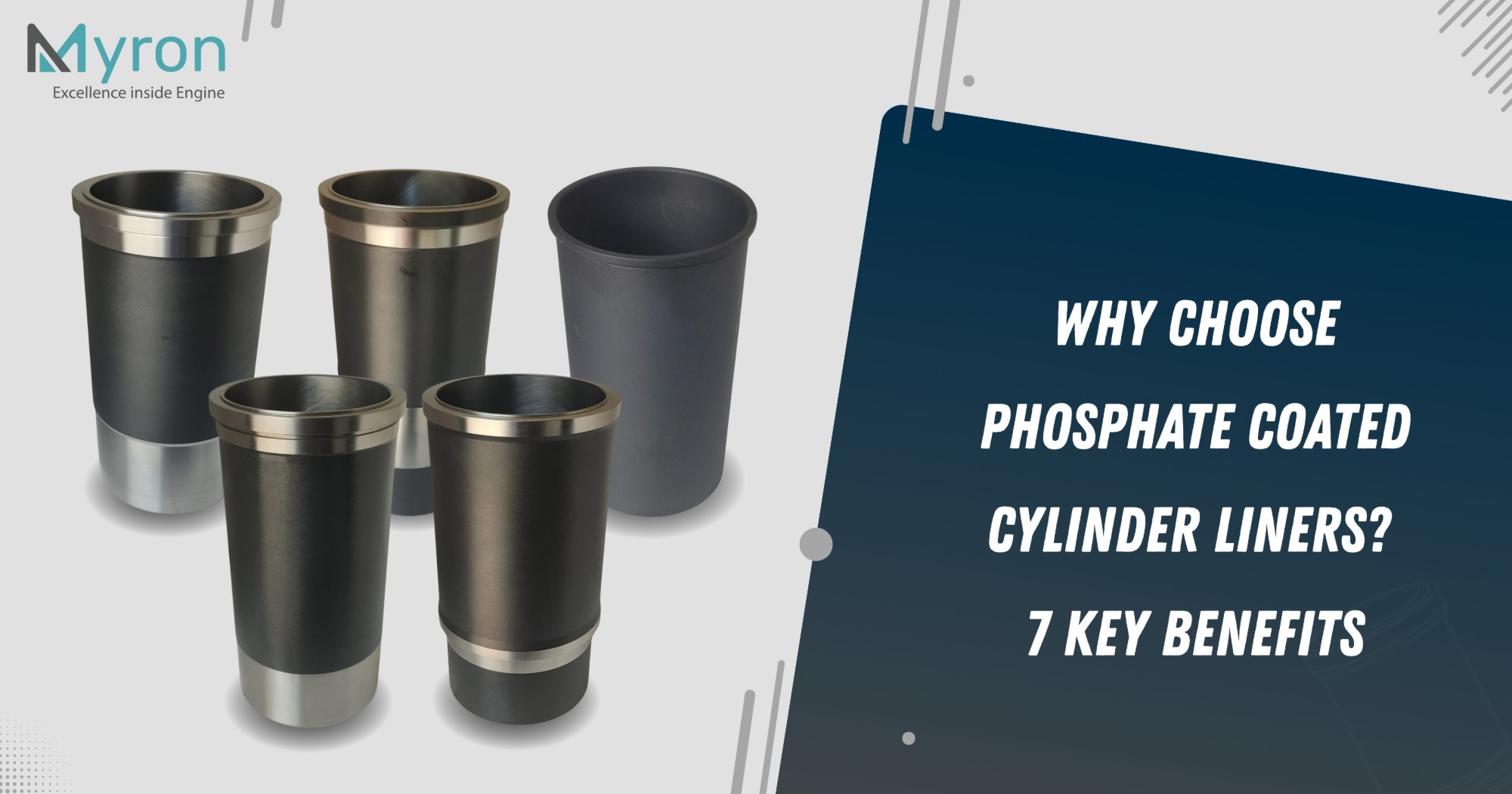
Why Choose Phosphate Coated Cylinder Liners? 7 Key Benefits
Internal combustion engines' longevity and effectiveness greatly depend on cylinder liners, sometimes called cylinder sleeves. Manufacturers often apply surface treatments like phosphate coating to enhance their performance and longevity. This advanced surface treatment not only improves wear resistance but also offers a host of other functional advantages. In this blog, we will explore phosphate coating, its use, and the top 7 benefits it brings to cylinder liners.
What is Phosphate Coating?
Phosphate coating is a chemical treatment process in which a metal surface is converted into a layer of phosphate crystals. This is commonly done using zinc, manganese, or iron phosphate solutions. In the case of cylinder liners, the treatment primarily enhances surface properties like hardness, oil retention, and corrosion resistance. The resulting layer is typically grey or black and has a matte texture.
Phosphate coatings are particularly valued in the automotive and heavy machinery sectors because they create a strong foundation for lubricants and reduce friction between moving components.
Benefits of Phosphate Coated Cylinder Liners
1. Improved Wear Resistance
One of the most significant advantages of phosphate-coated cylinder liners is their enhanced wear resistance. The phosphate layer forms a rigid outer surface that can withstand the repeated motion of pistons, rings, and other engine parts. This added protection minimizes material degradation, even under high-stress and high-temperature conditions.
Wear resistance is crucial for extending engine life, especially in vehicles subjected to demanding workloads, such as commercial trucks, tractors, and construction equipment.
2. Better Lubrication Retention
The micro-porous structure of phosphate coatings is excellent for holding lubricating oil. This enhances the liner's ability to maintain a consistent lubrication film between the piston and liner surface.
Improved oil retention reduces metal-to-metal contact, decreasing the chances of scuffing, friction, and overheating. This property is especially valuable during the engine start-up phase when lubrication is typically at its lowest.
3. Enhanced Corrosion Resistance
Phosphate coatings offer an extra layer of protection against rust and oxidation. This is particularly useful in humid or marine environments where engine components are frequently exposed to moisture.
By preventing corrosion, phosphate-coated liners maintain their structural integrity and prolong the engine's overall life. This feature is a significant reason why many manufacturers opt for phosphate coatings, especially for export-oriented or high-performance engines.
4. Reduced Friction and Heat Generation
Another key advantage of phosphate coated liners is the reduction in friction between the piston rings and liner walls. This translates to less heat generation within the cylinder, allowing the engine to run cooler and more efficiently.
Lower friction reduces energy loss, resulting in better fuel economy and smoother engine performance. Over time, this can result in considerable cost savings for commercial fleets. For coated liners, there is a recursion in friction between the piston rings and liner walls.
5. Improved Break-in Performance
The break-in period of a new engine is crucial for ensuring that parts wear in properly. Phosphate coated cylinder liners facilitate a smoother break-in process by offering an optimal surface for initial piston ring contact.
This accelerates the settling-in period and reduces the risk of damage during this critical phase. As a result, engines can reach peak performance faster and with fewer issues.
6. Better Compatibility with Piston Rings
Cylinder liners must be compatible with various piston rings to avoid excessive wear and ensure smooth operation. Phosphate coating improves this compatibility by providing a less abrasive surface that is still durable.
This leads to improved ring life, better sealing, and consistent engine compression — all essential for engine health and performance.
7. Cost-Effective Durability Upgrade
Phosphate coating is relatively inexpensive compared to other advanced surface treatments like chrome plating or thermal spraying. It provides excellent performance improvements without significantly raising production costs.
This makes phosphate-coated cylinder liners a cost-effective choice for both OEMs and aftermarket suppliers looking to enhance the durability of their engine components.
Applications Across Industries
Phosphate coated cylinder liners are widely used across various sectors, including:
- Automotive (cars, trucks, SUVs)
- Agriculture (tractors, harvesters)
- Marine (boats, outboard engines)
- Industrial machinery (generators, compressors)
Their versatility and enhanced performance make them suitable for high-performance and high-load applications.
Conclusion
Phosphate coated cylinder liners are a reliable and cost-effective solution for improving engine durability, performance, and lifespan. The benefits are diverse and impactful, from better wear resistance and lubrication to improved heat dissipation and corrosion resistance. Whether you are an OEM, engine builder, or end-user, choosing phosphate coated liners can lead to long-term savings and enhanced engine reliability.
Myron Liners specializes in manufacturing high-quality engine cylinder liners, including phosphate-coated variants. As trusted cylinder liner suppliers and manufacturers, we combine precision engineering with advanced surface treatments to deliver exceptional performance. Contact us today to explore our product range and discover how we can support your engine component needs.
Don't forget to check: Why Myron Liners: #1 Choice for Precision Engine Cylinder Liners
FAQs
Q1: What is the purpose of phosphate coating on cylinder liners?
A: It enhances surface durability, wear resistance, and oil retention, leading to better engine performance and longevity.
Q2: Are phosphate coated liners suitable for all engine types?
A: Yes, they are widely used in automotive, agricultural, marine, and industrial engines.
Q3: How does phosphate coating compare to chrome plating?
A: While chrome plating offers superior hardness, phosphate coating is more cost-effective and better at oil retention.
Q4: Can phosphate-coated liners help with fuel efficiency?
A: By reducing friction and heat, they contribute to better combustion and fuel economy.
Q5: Where can I purchase high-quality phosphate-coated cylinder liners?
A: You can explore a wide range of premium liners from trusted suppliers like Myron Liners.
Reference & Trademark Disclaimer
All manufacturer names, trademarks, logos, product names, part numbers, model numbers, descriptions, and other identifying references mentioned in this article are used for identification, reference, and cross-reference purposes only.
Such references do not imply any affiliation, association, authorization, sponsorship, approval, or endorsement by the respective manufacturers or trademark owners. All trademarks, brand names, product names, part numbers, and related intellectual property remain the property of their respective owners.
MYRON LINER LLP is an independent manufacturer and supplier of engine components. The use of any third-party name or reference is solely intended to help readers identify the applicable engine, component, or application.