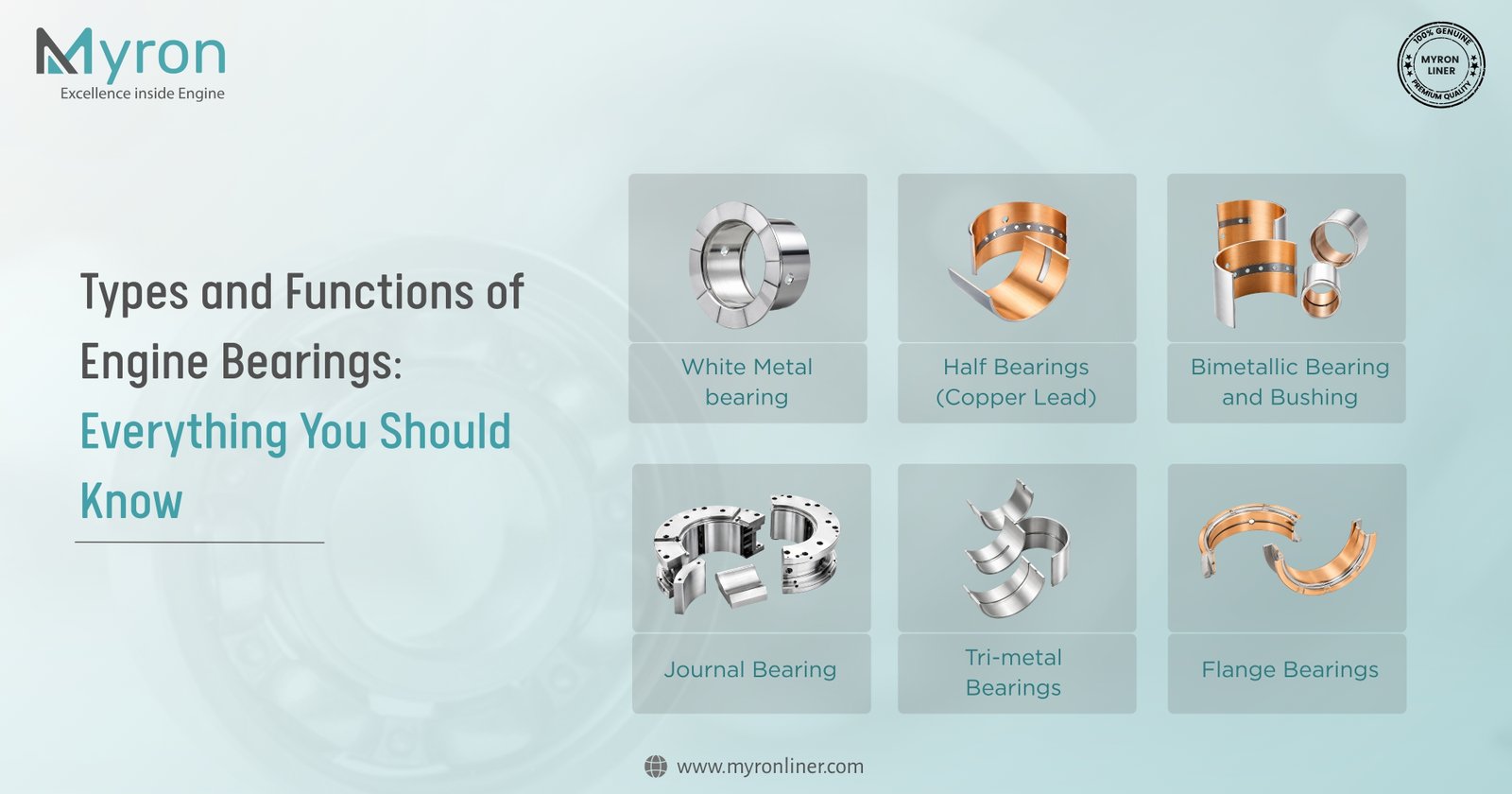
Types and Functions of Engine Bearings: Everything You Should Know
In the world of internal combustion engines, precision and reliability are critical. One of the most essential yet often overlooked engine components that ensure smooth operation is the engine bearing. Whether you're involved in engine rebuilding, automotive repair, or aftermarket parts supply, understanding engine bearings and their functions is crucial.
This blog provides a comprehensive overview of engine bearings, covering their types, roles, and the importance of each in maintaining optimal engine performance.
What Are Engine Bearings?
Engine bearings are precision-engineered components that support the rotating shafts in an engine. These shafts include the crankshaft and the camshaft. Engine bearings reduce friction between the moving parts and help maintain correct alignment. Installed in the engine block, these components ensure smooth rotation and load distribution throughout the engine.
Without engine bearings, metal-to-metal contact would cause rapid wear and overheating, leading to severe engine failure. They play a vital role in maintaining the durability and longevity of any engine, especially in high-performance or heavy-duty applications.
Why Are Engine Bearings Important?
The core function of engine bearings is to support rotating parts and reduce friction. Here's what they help accomplish:
- Friction Reduction: Bearings create a thin oil film that reduces metal-on-metal contact.
- Support and Stability: They stabilize the crankshaft and camshaft, enabling precise rotation.
- Heat Dissipation: Bearings help transfer heat away from moving parts to the engine block.
- Longevity: By reducing wear and tear, they enhance engine lifespan.
For aftermarket engine part suppliers and rebuilders, choosing high-quality bearings is non-negotiable. It's an investment in reliability and engine integrity.
Types of Engine Bearings
Engine bearings come in various types, each serving specific roles within the engine. Here's a detailed look at the most common types:
1. Main Bearings
Main bearings support the crankshaft in the engine block and are among the most critical components in any internal combustion engine. The crankshaft rotates inside these bearings, converting linear motion from the pistons into rotational energy.
Number of Main Bearings
Load demands and maximum RPM influence the number of main bearings in an engine. While most engines have at least two - one at each end of the crankshaft - high-performance or heavy-duty engines may include additional bearings to reduce bending stress and crankshaft deflection.
Some engines, like modern high-RPM petrol or diesel engines, may use one main bearing per crank pin. The total number of main bearings is often used to describe crankshaft design, such as "four-bearing" or "seven-bearing" crankshafts.
- Location: Positioned along the crankshaft journals inside the engine block.
- Function: Provides a smooth surface for crankshaft rotation and absorbs radial and axial loads.
High-quality main bearings are essential for high-speed and high-load engines. If the main bearings fail, the crankshaft can become misaligned or seized entirely.
2. Connecting Rod Bearings (Rod Bearings)
Rod bearings are located at the end of the connecting rod, where it connects to the crankshaft. These bearings are subjected to both rotational and oscillating forces.
- Location: Inside the big end of the connecting rod.
- Function: Allows the connecting rod to move smoothly on the crankshaft journal. They help convert the reciprocating motion of the piston into the crankshaft's rotary motion with minimal friction. Properly functioning rod bearings maintain oil film integrity and prevent direct metal-to-metal contact during high-speed operation. They also absorb shock loads generated during combustion, protecting both the crankshaft and connecting rod from premature wear.
Rod bearings must handle immense pressure during the combustion cycle. Worn rod bearings can cause knocking noises, loss of oil pressure, and engine failure.
3. Camshaft Bearings (Cam Bearings)
Cam bearings support the camshaft, which controls the timing of the engine's valves. While they operate at lower loads compared to crankshaft bearings, they are still crucial for maintaining valve timing precision.
- Location: In the engine block or cylinder head/camshaft housing, depending on the engine design.
- Function: Ensures smooth camshaft rotation and maintains timing integrity. They help reduce friction between the camshaft and its housing, ensuring consistent valve operation. Proper cam bearing performance is essential for accurate valve lift and duration, which directly impacts engine efficiency, emissions, and power output.
In overhead cam engines, these bearings are particularly important because valve timing has a direct impact on engine performance and emissions.
4. Thrust Bearings
Thrust bearings control the axial movement of the crankshaft. They prevent it from shifting forward and backward due to clutch action or torque converter pressure.
- Location: Integrated into main bearing sets or installed as separate thrust washers.
- Function: Maintains proper endplay and prevents crankshaft misalignment. They absorb axial loads generated during gear shifting or drivetrain engagement, ensuring the crankshaft stays within its designated operating position. Properly functioning thrust bearings also help maintain consistent gear mesh, reduce transmission stress, and prevent damage to the engine block and crankshaft surfaces.
Excessive crankshaft endplay due to worn thrust bearings can lead to timing issues, seal failure, and even crankshaft damage.
5. Balance Shaft Bearings (Used in Specific Engines)
Some engines use balance shafts to reduce vibration, particularly where additional vibration control is required. These balance shafts require appropriate bearing support to maintain proper alignment and smooth rotation.
- Location: Along the balance shafts in the engine block.
- Function: Support the shaft rotation and minimize engine vibration. By maintaining proper alignment and smooth motion of the balance shaft, these bearings help neutralize secondary engine imbalances. This contributes to quieter engine operation, reduced wear on surrounding components, and improved overall driving comfort.
Though not as common, these bearings contribute to smoother engine operation.
Materials Used in Engine Bearings
The material used in bearing construction directly impacts durability and performance. Common materials include:
- Bimetal Bearings: Typically consist of a steel backing with an aluminum-based bearing alloy. They offer a combination of strength, wear resistance, and compatibility with different engine applications.
- Tri-metal Bearings: Generally use a steel backing with a copper-based intermediate layer and a softer overlay designed to provide strength, fatigue resistance, and good conformability. The exact material construction varies by manufacturer and application.
Choosing the correct bearing material depends on the engine's intended use, lubrication system, and operational load.
Common Signs of Bearing Wear or Failure
Engine bearing failure can have serious consequences. Watch for these warning signs:
- Low or fluctuating oil pressure
- Knocking or rumbling noises
- Metallic particles in the engine oil
- Excessive bearing or engine temperature
- Abnormal vibration or engine performance
These symptoms can have multiple causes, so proper diagnosis is required before replacing bearings. When rebuilding an engine or replacing parts, always inspect the connecting rod, crankshaft, and engine block for signs of wear or scoring.
Engine Bearing Clearance and Lubrication
Proper clearance is vital for engine bearings to function correctly. Too much clearance can cause a loss of oil pressure and bearing knock; too little can lead to oil starvation and seizure.
Lubrication is equally important. A pressurized oil film forms between the bearing and the journal, allowing rotation without direct contact. For this reason, always:
- Use the correct viscosity oil
- Maintain proper oil pressure
- Replace oil filters regularly
Proper lubrication, correct clearance, clean oil, and accurate installation are essential for minimizing bearing wear and extending service life.
Tips for Installing Engine Bearings
- Cleanliness: Always clean the engine block, crankshaft, and connecting rod thoroughly.
- Use Plastigage: Measure bearing clearance during assembly to ensure accurate fitment.
- Apply Assembly Lube: Use high-quality assembly lube to protect the bearings during initial startup.
- Torque Correctly: Use a torque wrench and follow manufacturer torque specs.
- Check Alignment: Misaligned bearings can lead to premature failure.
These precautions can extend bearing life and improve engine reliability.
Aftermarket Bearings: Why They Matter
For aftermarket engine rebuilders and suppliers, bearing quality makes all the difference. For engine rebuilders and aftermarket suppliers, bearing quality is critical. Depending on the application, aftermarket bearings may be available in different materials, clearances, sizes, and performance specifications. The correct bearing should always be selected according to the engine manufacturer's requirements and the intended operating conditions. This allows:
- Better Material Choices
- Custom Clearances
- Enhanced Durability for Racing or Heavy-Duty Engines
Make sure to source your bearings from trusted manufacturers who specialize in aftermarket engine components.
Conclusion
Engine bearings are small but vital components that support and guide rotating shafts, reduce friction, and ensure reliable engine operation. From main bearings and connecting rod bearings to cam bearings and thrust bearings, each type plays a unique role in maintaining mechanical integrity.
Understanding these components helps mechanics, rebuilders, and automotive enthusiasts make informed choices about maintenance and part replacement.
About Myron Liners: Trusted Name in Engine Components
If you're looking for high-quality aftermarket engine components, including cylinder liners, Myron Liners is a name you can trust. As a reliable manufacturer and supplier, Myron Liners offers durable, precision-made engine components for various industrial and automotive applications.
Whether you're rebuilding an engine or sourcing parts for heavy-duty use, Myron Liners ensures that every product meets stringent quality standards. Visit their website to explore a comprehensive range of engine components tailored to meet your performance needs.
Reference:
Main bearing by Wikipedia[1].
FAQ
What are the symptoms of bad engine bearings?
Symptoms of bad engine bearings include low oil pressure, knocking or rumbling noises from the engine (especially during acceleration), metal shavings in the oil, engine overheating, and, in severe cases, a seized engine.
Which engine bearing is best?
There is no single bearing type that is best for every engine. The correct bearing depends on the engine design, operating conditions, load, lubrication system, crankshaft condition, and required clearance. Bimetal and tri-metal bearings each have specific advantages and should be selected according to the manufacturer's specifications and the intended application.
What are the different types of engine bearings?
There are several types of engine bearings, each serving a unique role. The most common include main bearings (supporting the crankshaft), connecting rod bearings (linking rods to the crankshaft), camshaft bearings (supporting camshaft rotation), thrust bearings (controlling crankshaft axial movement), and balance shaft bearings (reducing engine vibration in certain engine designs).
How do engine bearings affect performance?
Engine bearings are vital for reducing internal friction, supporting rotating components, and maintaining precise alignment within the engine. When functioning properly, they ensure smooth motion, consistent oil pressure, and optimal power output. Poor bearing conditions can lead to performance drops, engine noise, and mechanical failures.
Can you drive with worn engine bearings?
It's highly discouraged to drive with worn engine bearings. Continued operation can lead to severe crankshaft damage, loss of oil pressure, and catastrophic engine failure. If symptoms like knocking noises or low oil pressure occur, it's best to shut off the engine and inspect the bearings immediately.
What causes engine bearing failure?
Engine bearing failure can result from a variety of issues, including inadequate lubrication, contaminated oil, incorrect bearing installation, misaligned components, or operating the engine under excessive load. Overheating and improper clearance between bearing surfaces and journals are also common culprits.
Reference & Trademark Disclaimer
All manufacturer names, trademarks, logos, product names, part numbers, model numbers, descriptions, and other identifying references mentioned in this article are used for identification, reference, and cross-reference purposes only.
Such references do not imply any affiliation, association, authorization, sponsorship, approval, or endorsement by the respective manufacturers or trademark owners. All trademarks, brand names, product names, part numbers, and related intellectual property remain the property of their respective owners.
MYRON LINER LLP is an independent manufacturer and supplier of engine components. The use of any third-party name or reference is solely intended to help readers identify the applicable engine, component, or application.