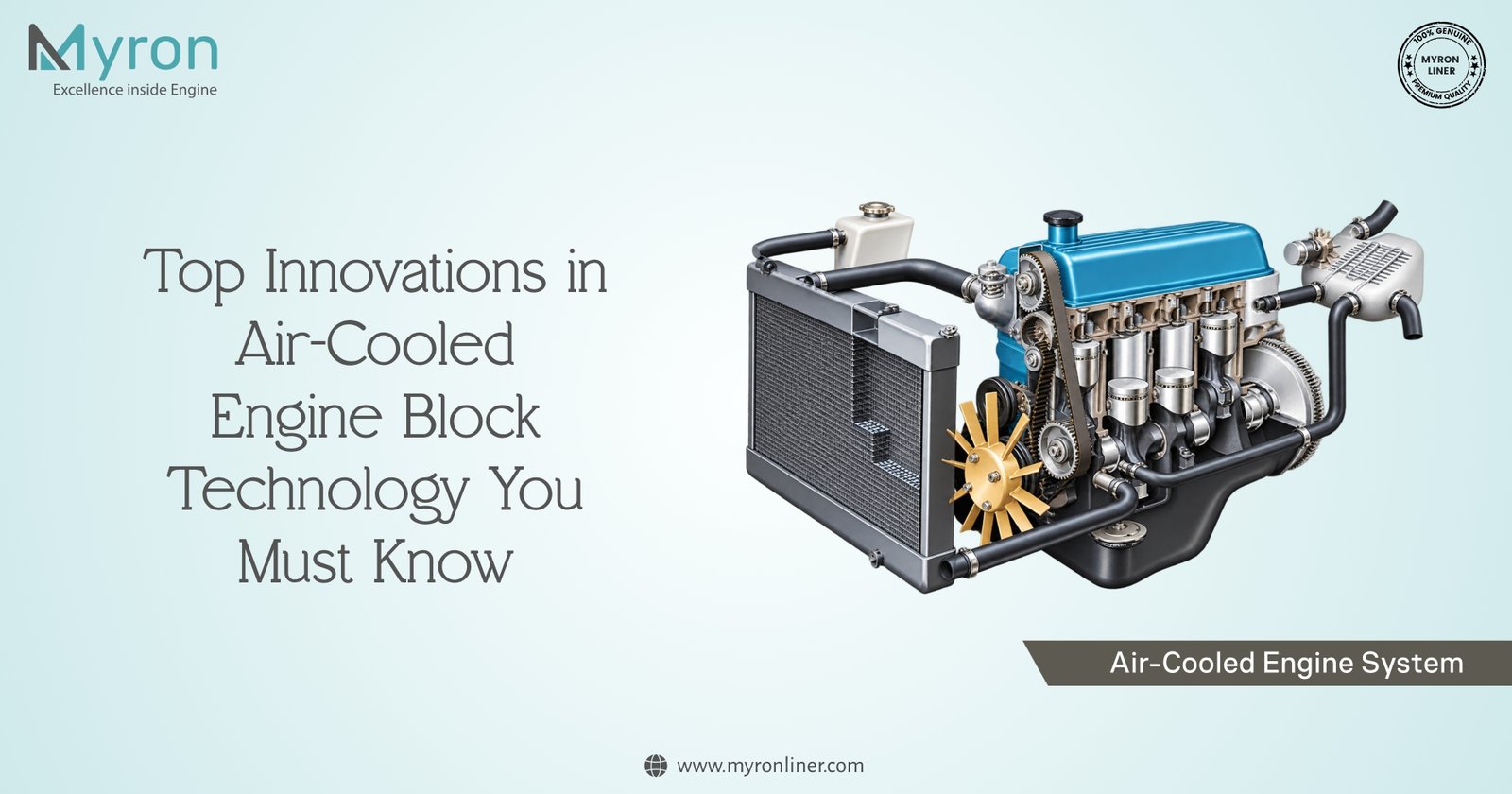
Top Innovations in Air-Cooled Engine Block Technology You Must Know
Air-cooled engines have long been favoured for their simplicity, reliability, and cost-effectiveness. While liquid-cooled systems often dominate discussions, air-cooled engines remain relevant because of their unique advantages. In recent years, engineers have made significant advancements in air-cooled engine block technology, enhancing performance, durability, and efficiency. This article delves into these innovations, focusing on materials, design, manufacturing processes, and the role of cylinder liners.
Understanding Air-Cooled Engine Blocks
An air-cooled engine uses air flowing over the engine block to remove heat generated during combustion. Air-cooled engines are different from liquid-cooled engines.
Liquid-cooled engines use a coolant that moves through a radiator. In contrast, air-cooled engines rely on the natural flow of air to keep the proper temperatures. This design eliminates the need for a radiator, hoses, and coolant, reducing complexity and maintenance requirements.
The engine block serves as the core structure housing the cylinders and other critical components. In air-cooled engines, manufacturers usually make the block from materials that conduct heat well. This helps to cool the engine efficiently.
Air-cooled engines do not use coolant like liquid-cooled engines. Instead, they depend on air flowing directly over the engine's surface. Fins integrated into the cylinder head and block disperse heat and increase the surface area for cooling.
This design has been popular in motorcycles, planes, and small cars. It is simple and needs less maintenance.
Advantages and Limitations of Air Cooling
Air cooling offers several key advantages:
- Simplicity: No radiator, coolant, or hoses required.
- Lower maintenance: Fewer parts that can fail or leak.
- Weight savings: Lightweight compared to liquid-cooled systems.
- No freezing issues: Operates efficiently in colder regions without risk of coolant freezing.
However, the design also has limitations:
- It is less effective at extremely high power outputs.
- Uneven cooling can sometimes cause hotspots in the engine block.
- Noise levels are often higher due to exposed cooling fins.
These challenges paved the way for modern innovations in air-cooled engine block technology.
Material Innovations Enhancing Heat Dissipation
One significant improvement in air-cooled engine blocks is the development of new materials. These materials help to dissipate heat more effectively. Traditional engine blocks were often made from cast iron, which, while durable, is heavy and not the best conductor of heat. Modern materials have addressed these issues:
- Aluminum Alloys: Aluminum alloys are lightweight and have excellent thermal conductivity. They are the top choice for many air-cooled engine blocks. They facilitate rapid heat transfer, reducing the risk of overheating.
Read more:
- High-Strength Composites: New composite materials have created engine blocks that are strong and lightweight. These materials can withstand high temperatures and stresses, extending the engine's lifespan.
- Ceramic Coatings: Applying ceramic coatings to engine blocks can enhance heat resistance and reduce friction. These coatings help maintain engine performance under extreme conditions.
Advanced Cylinder Liner Technologies
Cylinder liners, also known as cylinder sleeves, are crucial components in air-cooled engine blocks. They provide a durable surface for the pistons to move against, reducing wear and tear on the engine block itself. Innovations in cylinder liner technology have significantly improved engine performance:
- Air-Cooled Cylinder Liners: These liners have fins or other shapes to increase surface area. This helps to cool them better. They are particularly beneficial in applications where space constraints limit the use of traditional cooling systems.
- Finned Cylinder Liners: These liners have fins that increase the surface area. This helps them cool more efficiently. This design is instrumental in high-performance engines.
- Coated Cylinder Liners: Adding coatings like chrome or phosphate to cylinder liners can lower friction and wear. This helps engines last longer and perform better.
Read More: Boost Engine Power and Efficiency with Air Cooled Blocks
Design Innovations for Enhanced Performance
Design plays a pivotal role in the efficiency of air-cooled engine blocks. Recent innovations include:
- Engineers have created better cooling channels in the engine block. These channels help direct airflow and improve heat dissipation.
- Integrated Cooling Fins: Adding cooling fins to the engine block helps transfer heat better. It does this without adding much weight or complexity.
- Modular engine block designs make maintenance and repairs easier because mechanics can replace individual components without disassembling the entire engine.
Precision Manufacturing Techniques
Advancements in manufacturing technologies have enabled the production of more precise and durable air-cooled engine blocks:
- CNC Machining: CNC machines make engine blocks with precise measurements. This ensures high quality and reliable performance.
- Additive Manufacturing: 3D printing technologies are being explored to create complex engine components, potentially reducing material waste and enabling custom designs.
- Improved Casting Techniques: Better casting methods have created smoother surfaces and more detailed designs. This helps with heat dissipation and makes engines work more efficiently.
Hybrid Cooling Systems: The Future of Engine Technology
While air-cooled engines offer numerous advantages, some applications require additional cooling methods. Hybrid cooling systems combine air and liquid cooling to provide optimal temperature management:
- Air-Liquid Hybrid Systems: These systems use air to cool the general heat and liquid to cool parts that get very hot, like turbochargers.
- Variable Cooling Systems: Smart sensors and controls change the cooling methods based on engine temperature. This ensures efficient performance in different conditions.
The Role of Cylinder Liners in Engine Longevity
Cylinder liners are integral to the durability and performance of air-cooled engine blocks. By providing a hard, wear-resistant surface for the pistons, they reduce friction and prevent damage to the engine block. Regular maintenance and timely replacement of cylinder liners can significantly extend the engine's lifespan.
Myron Liners: Leading the Way in Cylinder Liner Manufacturing
When it comes to high-quality cylinder liners, Myron Liners stands out as a trusted manufacturer and supplier. Specializing in aftermarket engine parts, Myron Liners offers a wide range of products, including:
- Cast Iron Cylinder Liners: Known for their durability and wear resistance, ideal for various engine applications.
- Wet and Dry Cylinder Liners: Catering to different cooling requirements, ensuring optimal engine performance.
- Phosphate Coated Liners: Providing enhanced corrosion resistance and improved sealing properties.
- Chrome Cylinder Liners: Offering reduced friction and extended engine life.
- Air-Cooled Cylinder Liners: Designed with fins to increase surface area for better heat dissipation.
- Water-Cooled Cylinder Liners: Incorporating cooling channels for efficient temperature management.
- Finned Cylinder Liners: Enhancing heat dissipation through increased surface area.
Myron Liners dedicates itself to quality and customer satisfaction. They make sure each product meets high standards. This helps improve the performance and lifespan of air-cooled engines.
For more information or to explore their product offerings, visit Myron Liners.
Conclusion
Innovations in air-cooled engine block technology have led to more efficient, durable, and high-performing engines. New materials, better designs, and precise manufacturing have improved air-cooled engines. Hybrid cooling systems have also helped.
These changes have increased the abilities of air-cooled engines in many industries. Cylinder liners play a crucial role in these advancements, providing essential support for engine longevity and performance.
As the need for reliable and affordable engine solutions grows, companies like Myron Liners lead the way. They provide high-quality cylinder liners that meet the changing needs of the industry. Embracing these innovations ensures that air-cooled engines remain a viable and efficient choice for diverse applications.
Reference:
Air-cooled engine by Wikipedia[1].
FAQ
Q: What are the advantages of an air-cooled engine?
Air-cooled engines are light and straightforward. They are also cost-effective and need less maintenance. This is because they do not use radiators, coolant, or hoses.
Q: What is the working principle of an air cooling system?
Air cooling works by blowing air over fins on the engine block and cylinder head. This increases the surface area and helps release heat quickly into the air around it.
Q: Why are cylinder liners essential in an air-cooled engine block?
Cylinder liners provide a durable, heat-resistant surface for pistons, reducing friction and wear. In air-cooled engine blocks, they also support better heat dissipation, improving performance and engine life.
Q: Which industries commonly use air-cooled engine blocks?
Air-cooled engine blocks are standard in motorcycles, scooters, small cars, planes, portable generators, and farm machines. They are popular because they are reliable and easy to maintain.
Q: How are modern air-cooled engine blocks improving efficiency?
Recent innovations include aluminum alloys, finned cylinder liners, and new cooling fin designs. Precision CNC machining also helps. These improvements boost heat transfer, durability, and engine performance.
Reference & Trademark Disclaimer
All manufacturer names, trademarks, logos, product names, part numbers, model numbers, descriptions, and other identifying references mentioned in this article are used for identification, reference, and cross-reference purposes only.
Such references do not imply any affiliation, association, authorization, sponsorship, approval, or endorsement by the respective manufacturers or trademark owners. All trademarks, brand names, product names, part numbers, and related intellectual property remain the property of their respective owners.
MYRON LINER LLP is an independent manufacturer and supplier of engine components. The use of any third-party name or reference is solely intended to help readers identify the applicable engine, component, or application.