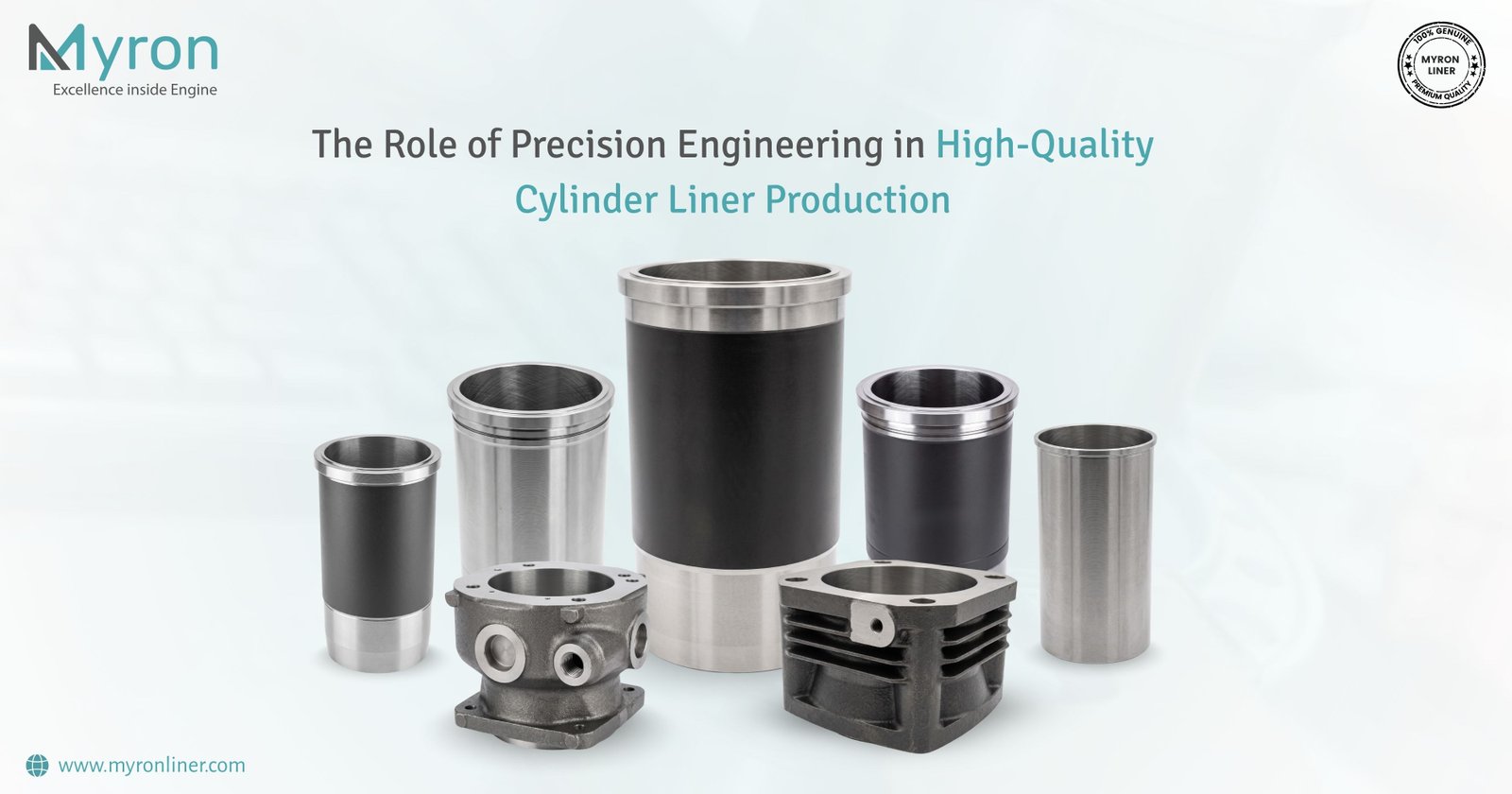
The Role of Precision Engineering in High-Quality Cylinder Liner Production
Cylinder liners are essential components of internal combustion engines. They form the sleeve in which the piston moves, ensuring smooth operation, efficient combustion, and long-lasting engine performance. For anyone involved in engine maintenance, aftermarket parts, or engine manufacturing, understanding the role of precision engineering in cylinder liner production is critical. This article explores how precision machining and engineering principles contribute to producing high-quality cylinder liners, enhancing engine efficiency, durability, and reliability.
What Are Cylinder Liners?
Cylinder liners, also known as sleeves, are cylindrical components inserted into an engine’s cylinder block. They create the surface for the piston to move smoothly during the combustion cycle. Cylinder liners are vital because they:
- Reduce wear on the engine block
- Maintain proper compression
- Ensure optimal heat transfer
- Enable easier engine maintenance and repair
There are different types of cylinder liners. These include dry liners, wet liners, chrome-coated liners, and air-cooled or water-cooled liners. Each type requires a distinct manufacturing process, but all rely heavily on precision engineering to meet stringent quality standards.
Understanding the Importance of Cylinder Liners
A cylinder liner (also known as a cylinder sleeve) is a replaceable metal sleeve fitted inside the engine block. It provides a smooth, wear-resistant surface for the piston to slide on while withstanding extreme heat and friction.
The liner also helps in:
- Maintaining the correct compression ratio
- Reducing friction between piston and block
- Transferring heat from the combustion chamber to the cooling system
- Preventing oil leakage into the combustion area
Simply put, without a properly engineered cylinder liner, even the best engine design cannot perform efficiently.
What Is Precision Engineering?
Precision engineering is the process of designing and manufacturing components with extremely high accuracy and tight tolerances. For cylinder liners, this means making sure every measurement is precise. This includes wall thickness and bore diameter, down to the micrometer.
This precision ensures:
- Perfect piston movement
- Consistent heat distribution
- Reduced vibration and wear
- Better sealing and compression
With modern technologies such as CNC machining, laser measurement systems, and automated inspection tools, manufacturers can now produce liners with unmatched accuracy and consistency.
Why Precision Engineering Matters in Cylinder Liner Production
The performance and longevity of cylinder liners depend on their dimensional accuracy, surface finish, and material quality. Even small changes in the liner’s diameter, roundness, or surface roughness can cause serious engine problems, like:
- Excessive piston wear
- Poor fuel combustion
- Reduced engine efficiency
- Premature engine failure
This is where precision engineering comes into play. Precision engineering ensures that every cylinder liner meets exact specifications, reducing the risk of engine damage and improving overall performance. By combining high-precision machining techniques with advanced quality control, manufacturers can produce liners that withstand high temperatures, pressures, and friction without compromising reliability.
The Manufacturing Process of Cylinder Liners
Producing a high-quality cylinder liner involves several stages, each requiring meticulous attention to detail and precision machining.
1. Material Selection
Cylinder liners are usually made from high-grade cast iron, alloy steel, or other specialized materials. Material selection is crucial because it directly affects wear resistance, thermal conductivity, and engine performance. Precision engineering begins at this stage by ensuring that the chosen material can withstand operational stress while maintaining machinability.
2. Casting or Forging
Most cylinder liners start as cast or forged blanks. Casting means pouring hot metal into molds to create a shape. Forging uses pressure to shape the metal.
Both methods require precise control over temperature, cooling rates, and metal composition. Precision engineering ensures the final product has minimal defects such as porosity or inclusions, which can weaken the liner.
3. Precision Machining
Once the liner is cast or forged, it undergoes precision machining to achieve the exact dimensions required. This stage includes:
- Boring: Enlarging the cylinder to the correct internal diameter.
- Honing: Refining the internal surface to achieve the proper smoothness and crosshatch pattern for optimal piston movement.
- Turning and Grinding: Ensuring outer diameters, lengths, and sealing surfaces are accurate.
Modern CNC machines and advanced honing tools help manufacturers keep very tight tolerances. These tolerances are often within micrometres. This ensures that each liner fits perfectly in the engine block.
4. Surface Treatment
Surface finish is vital for minimizing friction and wear. Many cylinder liners undergo treatments such as phosphate coating, chrome plating, or nitriding to enhance hardness and durability. Precision engineering makes sure that coatings are even and stick well. This is important for aftermarket engine parts, where performance and durability are key selling points.
5. Quality Control and Testing
No cylinder liner leaves the factory without rigorous quality inspection. This includes:
- Dimensional checks using coordinate measuring machines (CMM)
- Surface roughness measurements
- Hardness testing
- Non-destructive testing for cracks or defects
By applying precision engineering principles throughout production, manufacturers guarantee that every cylinder liner performs reliably under extreme operating conditions.
Read more: Complete Cylinder Liner Manufacturing Process at Myron Liners
Benefits of Precision Cylinder Liners in Engine Performance
High-quality, precision-engineered cylinder liners offer several advantages:
1. Enhanced Engine Efficiency
Accurate dimensions and smooth surface finishes reduce friction between the piston and liner. This improves fuel combustion, leading to better power output and fuel efficiency. Precision machining ensures a perfect fit, preventing air or fuel leaks that can compromise engine performance.
2. Increased Durability
Engines operating with poorly manufactured liners experience faster wear, leading to costly repairs or replacements. Precision-engineered cylinder liners withstand heat, pressure, and friction, extending engine life and reducing maintenance costs.
3. Improved Heat Dissipation
Cylinder liners must transfer heat from combustion to the coolant or air efficiently. Precision engineering makes sure the wall thickness is even and the right materials are chosen. This helps heat transfer and stops hot spots that can harm the engine.
4. Reduced Emissions
Properly engineered cylinder liners contribute to complete fuel combustion, reducing harmful emissions. For businesses and individuals focused on environmentally friendly engine solutions, precision liners are a critical component in meeting emission standards.
Types of Cylinder Liners and Their Precision Requirements
Different engines use different types of cylinder liners, but each demands accuracy and durability:
- Dry Liners: Fit directly into the engine block without coming in contact with coolant. They require tight dimensional control to prevent gas leakage.
- Wet Liners: Surrounded by coolant, offering better heat dissipation. The sealing areas must be machined with extreme precision to avoid leaks.
- Chrome-Plated Liners: These have a hard chrome layer to improve wear resistance. Surface finish is critical to ensure uniform coating adhesion.
- Air-Cooled and Water-Cooled Liners: These liners are made for specific engine types. They need a precise fit to work well and manage heat effectively.
In all cases, precision machining ensures the liner’s perfect fit, finish, and alignment within the engine block.
Precision Engineering Techniques in Modern Cylinder Liner Production
The demand for high-performance, aftermarket engine parts has driven the adoption of advanced precision engineering techniques. Some of the most important include:
CNC Machining
Computer Numerical Control (CNC) machines enable extremely accurate cutting, boring, and finishing. CNC machining makes sure each cylinder liner meets strict standards. This allows it to fit many engine models without losing performance.
Laser Measurement and Alignment
Modern production lines use laser measurement systems to verify dimensions and alignment at every stage. These systems detect even microscopic deviations, ensuring the cylinder liner meets the exact engineering specifications.
Advanced Honing
Honing is a critical process that creates the crosshatch pattern inside the cylinder liner. This pattern retains lubricating oil, reducing friction and wear. Precision honing machines help manufacturers control the angle, depth, and spacing of the crosshatch pattern. This control leads to better piston-liner interaction.
Computer-Aided Design (CAD) and Simulation
Before production starts, engineers use CAD and simulation tools. They design cylinder liners and predict how they will work in real-world conditions. This reduces trial-and-error, saves time, and ensures precision in the final product.
Challenges in Cylinder Liner Manufacturing
Even with advanced technology, producing high-quality cylinder liners comes with challenges:
- Maintaining tight tolerances in mass production
- Ensuring uniform surface finish across multiple liners
- Controlling thermal expansion during machining
- Preventing defects during casting or forging
Addressing these challenges requires skilled engineers, state-of-the-art machinery, and strict adherence to precision engineering principles.
The Aftermarket Advantage
In the aftermarket engine parts industry, precision-engineered cylinder liners are particularly important. Aftermarket liners are made to fit many engine models. They must still meet performance standards, unlike OEM parts. High-quality liners ensure:
- Compatibility with different engine models
- Consistent performance over time
- Cost-effective engine maintenance solutions
For workshops, fleet operators, and engine rebuilders, buying precision-engineered cylinder liners is a smart choice. It boosts reliability and lowers long-term costs.
Sustainability and Quality Control
Precision engineering not only improves product quality but also promotes sustainability. By minimizing material waste, reducing energy consumption, and extending product lifespan, manufacturers contribute to more eco-friendly production.
Every liner undergoes strict quality control checks, including hardness testing, surface inspection, and dimensional verification. This ensures that the final product meets the highest performance standards before reaching customers.
Why Choose Precision Machined Cylinder Liners
Choosing precision-engineered, machined cylinder liners ensures that:
- Engines perform at optimal levels – Accurate liners reduce wear and maximize efficiency.
- Maintenance is easier and less frequent – Durable liners withstand operational stress.
- Aftermarket engine parts meet high standards – Engine rebuilds using precision liners restore performance comparable to new engines.
- Return on investment is maximized – High-quality liners reduce downtime and repair costs.
The combination of precision engineering and precision machining is therefore a cornerstone of quality cylinder liner production.
Myron Liners: Trusted Manufacturers of Cylinder Liners
Myron Liners is a trusted manufacturer and supplier of high-quality cylinder liners for aftermarket engine parts. Myron Liners has years of experience in precision engineering. They make many types of cylinder liners. This includes dry liners, wet liners, chrome-coated liners, and both air-cooled and water-cooled liners.
Their focus on precision machining ensures each liner meets exact specifications, providing consistent performance and durability. Myron Liners uses advanced machines, strict quality checks, and high-quality materials. This helps them make engine parts that meet the needs of modern engines.
Conclusion
The role of precision engineering in cylinder liner production cannot be overstated. From material selection and casting to precision machining and surface treatment, every step impacts engine performance, durability, and efficiency.
High-quality cylinder liners are made with precision. They reduce friction, improve heat dissipation, and enhance fuel combustion. This makes them an important part of any internal combustion engine.
For aftermarket engine parts, precision-engineered cylinder liners are especially important. They ensure reliable performance across multiple engine types and reduce long-term maintenance costs.
Manufacturers like Myron Liners lead the industry. They make liners that are durable, accurate, and efficient. These liners help engines perform better and last longer around the world.
Investing in precision-engineered cylinder liners is like investing in your engine's heart. This choice brings you reliability, better performance, and peace of mind.
Reference:
Precision engineering by Wikipedia[1].
Cylinder (engine) by Wikipedia[2].
FAQ:
1. What is a cylinder liner?
A cylinder liner is a cylindrical sleeve fitted into the engine block that forms the inner wall of the combustion chamber. It provides a smooth surface for the piston to move up and down, reducing friction and wear. Cylinder liners also help in maintaining compression, improving heat transfer, and preventing leakage between combustion gases and engine oil.
2. Why is precision engineering important in cylinder liner production?
Precision engineering guarantees that manufacturers produce every cylinder liner with accurate dimensions, consistent roundness, and a perfect surface finish. These qualities are essential for maintaining engine efficiency, reducing wear, and improving the overall lifespan of the engine. Without precision engineering, even minor dimensional errors can cause friction, vibration, and energy loss, affecting the engine’s performance and fuel economy.
3. What is precision machining for cylinder liners?
Precision machining uses advanced tools such as CNC machines, honing equipment, and grinders. These tools shape and finish cylinder liners to exact specifications. This process includes steps such as boring, honing, and surface polishing to achieve the required tolerances and smoothness.
Precision machining makes sure the liner and piston fit perfectly. This leads to smooth operation and better heat management in the engine.
4. What are the types of cylinder liners?
Cylinder liners are available in several types, each serving specific engine requirements. The most common types are dry liners, which fit directly into the engine block. There are also wet liners, which touch the coolant. Lastly, there are chrome-coated liners, which have a protective layer to resist wear better.
Other variants include air-cooled and water-cooled liners, used depending on the engine’s cooling system design. Each type requires precise machining and finishing to ensure reliability and durability.
5. How do cylinder liners improve engine efficiency?
Cylinder liners play a key role in engine efficiency by reducing friction, improving sealing, and enhancing heat dissipation. A properly machined liner allows the piston to move smoothly, which minimizes energy loss during combustion. In addition, accurate liners help maintain optimal compression pressure, ensuring complete fuel combustion and better fuel economy. This results in improved power output, reduced emissions, and a longer engine life.
Reference & Trademark Disclaimer
All manufacturer names, trademarks, logos, product names, part numbers, model numbers, descriptions, and other identifying references mentioned in this article are used for identification, reference, and cross-reference purposes only.
Such references do not imply any affiliation, association, authorization, sponsorship, approval, or endorsement by the respective manufacturers or trademark owners. All trademarks, brand names, product names, part numbers, and related intellectual property remain the property of their respective owners.
MYRON LINER LLP is an independent manufacturer and supplier of engine components. The use of any third-party name or reference is solely intended to help readers identify the applicable engine, component, or application.