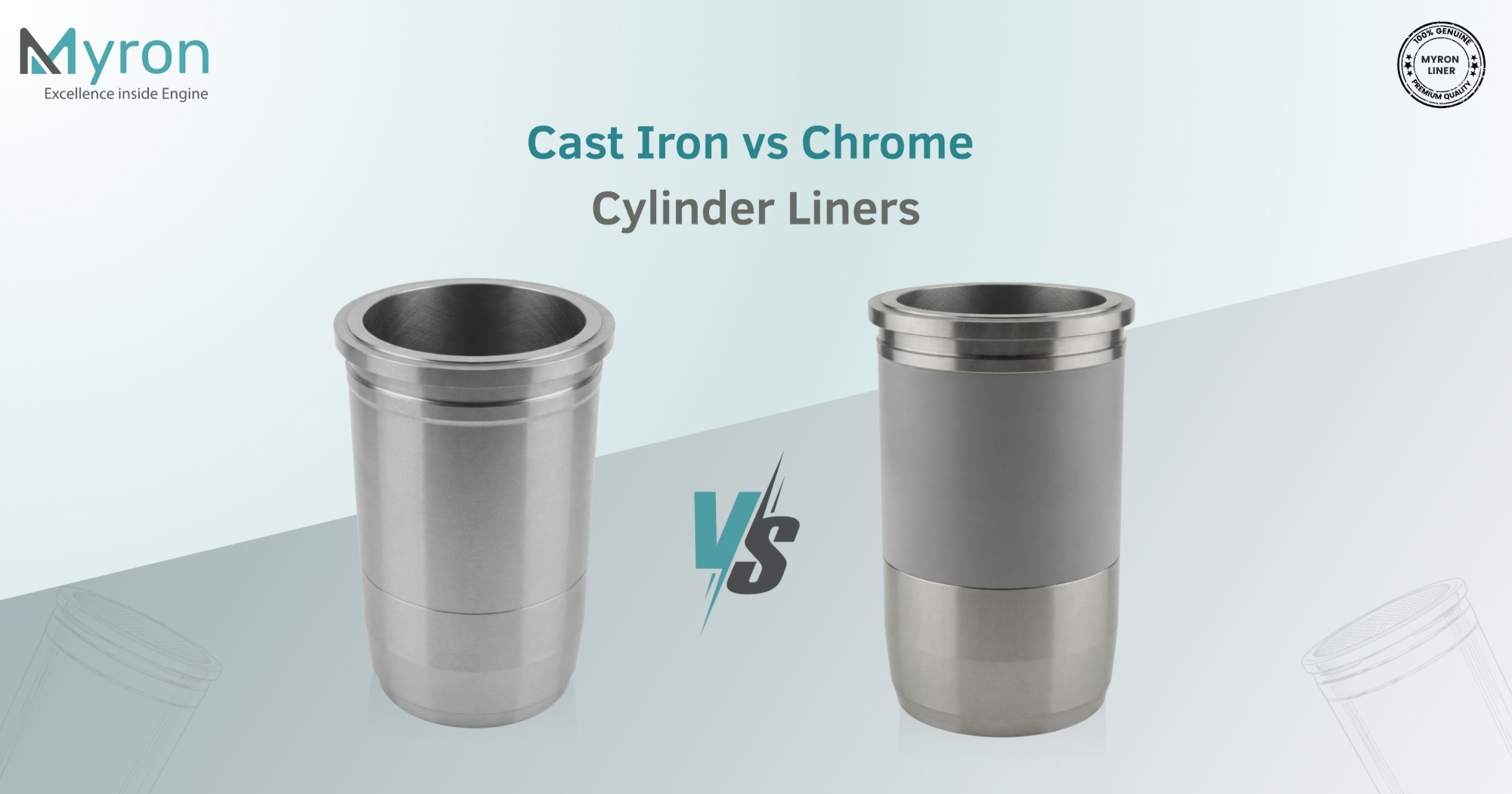
Cast Iron vs. Chrome Cylinder Liners
Cylinder liners form a key part of any engine. They create the surface where the piston moves up and down. The choice between cast iron and chrome cylinder liners affects engine life, power output, maintenance costs, and overall reliability.
This guide covers every detail about these two materials, including their properties, manufacturing methods, performance differences, and practical applications.
What Are Cylinder Liners and Why Do They Matter?
Cylinder liners, also called sleeves, are tubes fitted into the engine block. They protect the block from wear caused by the piston and rings. They also help with heat transfer, sealing, and smooth piston movement.
Good liners reduce friction, control oil consumption, and last long under high heat and pressure. Poor choice leads to fast wear, high oil use, loss of power, and expensive repairs.
Engines use two main liner types: dry and wet. Dry liners sit inside the block without touching coolant. Wet liners contact coolant directly for better cooling. Both come in cast iron or chrome versions.
Myron Liner offers both dry and wet-type cylinder liners in premium materials. Check our catalog for options that fit your engine perfectly.
Cast Iron Cylinder Liners: Properties and Specifications
Cast iron, especially grey cast iron, is the most common material for cylinder liners. It offers a good balance of strength, wear resistance, and cost.
Key Specifications and Properties:
- Composition: Mainly iron with 2.5-4% carbon, 1-3% silicon, and small amounts of manganese, phosphorus, and sulfur. Alloyed versions add chromium, molybdenum, nickel, or vanadium for better performance.
- Hardness: 180-300 HB for grey iron; higher in pearlitic or alloyed types (up to 320 HB).
- Tensile Strength: Around 200-400 MPa, depending on grade. Ductile (nodular) iron versions reach higher strength.
- Thermal Conductivity: Excellent, around 40-50 W/m·K, helping dissipate heat evenly.
- Microstructure: Graphite flakes in grey iron provide natural lubrication and vibration damping. Pearlitic matrix adds strength and wear resistance.
- Wear Resistance: Good against piston rings due to graphite lubrication. Surface can be honed for optimal oil retention.
- Density: About 7.2-7.8 g/cm³.
- Thickness: Varies by type; dry liners are thinner, wet liners thicker for structural strength.
- Operating Temperature: Handles high combustion temperatures well without losing properties quickly.
Alloyed cast iron with chromium improves carbide formation for extreme duty.
Manufacturing Process for Cast Iron Liners:
- Melting in induction furnaces at 1450–1520°C.
- Alloying and inoculation for uniform structure.
- Centrifugal casting: Molten metal poured into rotating mold for dense, defect-free tubes with fine grain structure.
- Heat treatment: Annealing, normalizing, or quenching to relieve stresses and improve machinability.
- Machining, honing, and finishing for precise dimensions and surface finish (typically Ra 0.2-0.8 µm for good ring seating).
Centrifugal casting gives superior quality compared to sand casting.
Cast iron liners work well in most diesel and gasoline engines. They are easy to machine and bore if needed during rebuilds.
Chrome Cylinder Liners: Properties and Specifications
Chrome cylinder liners usually mean a base material (often steel or cast iron) with a hard chrome plating layer on the inner surface. Pure chrome liners are less common today; plating on existing liners is more typical.
Key Specifications and Properties:
- Plating Thickness: Typically 0.02-0.5 mm or more for heavy duty; porous chrome variants have controlled porosity.
- Hardness: Very high, often over 800 HV (Vickers), much harder than cast iron.
- Wear Resistance: Excellent against abrasion; extends service life significantly in high-wear conditions.
- Friction: Low coefficient when properly finished, but standard hard chrome can be less oil-friendly than cast iron.
- Corrosion Resistance: Strong against combustion byproducts and moisture.
- Base Material: Often steel for strength or cast iron with chrome layer. Chrome-plated steel is lighter in some applications.
- Thermal Properties: Good heat transfer in thin layers, but base material affects overall performance.
- Surface Finish: Honed or porous chrome for oil retention (e.g., spot porous chrome with holes for lubricant storage).
Chrome Plating Process:
- Surface preparation (honing, cleaning).
- Electroplating in chrome bath with controlled current and temperature.
- Porous or channeled variants use special masking or etching for oil pockets.
- Final honing for precise bore size and cross-hatch pattern.
Chrome is popular for rebuilding worn liners or in specific high-performance or diesel applications where maximum wear life is needed.
Direct Comparison: Cast Iron vs. Chrome Cylinder Liners
Wear Resistance:
Cast iron cylinder liners offer good wear resistance with proper lubrication, while chrome cylinder liners provide higher wear resistance due to their harder surface.
Friction & Oil Retention:
Cast iron retains oil better because of its graphite structure, reducing friction. Chrome liners have lower oil retention unless porous chrome coating is used.
Heat Dissipation:
Cast iron transfers heat efficiently, helping maintain even engine temperatures. Chrome liners also perform well but depend on the base material and coating.
Strength & Durability:
Cast iron is durable for regular applications, whereas chrome liners offer higher strength for heavy-duty and high-load engines.
Weight:
Cast iron liners are heavier, while chrome-plated liners can be lighter.
Cost:
Cast iron is more affordable to manufacture and repair. Chrome liners have higher production and maintenance costs.
Machining & Repair:
Cast iron is easy to machine and recondition. Chrome liners are more difficult to repair and may require replating or replacement.
Piston Ring Compatibility:
Cast iron works with most piston ring types. Chrome liners should not be paired with chrome piston rings.
Applications:
Cast iron is widely used in passenger cars, tractors, and commercial vehicles. Chrome liners are preferred for heavy-duty diesel engines and demanding industrial applications.
Scuffing Resistance:
Cast iron generally offers better scuffing resistance, while chrome liners provide good performance but may be slightly less resistant in some conditions.
Environmental Impact:
Cast iron is easy to recycle, whereas chrome plating involves chemicals that require careful environmental handling.
Advantages and Disadvantages
Cast Iron Advantages:
- Lower cost.
- Excellent heat transfer and damping.
- Good oil retention and compatibility.
- Easy to manufacture, machine, and repair.
- Proven in millions of engines.
Cast Iron Disadvantages:
- Heavier than some alternatives.
- Lower peak hardness than chrome.
- Can wear faster in very abrasive conditions without proper maintenance.
Chrome Advantages:
- Superior hardness and wear life.
- Better corrosion resistance.
- Lower friction in optimized setups.
- Extends life in harsh environments.
Chrome Disadvantages:
- Higher cost.
- Potential oil retention issues if not porous.
- Harder to repair.
- Compatibility restrictions with rings.
- Less thermal damping.
Factors to Consider When Choosing
- Engine type (gasoline, diesel, turbo).
- Operating conditions (load, temperature, duty cycle).
- Budget for initial and maintenance.
- Expected service life.
- Availability of matching rings and parts.
- Cooling system (wet vs dry).
For most fleet and agricultural use, cast iron offers the best value. Chrome suits specialized high-wear rebuilds.
Conclusion: Making the Right Choice
Cast iron cylinder liners provide reliable, cost-effective performance for most applications with excellent heat management and repairability. Chrome cylinder liners offer top wear resistance for demanding conditions, but at higher cost and with specific needs.
Consider your engine's requirements carefully. For trusted cast iron solutions that perform day after day, choose Myron Liner. We manufacture premium cylinder liners, sleeves, and blocks with precision and care.
Visit myronliner today to explore our catalog, download brochures, or request a quote. Our team is ready to help you keep your engines running strong for years to come.
Reference & Trademark Disclaimer
All manufacturer names, trademarks, logos, product names, part numbers, model numbers, descriptions, and other identifying references mentioned in this article are used for identification, reference, and cross-reference purposes only.
Such references do not imply any affiliation, association, authorization, sponsorship, approval, or endorsement by the respective manufacturers or trademark owners. All trademarks, brand names, product names, part numbers, and related intellectual property remain the property of their respective owners.
MYRON LINER LLP is an independent manufacturer and supplier of engine components. The use of any third-party name or reference is solely intended to help readers identify the applicable engine, component, or application.