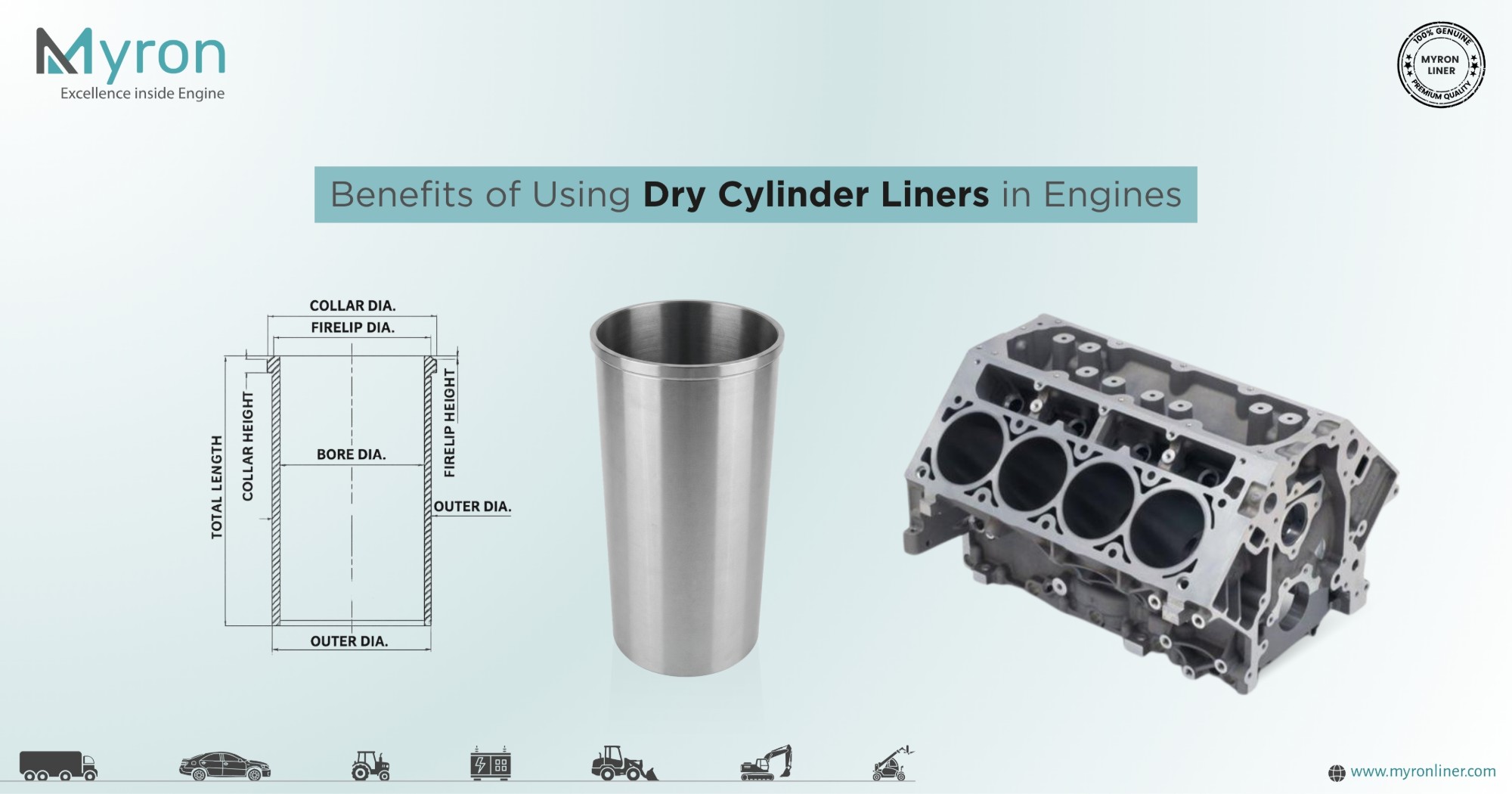
Benefits of Using Dry Cylinder Liners in Engines
This article looks closely at the benefits of using dry cylinder liners in engines. We cover their design, materials, how they compare to other types, and why they matter for everyday vehicles and heavy machines.
What Are Dry Cylinder Liners?
Dry cylinder liners, also called dry sleeves, are thin metal tubes pressed into the engine block. They do not touch the engine coolant directly. The block material surrounds them completely. Heat moves from the liner through the block to the cooling system.
This setup differs from wet liners, which contact coolant straight away. Dry liners stay thinner, usually between 1.5 mm and 3 mm thick. Their simple shape makes them strong when supported by the block.
Engine makers use dry liners in many cars, trucks, and performance builds. The tight fit creates good contact for heat flow and keeps the structure firm.
Myronliner offers precision-made dry-type cylinder liners built for long service life and exact fit.
How Dry Cylinder Liners Work in an Engine?
Inside the engine, combustion creates high pressure and heat. The piston rings slide against the liner surface thousands of times every minute. Dry liners provide a hard, smooth wearing surface that resists damage better than the base block material in many cases.
The liner absorbs wear from the piston rings and combustion gases. It also helps seal the combustion chamber to maintain compression. Because the block supports the liner fully, it handles side loads and distortion well during high-speed or high-load operation.
Oil forms a thin film on the liner surface. This reduces friction and helps carry away heat. The design prevents coolant leaks into the oil or combustion area, which is a common worry with other liner types.
For mechanics and fleet owners, this means fewer problems with water mixing into oil or sudden failures from leaks.
Main Benefits of Dry Cylinder Liners
Dry cylinder liners bring several clear advantages. Here are the key ones explained in detail.
1. Better Structural Rigidity and Strength
The full support from the engine block makes the assembly very rigid. This reduces cylinder distortion under high combustion pressure or during hard use. In high-performance engines or those with turbochargers, this rigidity helps keep bore shape stable for better sealing and power.
Less distortion means piston rings stay in good contact, cutting down on blow-by — gases leaking past the rings. This improves power output, fuel efficiency, and reduces emissions.
2. Easier Installation and Repair
Dry liners press into the block with an interference fit. Mechanics can machine out a damaged cylinder and install a new sleeve without major block work in many cases. This saves time and money compared to replacing an entire block.
No special seals against coolant are needed because the liner stays dry on the outside. This removes risks of coolant leaks into the crankcase. Replacement uses standard shop tools in many situations, though precise fitting matters for best results.
For engine rebuild shops, this simplicity speeds up jobs and lowers costs. It makes dry liners popular for automotive repairs and performance upgrades.
3. No Coolant Leakage Risks
Since coolant does not touch the liner directly, there is almost no chance of water entering the combustion chamber or oil. This is a big plus for reliability, especially in engines that see tough conditions or long hours.
Wet liners need careful O-ring installation. Mistakes here cause leaks that lead to expensive damage. Dry liners avoid this issue entirely.
Fleet operators and owners of older vehicles appreciate this peace of mind. It means fewer surprise repairs and longer time between services.
4. Good Heat Transfer in Supported Designs
Heat moves from the liner to the surrounding block and then to the coolant passages. While not as direct as wet liners, modern designs and materials make this efficient enough for most gasoline and many diesel applications.
The close contact between liner and block helps even heat distribution. In aluminum blocks, dry iron liners add strength while managing thermal expansion differences.
Engine builders often choose dry liners when block stiffness matters more than maximum cooling speed.
5. Lower Weight and Compact Design Potential
Dry liners allow thinner walls in some setups because the block provides support. This can reduce overall engine weight, which helps with vehicle handling and fuel economy.
In racing or performance engines, every kilogram saved counts toward better power-to-weight ratios.
6. Cost-Effective Manufacturing and Maintenance
Making the engine block with dry liner bores can be straightforward in some designs. Replacement liners cost less than full block repairs. Many aftermarket options exist for popular engines.
Over the life of an engine, this adds up to real savings for workshops and vehicle owners.
7. Reduced Wear and Longer Engine Life
The special materials in dry liners resist abrasion from piston rings and carbon deposits. Good surface finish holds oil film well, cutting friction and wear.
This leads to better compression over time, lower oil consumption, and extended intervals between overhauls.
8. Versatility Across Engine Types
Dry liners work in gasoline passenger cars, performance engines, some diesel applications, motorcycles, and industrial equipment. Their design fits many bore sizes and power levels.
Dry Cylinder Liners vs Wet Cylinder Liners
Understanding the differences helps choose the right type.
- Cooling: Wet liners cool faster because coolant touches them directly. Dry liners rely on conduction through the block — slower but sufficient for many uses.
- Thickness: Dry liners are thinner (1.5-3 mm). Wet liners are thicker (3-6 mm) since they stand alone against pressure.
- Replacement: Dry liners often need machining for installation but avoid sealing issues. Wet liners replace more easily but require careful sealing.
- Rigidity: Dry liners add to block strength. Wet liners can allow more flex in some designs.
- Leak Risk: Dry liners have almost none. Wet liners carry higher risk if seals fail.
- Applications: Dry for performance gasoline and many automotive rebuilds. Wet for heavy-duty diesels needing frequent rebuilds and maximum cooling.
Each type has its place. Dry liners shine where strength, simplicity, and leak-free operation matter most.
Materials Used in Dry Cylinder Liners
Most dry liners use cast iron alloys. These provide good wear resistance, machinability, and heat handling.
Common composition includes:
- Carbon: 3.0 – 3.5%
- Silicon: 2.0 – 2.5%
- Manganese: 0.5 – 0.8%
- Chromium, molybdenum, vanadium, and other elements for hardness and corrosion resistance.
Some use alloyed steels or special treatments for high-performance needs. Surface treatments or coatings improve oil retention and reduce wear further.
Applications of Dry Cylinder Liners
You find dry liners in:
- Passenger car gasoline engines.
- High-performance and racing engines.
- Many automotive rebuilds.
- Some diesel and industrial engines where rigidity matters.
- Motorcycles and smaller power units.
They suit engines modified for more power or those needing cylinder repair without full replacement.
Conclusion
Dry cylinder liners offer strong benefits including added rigidity, easier repairs, no coolant leak risks, good durability, and versatility. They suit many engine types and operating conditions. Whether for daily driving, performance work, or industrial use, they help engines last longer and run better.
For top-quality dry cylinder liners and engine components, head to myronliner. Their products deliver the performance and reliability you need.
Reference & Trademark Disclaimer
All manufacturer names, trademarks, logos, product names, part numbers, model numbers, descriptions, and other identifying references mentioned in this article are used for identification, reference, and cross-reference purposes only.
Such references do not imply any affiliation, association, authorization, sponsorship, approval, or endorsement by the respective manufacturers or trademark owners. All trademarks, brand names, product names, part numbers, and related intellectual property remain the property of their respective owners.
MYRON LINER LLP is an independent manufacturer and supplier of engine components. The use of any third-party name or reference is solely intended to help readers identify the applicable engine, component, or application.