A Complete Guide to the Different Types of Cylinder Liners
Cylinder liners are designed to withstand extreme operating conditions, including intense heat, high pressure from combustion, and continuous friction from piston movement. Without cylinder liners, engine blocks would wear out faster, leading to reduced engine efficiency and a significantly shortened lifespan.
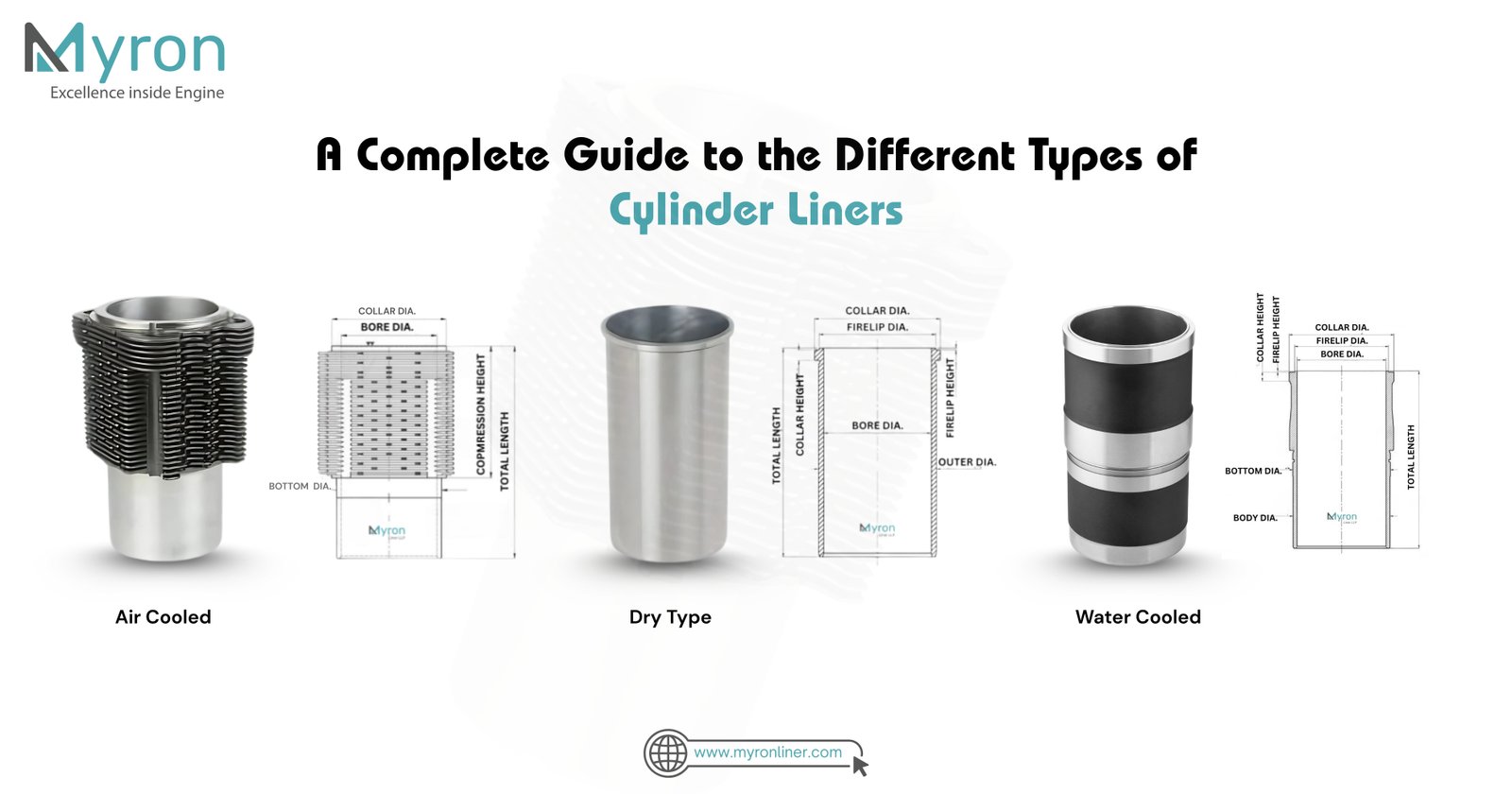
This comprehensive guide will dive deep into the different types of cylinder liners — including dry liners, wet liners, and air-cooled or finned liners. We'll discuss their unique designs, functional differences, materials used, and the advantages and disadvantages of each. Understanding these distinctions is crucial for mechanics, engineers, manufacturers, and even vehicle owners who want to make informed decisions about engine care, repairs, and upgrades.
What Is a Cylinder Liner?
A cylinder liner is a cylindrical component put into an engine block to provide a durable surface for the piston to move on. It reduces wear, improves heat transfer, and supports the engine's mechanical functions.
Cylinder liners are usually made of cast iron or other wear-resistant metals. Depending on the design, they can be either replaceable or an integral part of the engine block.
Read More: What Are Cylinder Liners and Why Are They Important
Types of Cylinder Liners
Cylinder liners are crucial components in internal combustion engines, and they come in various designs to suit specific engine needs, environmental conditions, and performance requirements. The type of liner used directly impacts engine durability, thermal performance, and ease of maintenance.
There are three major types of cylinder liners frequently used in diesel and gasoline engines:
1. Dry Cylinder Liners
Dry liners are inserted into the cylinder block without direct contact with the engine coolant. They are pressed into the bore of the cylinder block and rely on the block for heat dissipation. These liners act as a replaceable wear surface that protects the cylinder block from direct contact with the piston and combustion forces. Their design allows for easier maintenance and cost-effective engine repair, especially in light-duty applications.
Features:
- Thin and lightweight: Dry liners have a compact structure that adds minimal weight to the engine, making them ideal for space-efficient designs. Their slim profile also simplifies handling and installation.
- No coolant interaction: These liners do not come into direct contact with engine coolant, eliminating the need for complex sealing systems and reducing potential leak points.
- Easy to replace: Due to their simpler installation process and design, dry liners can be removed and replaced quickly without extensive engine disassembly.
Pros:
- Simple design: Dry cylinder liners have a straightforward construction that makes them easier to manufacture and install, reducing overall complexity in engine design.
- Lower cost: Their minimalistic structure and lack of coolant sealing requirements make them more affordable than wet liners in production and maintenance.
- Effective for low to moderate engine loads: Dry liners perform efficiently in engines that operate under moderate thermal and mechanical stress, making them suitable for everyday vehicles and light-duty applications.
Cons:
- Less efficient cooling: Since dry cylinder liners do not come into direct contact with coolant, they rely solely on the engine block for heat dissipation, which can limit cooling efficiency, especially in high-performance engines.
- Requires precise installation to avoid deformation: Improper installation can cause warping or misalignment of the liner, potentially leading to poor sealing, increased wear, or engine damage over time.
Applications:
- Widely used in automotive and light-duty engines: Dry liners are commonly found in passenger vehicles, small trucks, and motorcycles due to their cost-effectiveness and simplicity in design. They are ideal for engines that do not require intensive cooling or extremely high performance.
2. Wet Cylinder Liners
Wet liners come into direct contact with engine coolant. These liners are fitted with sealing rings (O-rings) at the top and bottom to prevent coolant from leaking into the combustion chamber.
Features:
- Thicker construction: Wet cylinder liners are generally thicker than dry liners, offering greater strength and durability to handle high engine loads and stresses.
- Direct cooling with engine coolant: These liners come into direct contact with engine coolant, which circulates them to dissipate heat and prevent engine overheating effectively.
- Seals to prevent coolant leakage: Rubber or metallic sealing rings are used at both ends of the liner to prevent coolant from leaking into the combustion chamber or crankcase.
Pros:
- Superior cooling performance: Wet liners offer excellent heat dissipation by directly contacting engine coolant, reducing the risk of overheating.
- Easier to replace and maintain: Since they are not integrated into the engine block, wet liners can be removed and replaced more conveniently when worn or damaged.
- Better thermal efficiency: Efficient heat transfer helps maintain optimal engine temperatures, improving overall performance and longevity.
Cons:
- More complex installation: Installing wet liners requires careful handling and precision to ensure correct fitting and alignment within the block.
- Risk of coolant leakage if seals fail: If the sealing rings wear out or are not installed properly, it can lead to coolant leakage, potentially causing serious engine damage.
Applications:
- Heavy-duty diesel engines, trucks, and industrial machinery: Wet liners are commonly found in large engines, such as commercial vehicles, agricultural equipment, and marine engines, where effective cooling and durability are crucial.
3. Air-Cooled (Finned) Cylinder Liners
These liners are used in air-cooled engines and feature external fins that dissipate heat by increasing surface area and airflow around the cylinder.
Features:
- Made from aluminium or alloyed metals: Air-cooled liners are typically crafted from lightweight materials such as aluminium or special alloy metals to ensure efficient heat dissipation while keeping the engine weight low.
- Integrated with fins for air cooling: These liners often feature external fins that increase surface area, allowing for better airflow around the liner and more effective cooling from the surrounding air.
Pros:
- No need for a cooling system: Air-cooled cylinder liners eliminate the need for an additional liquid cooling system, which reduces complexity and maintenance.
- Lightweight and efficient in small engines: These liners are especially useful in small engine applications because of their light weight and simplicity, making them ideal for motorcycles and small power equipment.
Cons:
- Less effective cooling than liquid cooling: While air cooling works well in small engines, it is less effective in larger, high-performance engines where liquid cooling provides superior heat dissipation.
- Limited to small engine applications: Air-cooled liners are most suitable for smaller engines, and their use in larger, more powerful engines is often impractical due to limited cooling capacity.
Applications:
- Motorcycles, small engines, and aviation applications: Finned cylinder liners are commonly found in motorcycles, lawnmowers, small generators, and aviation applications where weight and simplicity are more critical than intensive cooling systems.
Key Factors in Choosing the Right Cylinder Liner
Engine Type and Load
- Heavy-duty engines benefit from wet liners due to better cooling.
- Light-duty or compact engines may use dry liners for simplicity.
Cooling System Design
- Water-cooled systems work well with wet liners.
- Air-cooled systems require finned liners.
Maintenance Accessibility
- Wet liners are easier to replace and inspect.
- Dry liners may require precision reboring.
Cost and Availability
- Dry liners are typically less expensive and more easily available.
- Wet liners may incur higher initial costs but reduce long-term expenses.
Conclusion
Cylinder liners are pivotal in engine efficiency, lifespan, and reliability. Cylinder liners are important in engine efficiency, lifetime, and reliability. Whether using dry, wet, or air-cooled liners, understanding their differences and advantages helps you choose the right option for your engine's needs. As engine technology evolves, so do the materials and designs of cylinder liners, making them more efficient and durable than ever.
Investing in high-quality cylinder liners from trusted manufacturers ensures optimal performance and extends your engine's service life.
References
Cylinder liner by Wikipedia[1].
FAQ
1. What is the function of a cylinder liner?
It forms the inner wall of the cylinder, provides a sliding surface for the piston, and helps heat transfer and sealing.
2. What is the difference between wet and dry cylinder liners?
The main difference between wet and dry cylinder liners is their interaction with the engine's cooling system.
- Wet Cylinder Liners: These liners directly interact with the engine's coolant. The coolant flows around the liner, helping to regulate the temperature and prevent overheating. Wet liners offer superior cooling efficiency, which is ideal for heavy-duty and high-performance engines.
- Dry Cylinder Liners: These liners do not come into contact with the engine coolant. Instead, the heat generated during combustion is dissipated through the cylinder block. Dry liners are easier to install and replace and are often used in light-duty and smaller engines, but they are less efficient at managing heat than wet liners.
3. How often should cylinder liners be replaced?
This depends on engine usage, but regular inspection during overhauls can determine wear levels.
4. Can air-cooled liners be used in cars?
Typically, no. They are used in small engines like motorcycles and some aviation engines.
5. What causes cylinder liner wear?
Poor lubrication, contaminants, overheating, and improper maintenance.
Reference & Trademark Disclaimer
All manufacturer names, trademarks, logos, product names, part numbers, model numbers, descriptions, and other identifying references mentioned in this article are used for identification, reference, and cross-reference purposes only.
Such references do not imply any affiliation, association, authorization, sponsorship, approval, or endorsement by the respective manufacturers or trademark owners. All trademarks, brand names, product names, part numbers, and related intellectual property remain the property of their respective owners.
MYRON LINER LLP is an independent manufacturer and supplier of engine components. The use of any third-party name or reference is solely intended to help readers identify the applicable engine, component, or application.